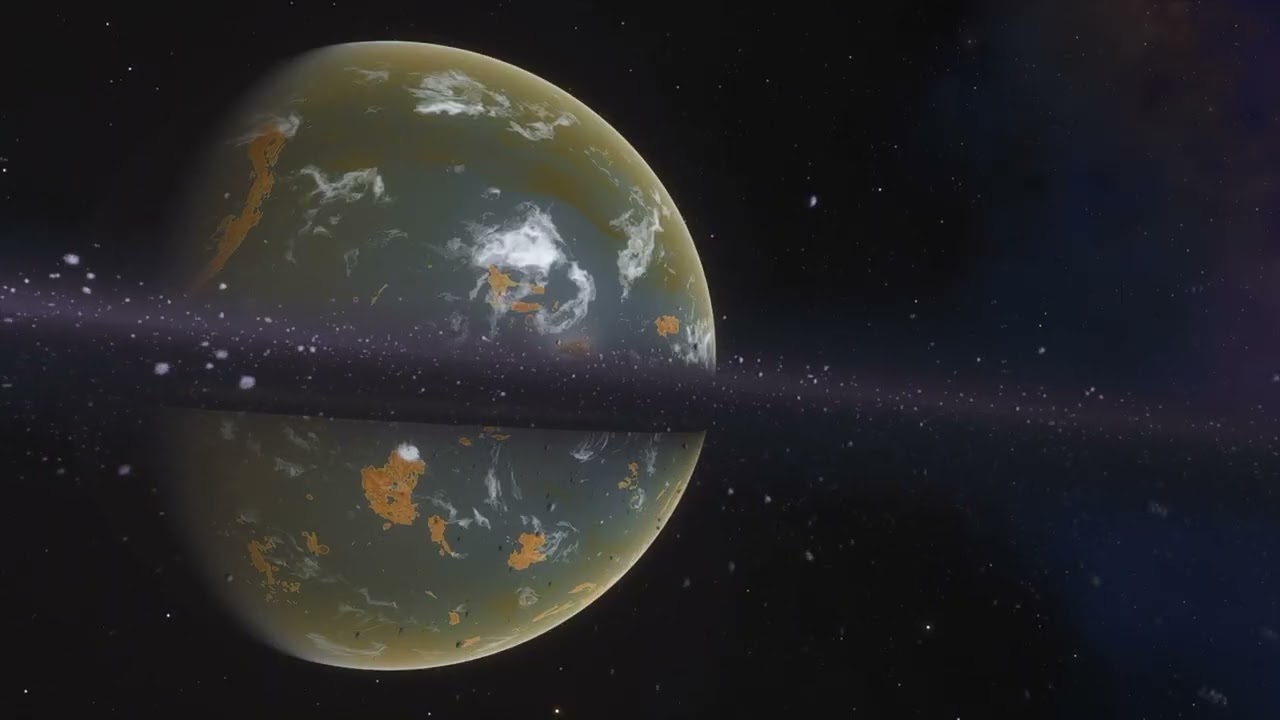
Did the Sun Once Eat a Super Earth?
Keywords
Summary
197 words
Critical Evaluation
Value of the Information & Strength of the Argument
The video provides valuable insights into a cutting-edge hypothesis in planetary science, presenting a coherent argument supported by modeling results. The reasoning is logical: it identifies the solar system’s missing super Earth as a puzzle, outlines plausible mechanisms for its disappearance, and highlights a specific study that ties together disparate observations of the Sun. The argument is strengthened by discussing corroborating details like the lack of asteroids inside Mercury’s orbit and the formation potential of a super Earth near the Sun. However, it also honestly acknowledges uncertainties, particularly regarding Jupiter’s migration history and the alternative that no super Earth ever formed. The evidence is presented with appropriate scientific caution, making the argument solid yet not overreaching.
Scientific Rigor, Source Quality, Title Accuracy
The scientific rigor is moderate; the video references recent studies without naming specific papers or providing direct links, relying instead on a general description of findings. The quality of information is high because it synthesizes multiple lines of evidence and clearly distinguishes between fact and speculation. The title accurately reflects the content, and the video stays on topic throughout. No explicit external sources are cited beyond the music credits and Patreon page, so the audience is not directed to primary literature. The adéquation between title and content is strong, as the video thoroughly addresses the question posed.
228 words
Title / Content Match
The title directly matches the video's central question, which is explored comprehensively throughout the episode.
Quality & Reliability
7/10
The video presents a reasonable scientific hypothesis based on recent modeling studies, clearly distinguishing speculation from established facts. It acknowledges uncertainties and alternative explanations, though it lacks direct citations to the specific papers discussed.
Key Moments
Markers derived by PSI from the transcript: the creator did not define chapters.
- Introduction: The solar system's strangeness and common exoplanet types (hot Jupiters, super Earths) we lack.
- Three possible fates for young planets: outward migration, ejection, or being engulfed by the star.
- Discussion of a microlensing survey finding distant super Earths, indicating they are common.
- New study modeling the Sun's ingestion of a super Earth (5-10 Earth masses) to explain lithium depletion and sound speed anomalies.
- Jupiter's grand tack migration as a wildcard; possible prevention of super Earths moving inward.
- Lack of asteroids inside Mercury's orbit as supporting evidence; Proxima Centauri b as a nearby super Earth candidate.
- Plate tectonics on super Earths: debate on thinner vs. thicker plates and implications for habitability.
Cited Sources
- Cylinder Five by Chris Zabriskie — Background music used in the video under Creative Commons license.
- Creative Commons Attribution 4.0 License — License for the music used in the video.
- Event Horizon Channel — Related channel by the same author, mentioned in the description.
Contribution & Novelties
This video contributes by popularizing a recent scientific hypothesis that the Sun may have engulfed a super Earth in its early history, linking it to unexplained solar anomalies like lithium depletion and sound speed discontinuities. It synthesizes multiple research threads, including microlensing discoveries of distant super Earths, planetary migration dynamics, and the absence of inner-solar-system asteroids. The video also frames this idea within the broader context of super Earth geophysics and habitability, raising thought-provoking questions about the uniqueness of Earth’s plate tectonics.
Pour aller plus loin :
- Super-Earth — Provides definitions and known examples of super Earths, covering mass ranges and detection methods.
- Grand tack hypothesis — Explains Jupiter’s early migration and its potential effects on the inner solar system, directly relevant to the video’s discussion.
- Proxima Centauri b — The closest known exoplanet, a possible super Earth, and a target for interstellar probe concepts.
- Plate tectonics — Discusses the mechanics and importance of plate tectonics on Earth, including debates about its presence on super Earths.
166 words
Radar Profile
The radar profile shows strong scores in information quality and technical level, balanced by moderate quantity and fiabilite. The video excels in presenting a coherent and well-explained hypothesis, but falls short on direct sourcing and depth of data, resulting in a rounded but not top-tier score.