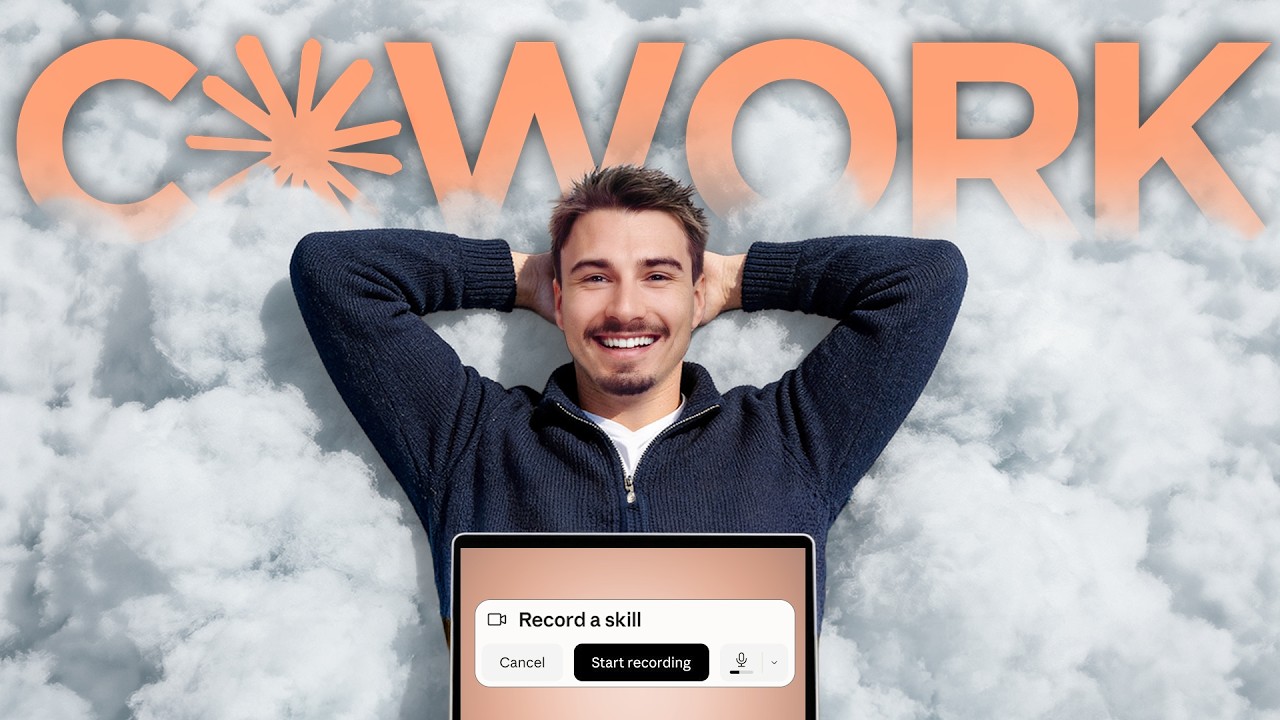
This is How You Delegate to AI in 2026
Keywords
Summary
168 words
Critical Evaluation
Value of the Information & Strength of the Argument
The video’s main value lies in its practical, step-by-step demonstration of a new AI feature that makes task delegation tangible. The argumentation is solid because Igor shows real examples with visible outcomes—running the recorded skill and reviewing the generated report. He also addresses potential pitfalls (e.g., screen clutter, permissions) which adds credibility. The case for the feature’s utility is persuasive, especially the time-saving aspect for repetitive tasks. However, the presentation is somewhat one-sided, focusing solely on benefits without discussing potential privacy or security concerns beyond a brief caution about sensitive information. The inclusion of a sponsor segment is handled smoothly but does blend with the educational content. Overall the argumentation is clear and effective for its intended audience, though it lacks critical evaluation of the tool’s limitations.
Scientific Rigor, Source Quality, Title Accuracy
The video cites official sources through the description links: Claude’s new interface (claude.ai/new), the AI Advantage Club (joinaiaclub.com/igor), and OpenAI’s what’s-new page (learn.chatgpt.com/docs/whats-new). These are primary sources directly related to the content. The title accurately matches the content—‘delegate to AI’ is exactly what the skill recording enables. However, rigor is slightly undermined by the promotional tone and the fact that the creator sells a membership to master such workflows. No conflicting sources are presented, and the claims about feature capabilities are taken from the vendor’s announcements. The video does not cite independent research or external validations. The sponsorship segment is clearly integrated but doesn’t affect the core tutorial. Overall, the title is well-aligned and the sources are appropriate, but the scientific rigor is limited by the lack of critical perspective.
272 words
Title / Content Match
The title accurately reflects the content: the video demonstrates how to delegate tasks to AI via recorded skills, a key capability for 2026.
Quality & Reliability
8/10
High relevance and practical value, well-structured demonstration with real examples, though the content is promotional for the creator's club and relies on vendor claims rather than independent verification.
Chapters
Cited Sources
- Claude desktop app — Main tool showcased for recording skills.
- AI Advantage Club — Promotional offer linked at the end of the video.
- OpenAI What's New — Reference for the ChatGPT custom instructions update.
Contribution & Novelties
This video provides a clear, actionable explanation of Claude’s new skill-recording feature, which is a notable step toward practical AI delegation. The demonstration shows how non-technical users can create automation workflows by simply performing a task while narrated. This lowers the barrier for automation compared to prior prompt-based or coding approaches. The video also highlights the ChatGPT custom instructions expansion, allowing more detailed user context. Its original contribution is the concrete use cases (QA and invoice processing) and the tip of using a pre-prepared checklist to seed the recording.
Pour aller plus loin :
- AI agents - Wikipedia — Provides background on autonomous agents and their components.
- Workflow automation - Wikipedia — Explains the broader concept of automating business processes.
- Claude documentation (Anthropic) — Official docs for Claude features and best practices, though not directly verified here.
- Prompt engineering - Wikipedia — Relevant to designing effective instructions for AI, which complements video content.
153 words
Radar Profile
The radar profile shows strong scores in quantity and quality of information, with slightly lower technical level and reliability, indicating a well-illustrated practical tutorial that is reliable but not formally rigorous.