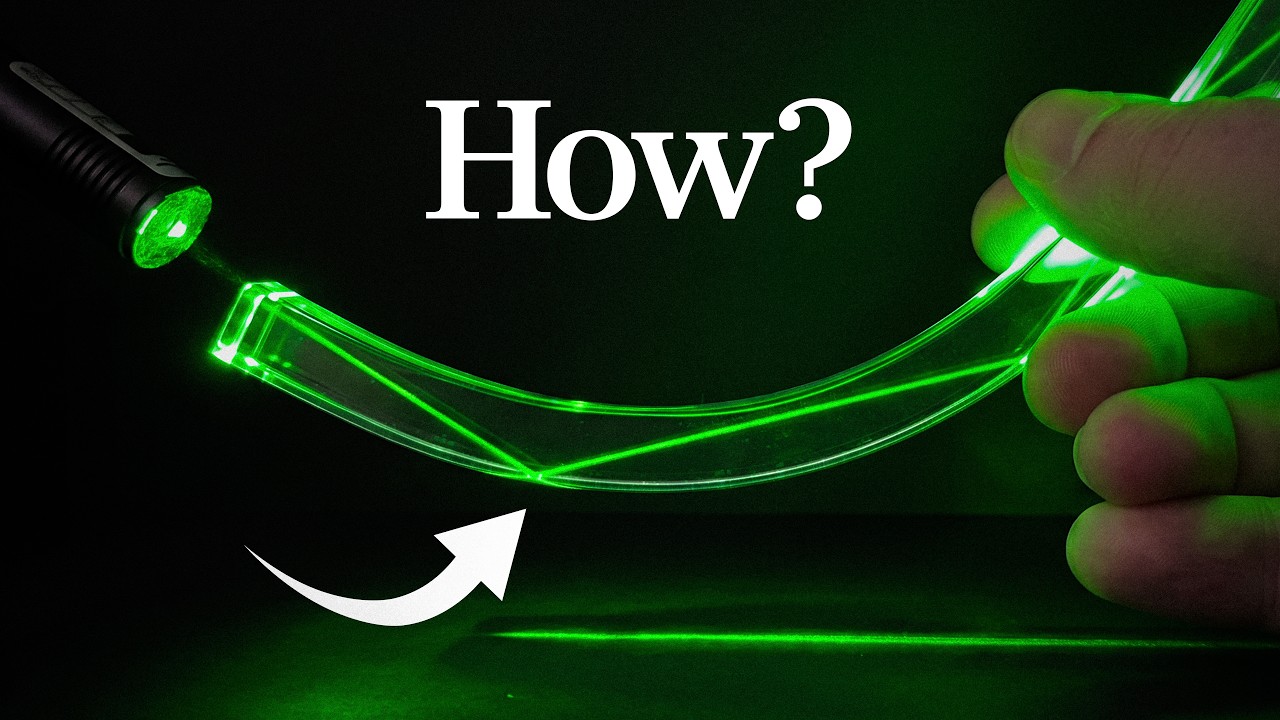
The Technology that Made the Internet Possible
Keywords
Summary
154 words
Critical Evaluation
Value of the Information & Strength of the Argument
The video provides a rich and well-structured account of fiber optics, blending historical narrative with scientific explanation. It offers clear value by connecting fundamental physics to real-world engineering, and it strengthens its argument by featuring credible experts like Dr. Donald Keck and Sir David Payne, as well as referencing a detailed book and additional sources. The argumentation is persuasive: it systematically addresses why glass fibers were initially considered impractical, then demonstrates how each obstacle—from high loss to manufacturing difficulties—was overcome. The use of analogies (e.g., the leaky truck) and visual demonstrations helps solidify complex concepts, making the information both accessible and convincing.
Scientific Rigor, Source Quality, Title Accuracy
The video demonstrates high scientific rigor by citing specific studies, historical documents, and experts. The description includes a comprehensive reference list (ve42.co/FiberRefs) and a note on the skin effect derivation, indicating attention to accuracy. The title is well-matched to the content, as the video truly explains the technology that underpins the internet. The sponsor segment (approximately one minute) is clearly flagged and does not affect the integrity of the main material. The production credits list numerous researchers and animators, reflecting a serious approach to accuracy and detail.
204 words
Title / Content Match
The title accurately reflects the content: the video explains how fiber optic technology became the backbone of the internet, detailing the scientific and engineering breakthroughs that made it possible.
Quality & Reliability
9/10
The video features renowned experts, references to scientific literature, and a detailed historical account. The production quality is high, and the content is well-researched, though the absence of a transcript limits independent verification of every factual claim. However, the channel's reputation and the cited sources support a high reliability rating.
Chapters
Cited Sources
- References for this video — Comprehensive list of scientific references and sources used in the video.
- Skin Effect Derivation — Supplementary article explaining the skin effect in more detail, as noted in the video description.
- Jeff Hecht's Website — Author of 'City of Light: The Story of Fiber Optics', cited as an invaluable resource for the video.
External References
Contribution & Novelties
The video offers a compelling narrative of fiber optic development, synthesizing historical accounts with accessible physics. It breaks down complex topics like signal attenuation and material science into understandable segments, providing a fresh perspective on a technology often taken for granted.
Pour aller plus loin :
- Charles Kao — His Nobel Prize-winning work on fiber optics is central to the video’s story.
- Total internal reflection — The physical principle that makes light confinement in fibers possible.
- Shannon–Hartley theorem — The theoretical framework for channel capacity discussed in the video.
89 words
Radar Profile
The radar profile shows high scores across all dimensions, with slightly lower technical complexity (8) compared to information quantity (10). This indicates a video that is rich in content, reliable in sourcing, and technically accessible, making it an excellent educational resource.
💬 Ferveur : Les commentaires expriment une appréciation massive de la qualité et de la profondeur du contenu, certains soulignant l'incroyable effort scientifique derrière la fibre optique. Quelques remarques humoristiques évoquent le changement de titre et la rapidité des commentaires précoces, mais l'ensemble est extrêmement positif.