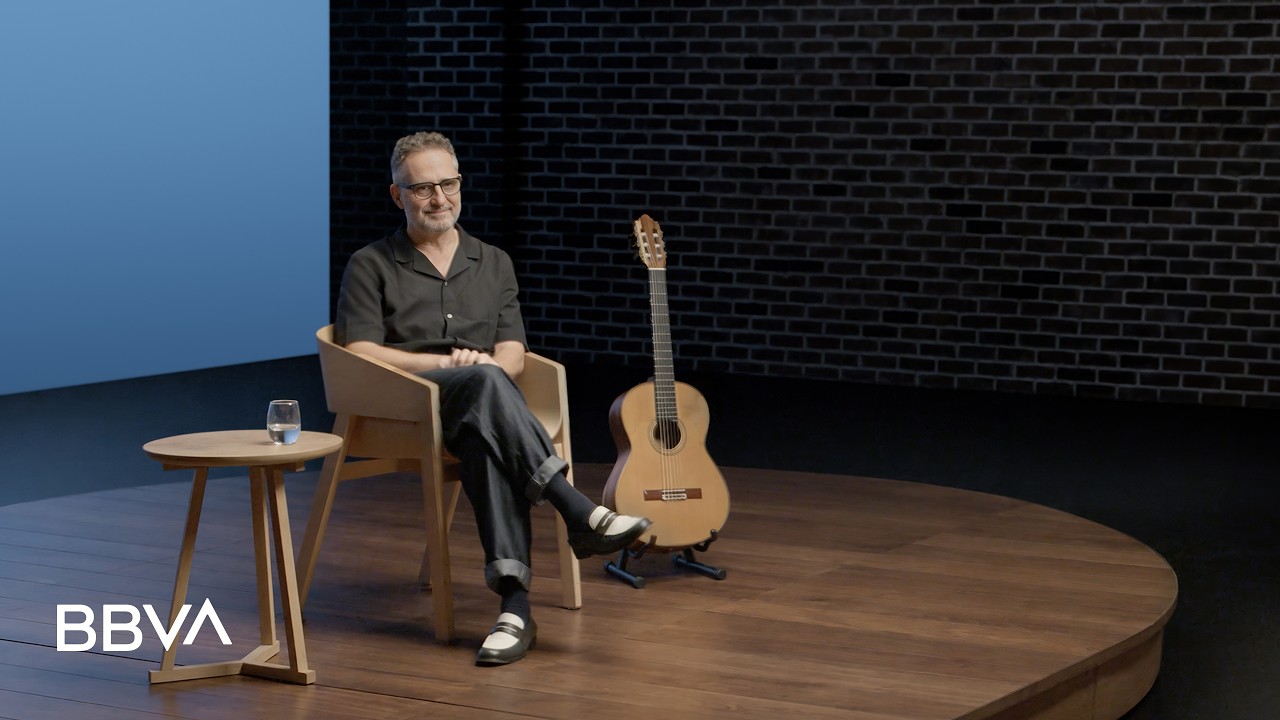
“Me fue bien a los 40 y aprendí a bailar a los 50” | Jorge Drexler, músico
JORGE DREXLER'S MASTERCLASS
Keywords
Summary
182 words
Critical Evaluation
Value of the Information & Strength of the Argument
The conversation provides valuable reflections on the creative process, the courage to change careers, and the importance of embodying present-ness. Drexler argues that learning is the antithesis of nostalgia and that dancing is a fundamental human activity that connects us. He defends reggaeton as a legitimate social phenomenon and discusses artificial intelligence with curiosity. His arguments are personal and anecdotal, but he grounds them in some scientific references, such as Lavoisier’s law of conservation of mass as a metaphor for reciprocity, and mentions neuroscience of dance. The reasoning is clear and sincere, though it relies on subjective experience rather than empirical evidence.
Scientific Rigor, Source Quality, Title Accuracy
Scientific rigor: The video does not aim to present scientific findings; it is an interview. Drexler cites a few sources: the law of conservation of mass (Lavoisier), a neuroscientist Nazareth Castellanos, and archaeological evidence of a 45,000-year-old flute. These references are accurate but presented anecdotally. The description includes links to the channel’s website and Spotify, which are not academic sources. The title matches the content: it highlights the late success and late learning of dance, both central themes. The audience seems highly appreciative, as seen in the positive comments.
206 words
Title / Content Match
The title accurately reflects the main themes: the speaker's late success and his late learning of dance, both discussed in the interview.
Quality & Reliability
8/10
The content is a personal narrative by a respected musician, not peer-reviewed research. The few scientific references (Lavoisier's law, neuroscience of dance) are correctly mentioned, but the emphasis is on subjective experience and reflection. Overall, it is reliable as a testimony, but not as a source of scientific facts.
Chapters
- «Hacíamos música antes que la agricultura»
- Criarse sin música y en dictadura
- Dejar una vida resuelta por la música
- La guitarra escondida bajo la bata
- «Todo se transforma»: dar y recibir
- ¿Ganan los optimistas? La vida es bonita
- Aprender es lo contrario de la nostalgia
- A los 50 aprendió a bailar
- En defensa del reguetón
- «¿Hay alguien A.I.?»: gracias a la IA
- Ni VIP ni fans: qué es el éxito
- «Matar al padre»: familia y vocación
- «Yo soy el otro»: música y empatía
- El tambor chico: aquí y ahora
Cited Sources
- Aprendemos Juntos website — The channel's official site, where additional content and resources are offered.
- Aprendemos Juntos on Spotify — Podcast version of the interview series.
Contribution & Novelties
The original contribution lies in the personal testimony of a successful artist about learning and change, challenging common assumptions about age and creativity. Drexler’s reflection on dancing as a remedy against nostalgia and his defense of reggaeton as a social bonding agent offer a fresh perspective on how we perceive art and self-improvement. He also weaves scientific metaphors into his narrative, making it both accessible and profound.
Pour aller plus loin :
- Antoine Lavoisier — The law of conservation of mass is referenced as a metaphor for reciprocity and transformation.
- Candombe — Uruguayan musical and dance tradition, deeply rooted in African heritage, mentioned in the context of cultural identity.
- Neuroplasticity — The brain’s ability to reorganize itself, related to the idea of learning new skills like dancing at an older age.
131 words
Radar Profile
The profile shows high scores in quantity and reliability, moderate in quality, and low in technical level, reflecting a non-technical but detailed personal account. This indicates a focused but subjective presentation, valuable for its human depth rather than scientific rigor.
💬 très positif: The 30 comments analyzed express deep admiration for Jorge Drexler, gratitude for the inspiring conversation, and often mention personal emotional impact. There is no criticism or negative feedback.