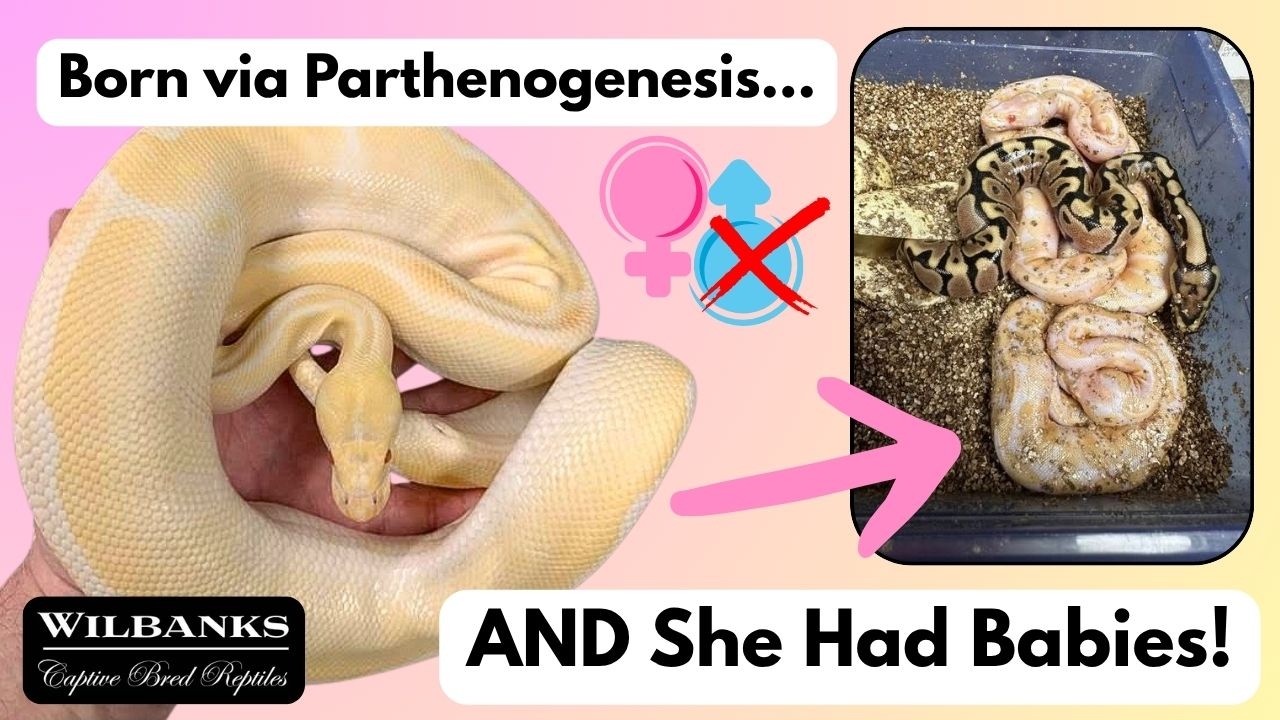
A Partho Snake Reproduced??? | Reptile Genetics Weekly Ep 162
Keywords
Summary
139 words
Critical Evaluation
Value of the Information & Strength of the Argument
The value lies in documenting an extremely rare reproductive event and providing a clear, experiential explanation of parthenogenesis in snakes. The argumentation is strong in that it combines first-hand observation, historical precedent, and logical deduction to support the conclusion. Jeff’s detailed account of the clutch, including the unexpected phenotypes and the use of process of elimination, builds a compelling case. The hosts also address common questions and acknowledge the limitations of current scientific understanding.
Scientific Rigor, Source Quality, Title Accuracy
The discussion is scientifically informed, referencing known cases in Burmese pythons, timber rattlesnakes, and whiptails, but lacks formal citation of literature. The primary sources are the personal experiences of the participants, supplemented by the company’s own research. The title matches the content well, as the central topic is the reproduced parthenogenetic snake. The show is presented in an informal yet professional manner, suitable for an audience already familiar with reptile genetics.
160 words
Title / Content Match
The title accurately reflects the main subject: the surprising reproduction of a parthenogenetic snake, which is discussed in detail with the guest who witnessed it.
Quality & Reliability
7/10
Information provided by a professional reptile geneticist with hands-on experience, yet the discussion is largely anecdotal and lacks formal citations. The content is honest about uncertainties and aligns with known scientific principles, but should be considered expert opinion rather than peer-reviewed data.
Key Moments
Markers derived by PSI from the transcript: the creator did not define chapters.
- Introduction and sample update: fast test and sex determination for green tree pythons.
- Business announcements: colubridfest, shed donor shoutout, and new international testing locations.
- Guest Jeff Byers talks about his early reptile breeding experiences and first sightings of parthenogenesis.
- Jeff details the surprising albino clown clutch from a fire hat clown mother, identifying parthenogenesis as the only explanation.
- Discussion on how parthenogenetic offspring are half-clones and the high failure rate of such animals.
- Jeff reveals that one of the parthenogenetic females laid eggs and produced healthy offspring, a rare second-generation event.
Cited Sources
- Rare Genetics Inc - Shed Submission for Research — Mentioned for submitting shed samples to support ongoing genetic research.
- Rare Genetics Inc - Genetic Testing Store — Referenced for ordering genetic tests.
- Rare Genetics Inc - Bulk Ordering — Promoted for discounted bulk genetic test orders.
- Wilbanks Captive Bred Reptiles — Guest Jeff Byers represents this facility; website to view their snakes.
Contribution & Novelties
The video contributes a documented case of a parthenogenetic snake that reproduced, an extremely rare occurrence that adds to the limited body of observations on reptilian parthenogenesis. It also clarifies, through expert testimony, the genetic mechanisms and practical detection methods for breeders. This case study serves as a reference for future research and hobbyist awareness.
Pour aller plus loin :
- Parthenogenesis — Overview of the reproductive mode and its variants.
- Automixis — Details on the specific mechanism (terminal fusion) often involved in parthenogenetic reproduction.
- Thelytoky — A type of parthenogenesis where females produce only daughters, relevant to the observed all-female clutches.
101 words
Radar Profile
The radar profile shows a high quantity of information but moderate technical depth, indicating that the content is substantive yet accessible to a general audience interested in reptile genetics. The balance suggests a good fit for hobbyist breeders and those seeking expert insights without heavy formal science.