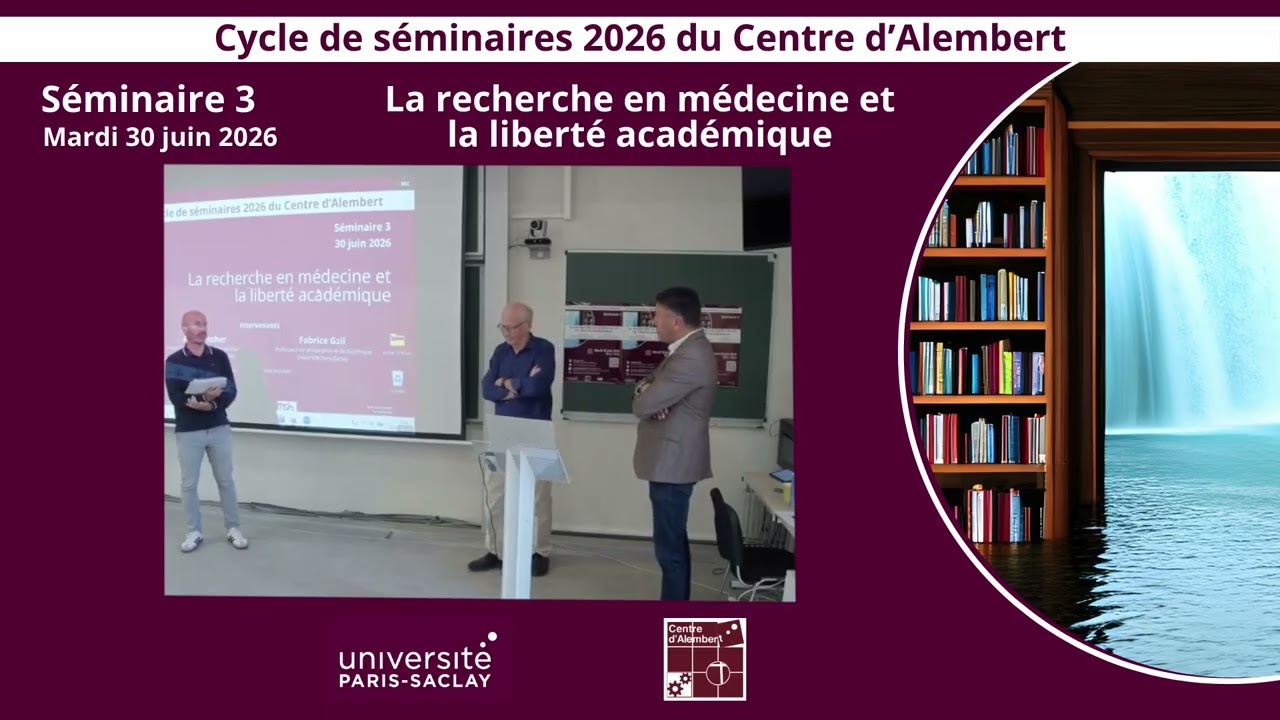
Questions du public à Alain Fischer et Fabrice Gzil
Questions from the audience to Alain Fischer and Fabrice Gzil
Keywords
Summary
163 words
Critical Evaluation
Value of the Information & Strength of the Argument
The value lies in the firsthand insights from two prominent scientists who have directly engaged with policy-making, particularly during COVID-19. Fischer’s experience on the vaccination council provides concrete examples of science–policy interaction. The argumentation is solid, grounded in specific instances such as the UK-US drug pricing deal and the budgetary scale of USAID versus the Gates Foundation. Both speakers weigh evidence and nuance their positions, acknowledging complexity and avoiding oversimplification. They explicitly distinguish ideology from economic motives, and caution against drawing direct parallels between US and French contexts. The discussion is balanced, presenting both the risks of privatization and the continued utility of existing infrastructure like PubMed.
Scientific Rigor, Source Quality, Title Accuracy
The speakers are highly credible: Alain Fischer is a professor at the Collège de France and immunologist; Fabrice Gzil is a researcher in ethics and public health. They cite specific figures and events without inflating claims, and they acknowledge uncertainty (e.g., ‘I don’t have a clear vision’ on sanctions). While no explicit sources are listed in the description, the mentions of USAID, Bill Gates, and glyphosate are verifiable facts. The title perfectly matches the format of a Q&A session. No professional comments were provided to analyze public reception.
210 words
Title / Content Match
The title accurately reflects the content: a Q&A session with experts on academic freedom and science policy.
Quality & Reliability
8/10
The discussion is led by two senior scientists with deep knowledge of science policy, providing nuanced and balanced analysis.
Key Moments
Markers derived by PSI from the transcript: the creator did not define chapters.
- Opening question about economic interests in health sciences and US politics.
- Discussion on Trump's pressure on pharma and the UK-US drug price deal.
- Question on alternative funding sources for researchers affected by cuts.
- Debate on sanctions for scientific misconduct and integrity mechanisms.
- Exchange about glyphosate, conflicts of interest, and fake news accusations.
- French environmental health agencies and political pressure on expertise.
- COVID-19 science advisory experience and the interface between science and policy.
- International data sharing, PubMed access, and corporate capture of health data.
Contribution & Novelties
The video contributes a nuanced perspective on how US science cuts affect global research, emphasizing that while some data loss occurs, key resources like PubMed remain accessible. It also highlights the growing privatization of research, particularly in AI, as a systemic issue beyond any single administration. The speakers’ hands-on experience with COVID-19 advisory councils offers a concrete model of science-policy collaboration.
Pour aller plus loin :
- Academic freedom — Core concept discussed throughout the seminar.
- Conflict of interest — Central to the glyphosate debate and scientific integrity.
- Science policy — The intersection of research and government decision-making explored here.
99 words
Radar Profile
The radar profile shows high scores in information quality and reliability, moderate in quantity and technical depth. This reflects a balanced expert discussion that prioritizes credibility and nuance over exhaustive detail or technical complexity.