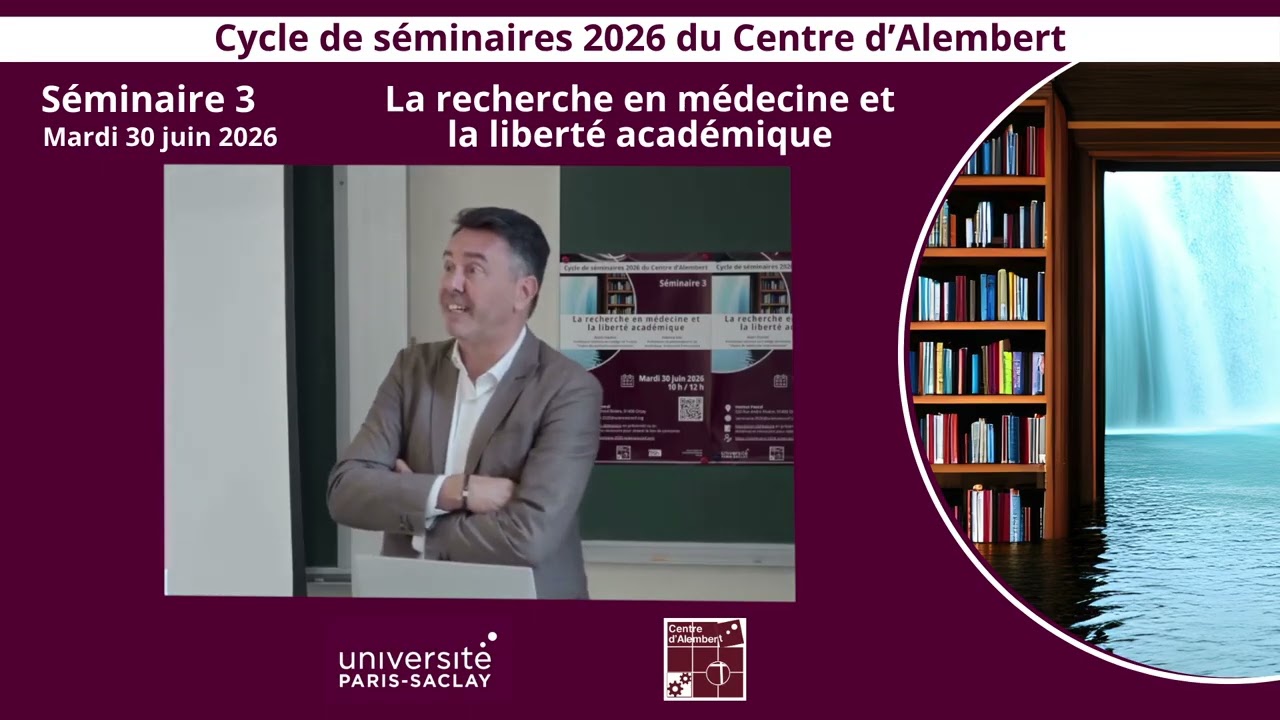
Fabrice Gzil, Professeur de philosophie et de bioéthique à la Faculté de médecine, Univ.Paris-Saclay
Fabrice Gzil, Professor of philosophy and bioethics at the Faculty of Medicine, Univ.Paris-Saclay
Keywords
Summary
209 words
Critical Evaluation
Value of the Information & Strength of the Argument
The primary value of this lecture lies in its exhaustive and precise documentation of the current events. Gzil provides concrete numbers (e.g., 750 fired at CDC, 700 at FDA, 1200 at NIH) and specific dates, which grounds the discussion in verifiable reality and gives significant weight to his claims. His argumentation is tightly structured, moving logically from factual observation to societal consequences and finally to a philosophical lens for understanding the underlying strategies. The use of concepts like ‘flooding the zone’ (flooder la zone) and the historical comparisons (McCarthyism, destruction of cultural heritage) effectively frame the severity and unprecedented scope of these actions, offering a compelling and coherent explanatory framework. While the analysis is explicitly philosophical rather than social-scientific, the logical progression and clarity of his argumentation make it a robust and persuasive exercise in critical analysis.
Scientific Rigor, Source Quality, Title Accuracy
The scientific rigor is high for a seminar lecture. Gzil bases his analysis on the observable public actions of the administration, naming specific individuals (Robert F. Kennedy Jr., Jay Bhattacharya, Elon Musk) and institutions with precision. He mentions the ‘Silencing Science Tracker’ as a documented resource monitoring over 400 attacks during Trump’s first term, though he does not cite academic papers or formal reports within the talk itself, relying instead on his own expertise and the public record. The quality of the sources presented appears reliable, though the lack of explicit citation of external documents limits the immediate traceability. The title, which identifies the speaker and his affiliation, is fully adequate to the content, accurately representing a scholarly intervention rather than a general news summary. The speaker’s hermeneutic approach is well-suited to the task of characterizing a complex political phenomenon.
292 words
Title / Content Match
The title accurately identifies the speaker, his academic position, and his institutional affiliation, which perfectly matches the content of this seminar lecture. It is descriptive and neutral.
Quality & Reliability
8/10
The lecture provides a detailed and structured account of the US administration's actions against scientific institutions, supported by specific figures, agency names, and dated events. The speaker demonstrates deep expertise as a philosopher and bioethicist, offering a clear analytical framework. However, the interpretive part is explicitly subjective, and the absence of external citations (papers, reports) limits the verifiability of some claims within the video itself.
Key Moments
Markers derived by PSI from the transcript: the creator did not define chapters.
- Introduction and context: the lecture follows Alain Fischer's presentation, recalling Claude Bernard and setting the stage for an analysis of the US administration's actions in health and medicine.
- Cataloging the facts: withdrawal from the WHO, dismantling of USAID, and mass layoffs across federal health agencies (CDC, FDA, NIH).
- The list of forbidden words: presentation of the ~120 terms banned from scientific publications and grant applications, including 'bias', 'equity', 'health disparities', and 'vulnerable populations'.
- Immediate consequences: interruption of research projects, suspension of global health aid, cancellation of scientific conferences, and the overall climate of chaos and anxiety among researchers.
- Philosophical interpretation: characterization of the regime using Steve Bannon's 'flood the zone' strategy, and comparisons with historical precedents like McCarthyism and dystopian scenarios.
- Escalation from previous terms: analysis of how these measures are an industrial-scale version of the more artisanal attacks seen during Trump's first mandate, targeting even biomedical and public health research.
- Conclusion: the speaker addresses the responsibilities and obligations for European and French institutions to respond to and potentially resist this political assault on science.
Cited Sources
- Silencing Science Tracker — Mentioned by the speaker as a resource that recorded more than 400 attacks on academic freedom during the first Trump administration, providing a baseline for comparison.
Contribution & Novelties
The lecture’s original contribution is its systematic philosophical framing of a rapidly evolving political crisis, connecting the specific actions (layoffs, censorship word lists) to a unifying strategic concept (‘flooding the zone’). It successfully bridges meticulous news documentation with ethical and political theory, urging a proactive European stance. This is not a novel empirical study but a high-level critical synthesis and interpretive essay.
Pour aller plus loin :
- Academic freedom — Core concept of the lecture, providing historical and legal context for the threats described.
- National Institutes of Health — The key biomedical research agency whose funding and personnel are being severely affected, as detailed by the speaker.
- Flood the zone — The political strategy theorized by Steve Bannon, directly cited by the speaker to interpret the administration’s shock-and-awe tactics.
129 words
Radar Profile
The radar profile shows a content with very high information quantity and quality, coupled with a moderate technical level, making it broadly accessible. The reliability score is also notably high, reflecting the speaker's evident expertise and structured presentation.