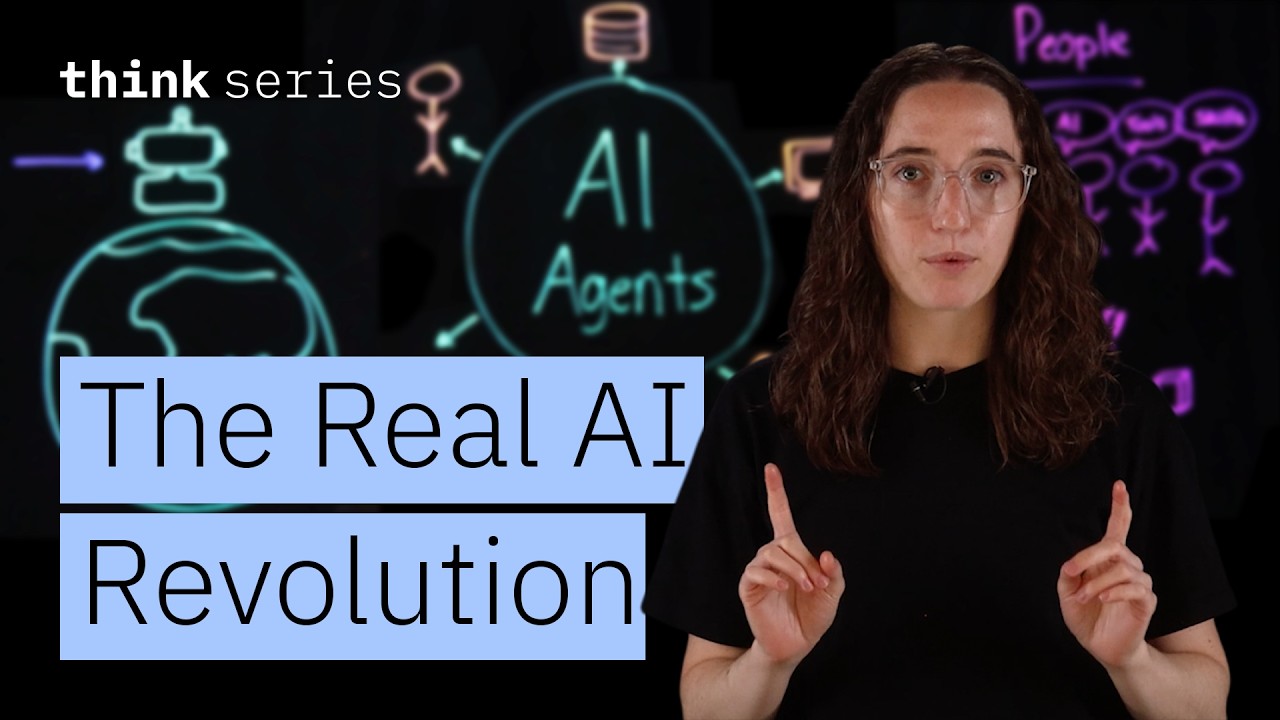
AI Agents Aren't the Revolution. They're the Catalyst!
Keywords
Summary
115 words
Critical Evaluation
Value of the Information & Strength of the Argument
The video provides a coherent and well-structured argument, offering valuable insights into the indirect effects of AI agents. Its value lies in synthesizing technical trends (MCP, A2A, API requirements) with societal impacts like digital literacy and democratization. The argumentation is solid, using logical progression from data modernization to system improvements to human empowerment. However, it remains conceptual without concrete case studies or empirical evidence, which limits its depth. The speaker’s expertise lends authority, but the lack of quantitative data or real-world examples reduces the argument’s persuasive power.
Scientific Rigor, Source Quality, Title Accuracy
The scientific rigor is moderate; the video references specific technologies (MCP, A2A) and industry concepts without formal citations. The sources in the description are IBM promotional links, which serve as references but are not independent or peer-reviewed. The title is highly accurate, reflecting the central thesis without exaggeration. The absence of critical engagement with potential drawbacks of agents (e.g., job displacement, security risks) is a notable gap, but the video stays consistent with its optimistic perspective.
178 words
Title / Content Match
The title perfectly captures the central thesis that AI agents are catalysts for broader ecosystem changes, not the revolution themselves.
Quality & Reliability
7/10
The video presents a well-argued expert perspective from IBM, grounded in industry knowledge but relying on anecdotal observations rather than empirical data. Its credibility is strong, though it lacks formal citations for claims.
Chapters
- Are AI Agents Really the Future?
- Why Agents Are a Catalyst, Not the Revolution
- How AI Adoption Is Modernizing the Data Layer
- Breaking Down Silos and Building Trustworthy Data Foundations
- Agents Expose System Weaknesses and Drive Standardization
- The New API Requirements: Predictable, Documented, Machine‑Readable
- Security, Governance, and Permission Boundaries Under Pressure
- From Operable Software to Connected Digital Ecosystems
- Interoperability by Default: MCP, A2A, and Cross‑System Workflows
- Democratizing Technology and Expertise Through Agents
- Digital Literacy and Accessible Learning at Scale
- The Shift Toward Outcome‑Based Thinking
- Why the Lasting Impact Isn’t Agents — It’s the Ecosystem They Improved
Cited Sources
- Learn more about AI Agents — IBM resource page on AI agents, likely containing detailed information on the topics discussed.
- Monthly newsletter for AI updates from IBM — Newsletter signup, not directly referenced but provided as supplementary resource.
Contribution & Novelties
The video contributes by reframing the AI agent discussion from a focus on the agents themselves to the broader ecosystem transformations they trigger. It highlights how agent adoption forces data modernization, system standardization, and interoperability as necessary preconditions, and extends to social impacts like digital literacy and outcome-based thinking. This perspective is valuable for understanding AI’s long-term value beyond immediate automation.
Pour aller plus loin :
- Data silos on Wikipedia — This concept is central to the video’s discussion of data fragmentation and the push for openness.
- API on Wikipedia — Understanding APIs is crucial to the video’s points about machine-readable systems and agent interoperability.
- Digital literacy on Wikipedia — The video’s claim about democratization of expertise aligns with this broader concept.
- Model Context Protocol (MCP) — Mentioned without URL; refer to official Anthropic documentation for details.
137 words
Radar Profile
The radar profile shows balanced scores across all dimensions, with quantity and quality of information slightly higher than technical depth. This suggests a well-rounded explanatory video that is accessible to a general tech audience while still offering substantive content. The reliability score aligns with a trusted source like IBM, reinforcing the overall credibility.