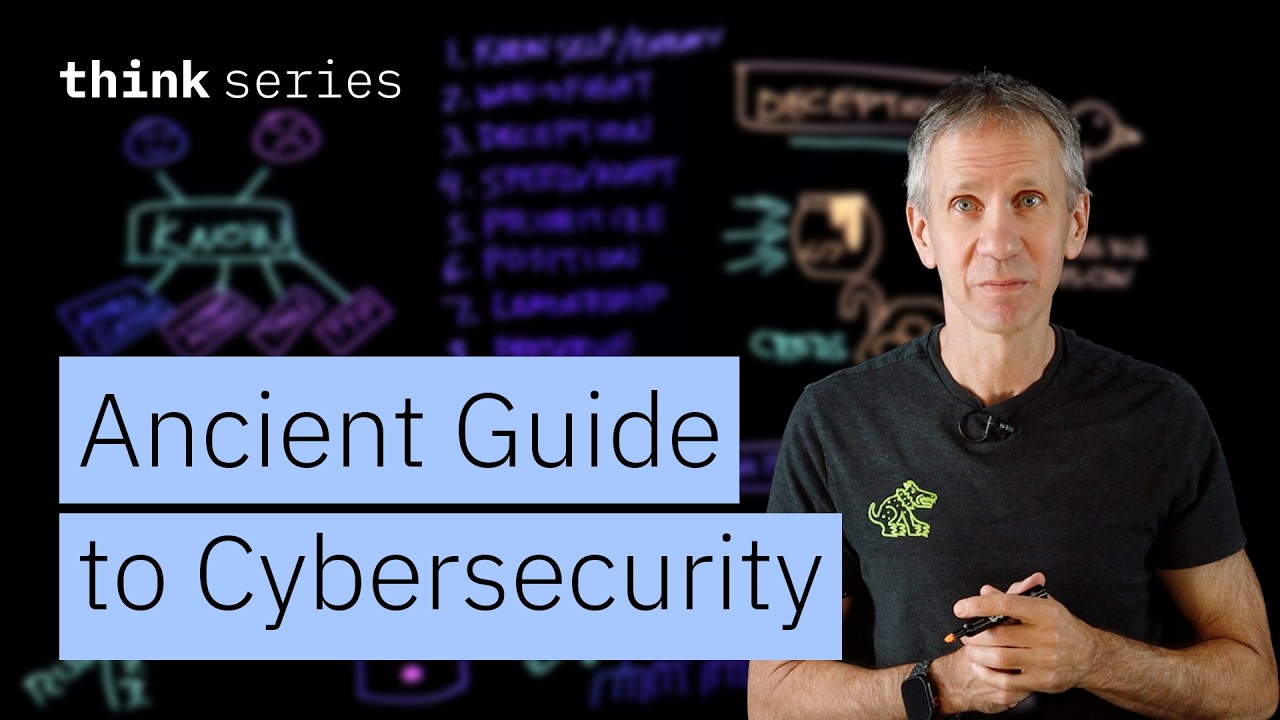
An Ancient Guide to Cybersecurity: 8 Lessons from The Art of War
Keywords
Summary
121 words
Critical Evaluation
Value of the Information & Strength of the Argument
The video provides valuable insights by translating abstract military principles into actionable cybersecurity strategies. The argumentation is coherent and well-structured, using analogies that are easy to grasp. However, the reasoning is largely anecdotal, relying on the authority of Sun Tzu rather than empirical evidence. The speaker’s expertise lends credibility, but the lack of specific data or case studies weakens the overall argument. The emphasis on prevention, deception, and leadership is sound, but the video could benefit from more concrete examples of how these principles are implemented in real-world scenarios.
Scientific Rigor, Source Quality, Title Accuracy
The video does not cite specific sources for its claims, but the concepts discussed are well-known in the cybersecurity field. The description includes links to IBM resources, which are relevant but not directly referenced in the video. The title accurately reflects the content, and the video stays on topic throughout. The speaker’s professional background adds credibility, but the lack of citations for specific statistics (e.g., mean time to identify) is a minor weakness. Overall, the information is reliable but not rigorously sourced.
186 words
Title / Content Match
The title accurately reflects the content, which indeed presents eight lessons from The Art of War applied to cybersecurity.
Quality & Reliability
8/10
The video presents well-established cybersecurity concepts (threat intelligence, honeypots, zero trust) with accurate explanations, but relies on anecdotal interpretations of Sun Tzu without citing specific sources or data beyond general references.
Key Moments
Markers derived by PSI from the transcript: the creator did not define chapters.
- Introduction to Sun Tzu and The Art of War
- Lesson 1: Know yourself and your enemy - threat intelligence
- Lesson 2: Win first, then go to war - prevention
- Lesson 3: All warfare is based on deception - honeypots and honey tokens
- Lesson 4: Speed is the essence of war - AI and response times
- Lesson 5: Subdue the enemy without fighting - prioritization and risk analysis
- Lesson 6: Control the terrain - monitoring and network segmentation
- Lesson 7: Leadership and Lesson 8: Preserve resources
Cited Sources
- Cost of a Data Breach Report 2026 — Referenced in the video description as a source for data breach statistics.
- IBM AI Newsletter — Mentioned in the description for AI updates, not directly cited in the video.
Concurring Sources
- Cost of a Data Breach Report 2026 — The video mentions statistics on mean time to identify and contain, which are likely from this report.
Contribution & Novelties
The video offers a unique perspective by applying ancient military wisdom to modern cybersecurity, providing a memorable framework for defense strategies. It synthesizes well-known concepts into a cohesive narrative, making it accessible to a broad audience.
Pour aller plus loin :
- The Art of War — The original text, providing context for the principles discussed.
- Threat intelligence — A key concept in cybersecurity, aligning with Sun Tzu’s ‘know your enemy’.
- Zero trust architecture — A modern security model that embodies the principle of ‘assume breach’.
85 words
Radar Profile
The radar profile shows high scores in information quality and reliability, with moderate scores in quantity and technical depth. This indicates a well-explained but not deeply technical video, suitable for a general audience interested in cybersecurity principles.