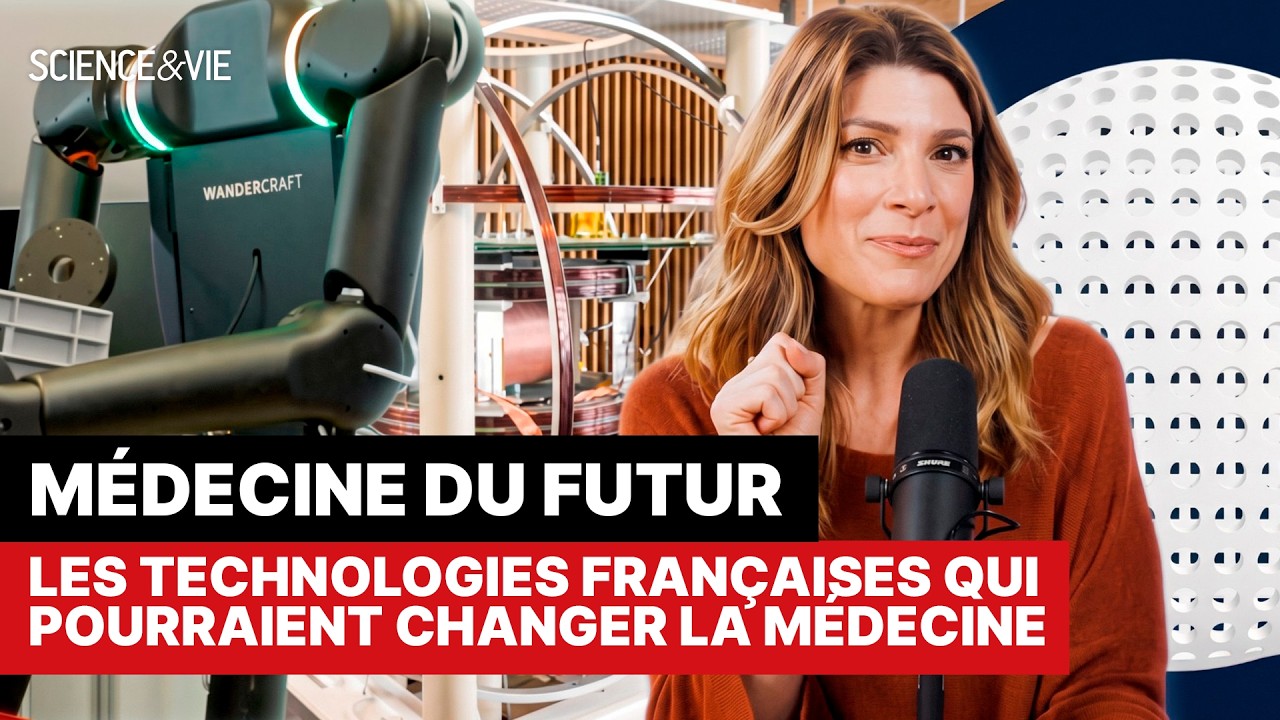
IRM, implants, exosquelettes : la France peut-elle révolutionner la médecine ?
MRI, implants, exoskeletons: can France revolutionize medicine?
Keywords
Summary
123 words
Critical Evaluation
Value of the Information & Strength of the Argument
The documentary provides valuable insights into the real-world application of scientific research, effectively illustrating the ‘death valley’ concept through concrete examples. The argumentation is structured and persuasive: each company’s story is used to demonstrate how fundamental research translates into tangible innovations. Technical explanations are clear and accessible, using analogies (e.g., the stadium analogy for MRI signal detection) to make complex concepts understandable. The inclusion of financial and sovereignty discussions adds depth, highlighting the non-technical barriers to innovation. However, the presentation is largely promotional, focusing on success stories without a critical examination of potential downsides or failures.
Scientific Rigor, Source Quality, Title Accuracy
The documentary maintains a high standard of scientific rigor in its explanations, aligning with the reputation of Science & Vie. The companies’ claims are presented without external corroboration, but they are consistent with publicly known information about these startups. The title accurately encapsulates the content, and the narrative is coherent. No external sources are cited in the description beyond social media links, limiting the ability to cross-verify claims. The comments analysis (not available) would normally provide additional perspectives, but none were provided.
193 words
Title / Content Match
The title accurately reflects the content, which systematically covers all three technologies mentioned and addresses the question of France's capacity to revolutionize medicine.
Quality & Reliability
8/10
Documentary produced by a recognized science magazine, featuring interviews with company founders and engineers. The content is informative, well-explained, and balanced, though it relies on self-reported claims from the companies themselves, with no independent verification or external sources cited.
Key Moments
Markers derived by PSI from the transcript: the creator did not define chapters.
- Introduction: from fundamental research to deep tech, examples like GPS and lithium batteries.
- Chipiron: compact low-field MRI, technical challenges and clinical trial plans.
- Lattice Medical: 3D-printed resorbable breast implant, inspired by Calais lace.
- Wandercraft: exoskeletons for spinal cord injury patients, using AI and math.
- Funding: Bpifrance, France 2030, venture capital, and the need for technological sovereignty.
Cited Sources
- Instagram de Science & Vie — Réseau social de la chaîne pour plus de contenu
- TikTok de Science & Vie — Réseau social de la chaîne pour plus de contenu
- Facebook de Science & Vie — Réseau social de la chaîne pour plus de contenu
- Boutique Science & Vie — Boutique de produits dérivés mentionnée dans la description
Contribution & Novelties
This documentary offers a rare inside look at the development trajectory of three French medical deep-tech startups, highlighting not only technical innovations but also the critical hurdles of funding and industrial scalability. Its novelty lies in humanizing the ‘deep tech’ concept through personal stories, such as the founder’s son inspiring the exoskeleton, and in presenting the ‘valley of death’ with concrete numbers (e.g., Chipiron’s €43M raise). It serves as an educational piece that bridges scientific research and commercial reality.
Pour aller plus loin :
- Low-field MRI — Pertinent pour comprendre les principes de l’IRM et les variations de champ.
- 3D printing of biomaterials — Contexte sur la fabrication additive utilisée pour l’implant MATTISSE.
- Powered exoskeleton — Référence sur les exosquelettes et leurs applications médicales.
- Valley of death (innovation) — Concept central de la vidéo sur les difficultés de financement entre recherche et marché.
143 words
Radar Profile
The radar profile shows high scores in information quality and reliability, moderate technical depth, and lower quantity due to a focused documentary format. The content excels in clarity and trustworthiness but is limited in breadth and critical analysis.