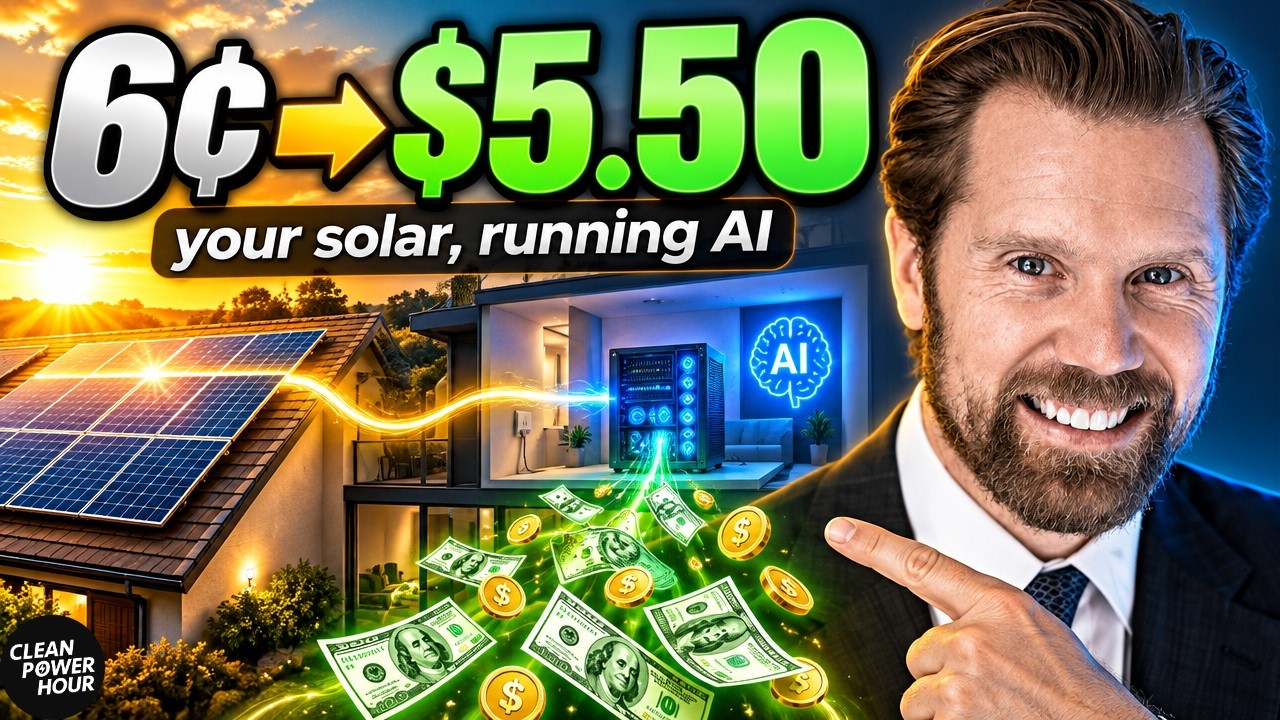
This Startup Pays You to Run AI on Your Solar Power
Keywords
Summary
181 words
Critical Evaluation
Value of the Information & Strength of the Argument
The video provides valuable insights into an emerging business model that leverages AI compute to monetize excess solar energy. The argumentation is based on first-hand experience and specific projections, but it lacks external validation. The host challenges some assumptions, leading to a balanced discussion. The value lies in exposing viewers to a concrete application of distributed energy and edge computing, with clear economic framing.
Scientific Rigor, Source Quality, Title Accuracy
The source is an interview with the company CEO, so it is inherently biased. However, the guest provides concrete numbers and examples, which adds some rigor. The title is appropriate and matches the content. No external sources are cited, but the description contains links to the company and the host’s materials. The discussion remains at an expert opinion level, with no peer-reviewed evidence presented.
143 words
Title / Content Match
The title accurately summarizes the video's content, which discusses a startup paying users to run AI on their solar power.
Quality & Reliability
6/10
The video presents claims from a company founder without independent verification, but includes specific details and examples that add credibility.
Chapters
Cited Sources
- Lektra - Powering Intelligence — Company website mentioned as the official source for Lektra's services and contact.
- Karl Andersen on LinkedIn — Guest's LinkedIn profile, provided for further connection and verification of credentials.
Concurring Sources
- Lektra - Powering Intelligence — The company's official website aligns with the claims made in the interview about their business model.
External References
Contribution & Novelties
The video proposes a distinctive approach to solving grid constraints by using distributed energy resources to power edge compute, offering energy hosts a new revenue stream. This could enable more decentralized energy systems. The novelty lies in the 80/20 revenue split and the integration of AI compute with existing solar infrastructure.
Pour aller plus loin :
- Edge computing — Core concept of placing compute closer to the data source.
- Distributed generation — Context for solar and batteries on site.
- Behind-the-meter — Energy generation on the customer side of the meter.
- Data center — General context for the industry.
98 words
Radar Profile
The radar profile shows high scores for quantity and technical level, but lower for reliability, indicating an informative but potentially biased source. The balance suggests the video is useful for understanding a new concept, but should be weighed against independent verification.