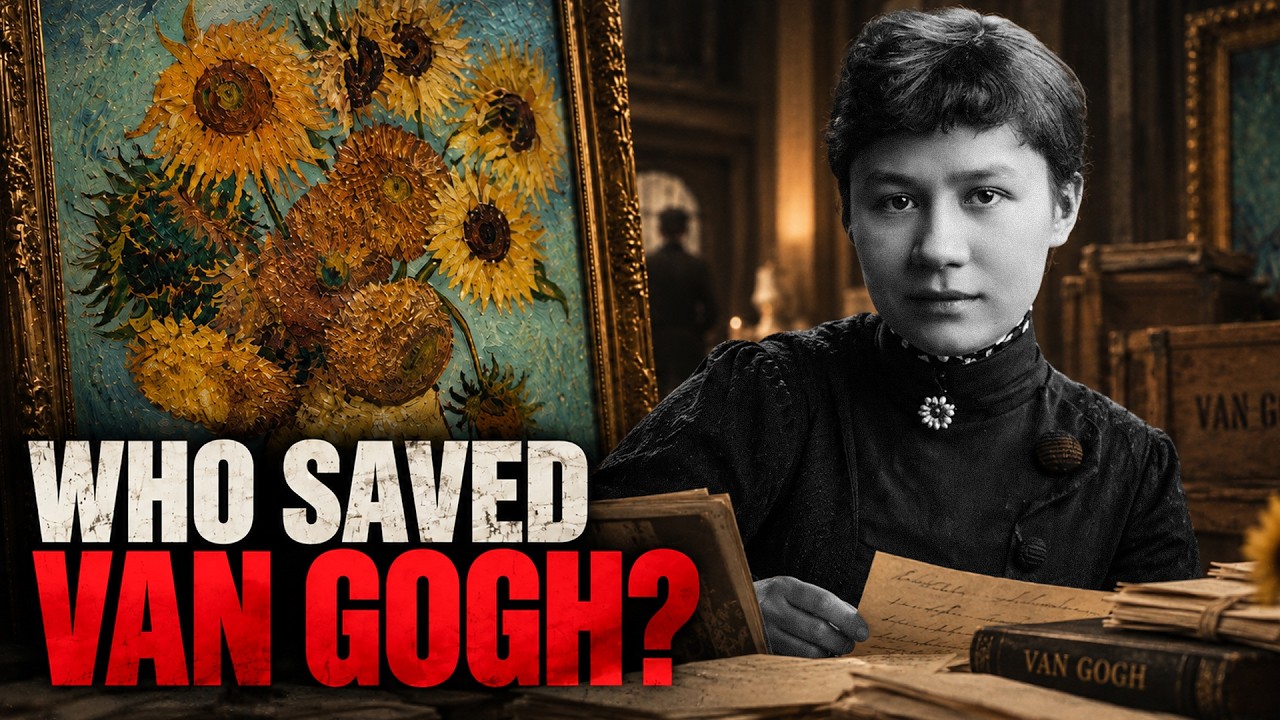
Untold Story: The Woman Who Saved Van Gogh’s Legacy | Art History | Van Gogh | History Documentary
Keywords
Summary
179 words
Critical Evaluation
Value of the Information & Strength of the Argument
The documentary offers substantial value by shedding light on a frequently overlooked figure in art history. It convincingly argues that Johanna Bonger was the linchpin in Van Gogh’s rise to fame, using a mixture of historical records, expert interviews, and excerpts from letters to build a robust case. The argumentation is persuasive, tracing each step of her promotional strategy—from exhibitions to strategic sales—and explaining how her efforts gradually shifted public opinion. The inclusion of contemporary expert commentary adds depth, and the narrative is structured logically, moving from her inheritance to her ultimate success. The documentary does not shy away from complexities, such as the initial lack of buyers and the difficult relationship between Vincent and his family, but it maintains a clear focus on Johanna’s agency and determination.
Scientific Rigor, Source Quality, Title Accuracy
The documentary demonstrates scientific rigor by grounding its claims in historical correspondence and testimonies. Experts interviewed include art historians familiar with the Van Gogh archive, lending credibility to the narrative. However, the film does not provide direct citations or URLs to primary sources, which limits the ability to verify specific facts independently. The title is fully aligned with the content, as it directly addresses the woman who saved Van Gogh’s legacy. No public comments were analyzed, as none were provided; therefore, no trend assessment is included.
229 words
Title / Content Match
The title accurately reflects the content, which centers on Johanna Bonger's efforts to secure Van Gogh's legacy, as detailed throughout the documentary.
Quality & Reliability
8/10
The documentary is well-researched, featuring insights from art historians and relying on primary sources such as Van Gogh's letters. It presents a coherent narrative about Johanna Bonger's pivotal role, with no apparent factual errors. However, the absence of direct citations or external links in the description limits verifiability.
Key Moments
Markers derived by PSI from the transcript: the creator did not define chapters.
- Introduction: Theo's death and Johanna inheriting Vincent's works
- Johanna discovers the letters and decides to publish them
- Early sales to collectors like Octave Mirbeau and Emil Schuffenecker
- Helena Kröller-Müller's massive acquisition of Van Gogh's works
- The Sunflowers sale to the National Gallery, London in 1924
- Long-lost painting revealed in 2013 and reflection on Van Gogh's enduring legacy
Concurring Sources
- Johanna van Gogh-Bonger — Corroborates the central role she played in promoting Van Gogh's works.
- Vincent van Gogh — Supports the broader historical narrative and factual details about Van Gogh's life.
Contribution & Novelties
The documentary contributes to art history by foregrounding Johanna Bonger’s instrumental role, which is often reduced to a footnote. It provides a comprehensive account of her strategies—publication of letters, loans, and sales—that were crucial to Van Gogh’s posthumous success. The film also interweaves the broader context of the art market and the eventual fate of the paintings, including losses during WWII and recent discoveries.
Pour aller plus loin :
- Johanna van Gogh-Bonger — Biographical entry detailing her life and contributions.
- Vincent van Gogh — Overview of the artist and his legacy.
- Sunflowers (Van Gogh series) — Information on the iconic series and its history.
- Van Gogh Museum — Official museum site with resources on the artist and his family.
119 words
Radar Profile
The perceptual profile indicates a rich information load with high quantity and quality, a moderate technical level appropriate for a general audience, and overall good reliability, suggesting an informative and trustworthy documentary.