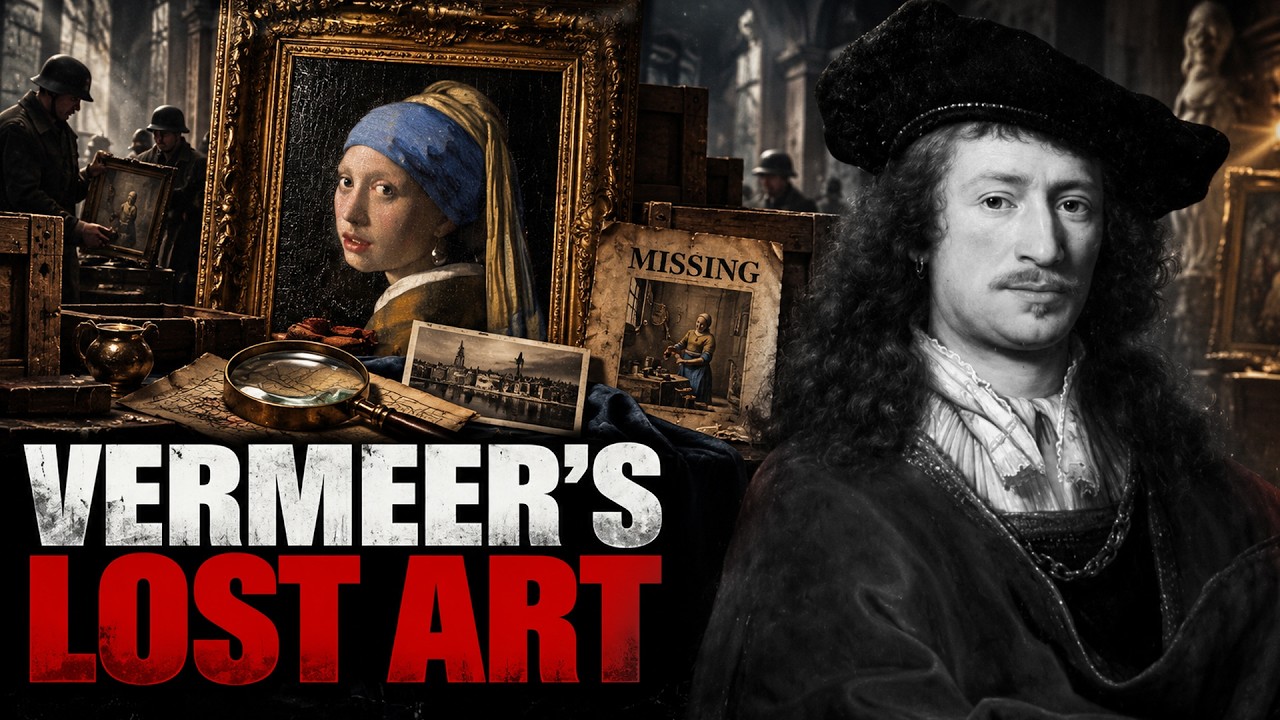
Who Stole Vermeer’s Masterpieces During WWII? | The Greatest Art Theft Mystery | Vermeer | History
Keywords
Summary
136 words
Critical Evaluation
Value of the Information & Strength of the Argument
The documentary provides substantial value by consolidating historical accounts of Vermeer’s legacy, the impact of forgery, and notable art thefts. It effectively uses expert interviews to explain the psychological and technical aspects of the forgeries, arguing that scholars’ desire to fill gaps in Vermeer’s oeuvre made them vulnerable to deception. The narrative is compelling and logically structured, but the argumentation relies heavily on dramatizations and reenactments, which may sometimes blur the line between fact and speculation. The inclusion of technical pigment analysis and x-ray evidence strengthens the case for authenticity debates, but the lack of explicit citations undermines the strength of the argumentation, leaving some claims unverifiable.
Scientific Rigor, Source Quality, Title Accuracy
The documentary demonstrates moderate scientific rigor: it references historical records, mentions specific dealers, museums, and art historians, but does not provide direct citations or links. The credibility is enhanced by the inclusion of expert voices and forensic analysis, yet the reliance on scripted dialogues and lack of source transparency weaken its scholarly reliability. The title focuses on WWII thefts, but the content is broader, covering early forgeries and later heists, which creates a slight mismatch. However, this does not significantly detract from the overall informational quality. If viewer comments were available, they could reveal public reception, but none were provided in the input.
225 words
Title / Content Match
The title emphasizes WWII thefts, but the documentary also explores broader art theft history and forgeries, making the focus broader than the title suggests.
Quality & Reliability
7/10
The documentary combines historical records, expert interviews, and dramatizations; while informative, it lacks explicit citations and verifiable sources, and some scenes are reenactments that may affect factual precision.