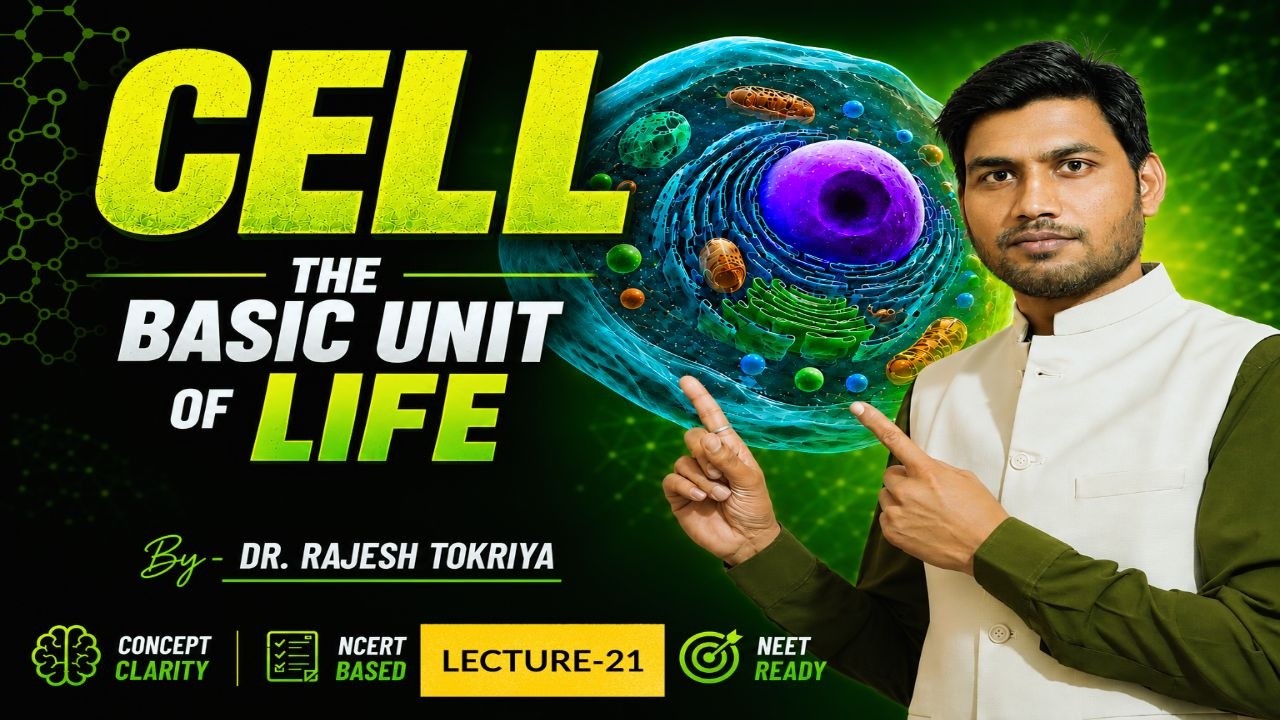
L-21 Ribosome Structure, Composition, Types & Functions
Keywords
Summary
167 words
Critical Evaluation
Value of the Information & Strength of the Argument
The educational value is strong for its target audience of biology students, as it offers a systematic, step-by-step explanation of ribosome biology, simplifying complex concepts into manageable units. The argumentation is logically structured, moving from basic definitions to detailed molecular composition and functional aspects, with repetitive reinforcement of key points to aid memorization. However, the arguments are primarily descriptive and lack critical evaluation or comparison with alternative hypotheses, which limits its scientific depth. The reliance on established curricular facts without referencing experimental evidence or recent research reduces its value for advanced learners, but it serves well as a foundational tutorial.
Scientific Rigor, Source Quality, Title Accuracy
The scientific rigor is moderate. The content is factually aligned with standard textbooks and covers established knowledge, but the presenter does not cite specific studies or provide references to original publications. The description includes no links, and the video relies on verbal transmission of information, with no visual verification of claims. The title accurately reflects the content, and no discrepancies are evident. The lecture avoids discussing contentious or speculative topics, sticking to widely accepted facts, which enhances its reliability for educational purposes. However, the lack of formal citations and the absence of any mention of controversies or recent advances in ribosome research limit its scientific completeness.
221 words
Title / Content Match
The title precisely matches the content, which systematically covers ribosome structure, composition, types, and functions, along with additional details such as discovery and associated concepts.
Quality & Reliability
7/10
The lecture provides a comprehensive and accurate overview of ribosome biology based on standard textbook knowledge, particularly suited for exam preparation. However, it does not cite primary research papers or recent advancements, and relies heavily on established curricular content.
Key Moments
Markers derived by PSI from the transcript: the creator did not define chapters.
- Introduction and recapitulation of the endomembrane system, connecting ribosomes to the nucleus and ER.
- Discovery of ribosomes by George Palade; mention of Palade particles and alternative names like RNP particles.
- Occurrence of ribosomes in prokaryotic and eukaryotic cells; free and bound forms; presence in mitochondria and chloroplasts.
- Composition of ribosomes: rRNA and ribosomal proteins; detailed types of rRNA in prokaryotes and eukaryotes.
- Ribozyme activity of rRNA; the role of rRNA in catalyzing peptide bond formation.
- Structure of ribosomes: large and small subunits, association and dissociation; summary of 70S and 80S types.
Contribution & Novelties
The lecture offers a comprehensive pedagogical presentation of ribosome biology, tailored for students preparing for national exams. It synthesizes standard information into a logical sequence, emphasizing mnemonics and clear distinctions between prokaryotic and eukaryotic ribosomes. While it does not introduce original research, it provides a valuable educational resource that consolidates scattered facts into a cohesive narrative.
Pour aller plus loin :
- Ribosome - Wikipedia — Overview of ribosome structure, function, and types, extending the basic concepts covered in the video.
- RNA world - Wikipedia — Links the ribozyme concept discussed in the lecture to the broader hypothesis of RNA as an early catalytic molecule.
- George Emil Palade - Wikipedia — Background on the scientist who discovered ribosomes, providing historical context beyond the mention in the lecture.
126 words
Radar Profile
The scores indicate a balanced profile with strong emphasis on quantity of information (8) and moderate scores on quality and technical depth (7 and 6). The reliability score is slightly lower (6), reflecting the lack of original citations but consistent with an educational tutorial.