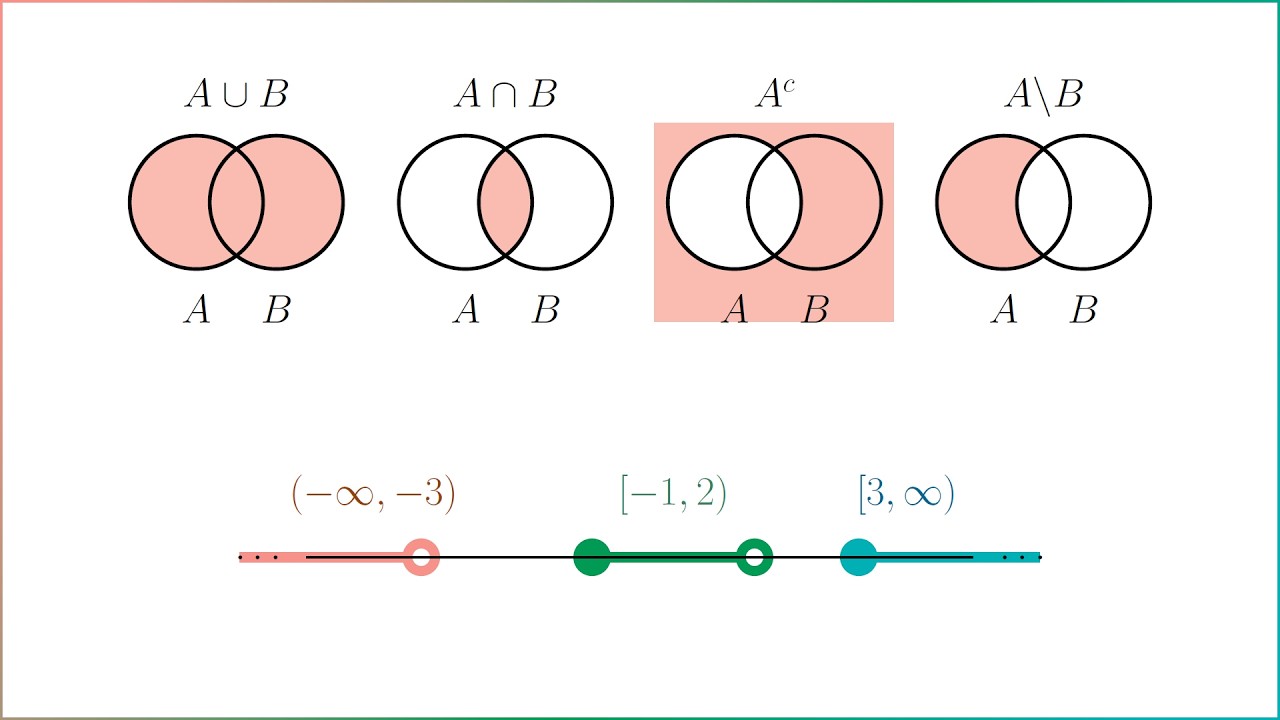
Introduction to University Mathematics (2026), Lecture 1. First Year Student Lecture
Keywords
Summary
154 words
Critical Evaluation
Value of the Information & Strength of the Argument
The lecture provides a clear, systematic introduction to set theory, a cornerstone of mathematics. The information is highly valuable for students beginning university studies, as it establishes precise definitions and notation that are essential for further coursework. The argumentation is rigorous: each concept is introduced with definitions, examples, and warnings about common misconceptions. The use of illustrative examples, including confusing cases with sets of sets, strengthens understanding. The reasoning is logical and builds upon previously introduced ideas, making the material accessible while maintaining mathematical rigor.
Scientific Rigor, Source Quality, Title Accuracy
The scientific rigor of the lecture is high; it adheres to standard mathematical definitions and avoids imprecision. The lecturer takes care to explain nuances, such as the difference between an element and a subset, and addresses potential confusions. Since the topic is well-established, there are no controversial claims. The quality of sources is not directly applicable, as the lecture does not cite external works, but it is based on universally accepted mathematical knowledge. The title accurately reflects the content: it is an introductory lecture on sets for first-year university students. The inclusion of course materials in the description further enhances the resource’s credibility and utility.
205 words
Title / Content Match
The title accurately describes the video: it is the first lecture of an introductory university mathematics course, and the content covers fundamental set theory, a typical starting point for first-year students.
Quality & Reliability
9/10
The lecture is delivered by a professor at Oxford University, a leading institution. The content is standard introductory set theory, presented with clarity and rigor. No claims are made beyond established mathematics.
Key Moments
Markers derived by PSI from the transcript: the creator did not define chapters.
Cited Sources
- Course materials — Official course page for the Introduction to University Mathematics course, containing materials referenced in the lecture.
- First lecture in the series — Link to the previous lecture in this introductory series.
- Student Lectures playlist — Playlist of all student lectures by Oxford Mathematics.
Concurring Sources
- Set (Wolfram MathWorld) — Concise definition and properties of sets.
- Set Theory (Encyclopaedia Britannica) — Overview of set theory as a branch of mathematics.
Contribution & Novelties
This lecture does not present new research but provides a clear pedagogical exposition of set theory, emphasizing notation and common difficulties. It is valuable for students transitioning to university-level mathematics.
Pour aller plus loin :
- Set (mathematics) — Comprehensive reference on sets.
- Empty set — Details on the empty set and its role.
- Subset — Explanation of subsets and proper subsets.
- Set theory — Overview of set theory from Stanford Encyclopedia.
71 words
Radar Profile
The radar profile shows high scores in information quantity, quality, and reliability, reflecting the lecture's comprehensive coverage and authoritative source. The technical level is slightly lower, consistent with an introductory course. Overall, the video excels as an educational resource.