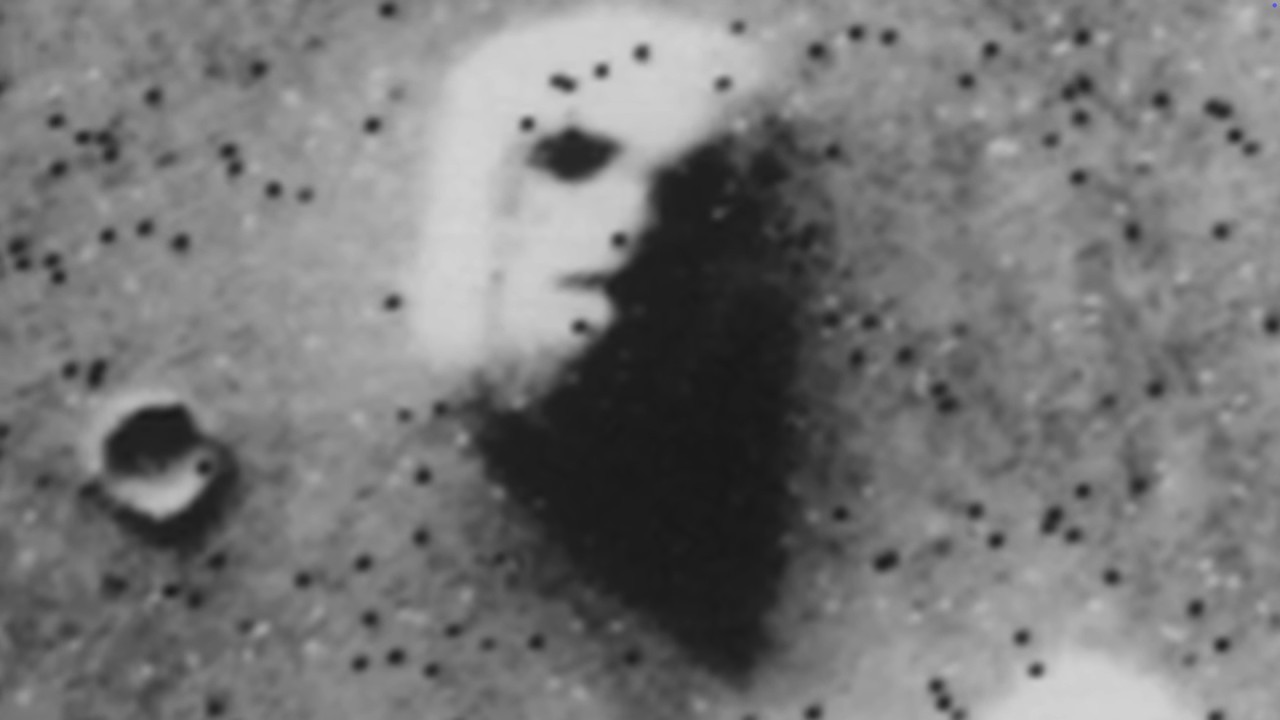
The Optical Illusion That Hijacked a Mars Mission
Keywords
Summary
157 words
Critical Evaluation
Value of the Information & Strength of the Argument
The value of the information lies in its clear, engaging synthesis of the scientific history and the human psychological response (pareidolia). The argumentation solidly presents the scientific consensus, progressively dismantling the artifice theory by citing improved imaging from MGS and MRO. It effectively contrasts these evidence-based conclusions with the unverified, sensational claims of ancient astronauts, showcasing the strength of empirical science over speculation. The documentary successfully distinguishes between the natural geological processes forming the Cydonian mesas and the misperception that created the ‘face’, anchoring its argument in observational evidence.
Scientific Rigor, Source Quality, Title Accuracy
The scientific rigor is high for a mainstream documentary; it accurately describes the Viking 1, MGS, and MRO missions and the geography of Cydonia. However, the absence of specific primary source citations or links in the video description weakens its scholarly depth. The title perfectly encapsulates the content by dramatizing the phenomenon’s impact on scientific missions, but the analytical body remains faithful to the core facts. The documentary’s suitable balance between exploring the phenomenon and debunking it ensures a reliable, trustworthy narrative.
186 words
Title / Content Match
The title accurately reflects the core narrative: the face-shaped formation captured public imagination and drew attention away from the scientific mission focus, effectively 'hijacking' the media narrative.
Quality & Reliability
8/10
The documentary presents well-established scientific facts regarding the 'Face on Mars', explaining the pareidolia phenomenon and its debunking by subsequent NASA missions like Mars Global Surveyor and MRO. The narrative is balanced and critically examines conspiracy theories, though it lacks explicit citations to primary scientific papers or official NASA analysis links in its description.
Key Moments
Markers derived by PSI from the transcript: the creator did not define chapters.
- Introduction to the 'Face on Mars' mystery
- Discovery of the face by Viking 1 orbiter in 1976
- Rise of conspiracy theories and cultural impact
- Geological analysis of the Cydonia region
- Mars Global Surveyor's high-resolution images debunk the face
- Mars Reconnaissance Orbiter and later astrobiological findings
Cited Sources
- NASA Viking 1 Orbiter — Captured the original 1976 image of the 'Face on Mars'.
- NASA Mars Global Surveyor — Provided high-resolution images in 1998 that showed the face as a natural mesa.
- NASA Mars Reconnaissance Orbiter — Provided further detailed imagery and discovered evidence of water ice.
- Chariots of the Gods by Erich von Däniken — Popularized ancient astronaut theories that fueled the alien construction hypothesis.
Concurring Sources
- NASA Mars Global Surveyor and MRO high-resolution imagery — Corroborate that the face is a natural geological formation (mesa) due to erosion and shadow effects.
Dissenting Sources
- Ancient astronaut theories popularized by Erich von Däniken's books — Propose an artificial humanoid construction, which contradicts the scientific evidence of natural erosion.
Contribution & Novelties
The video’s novel contribution is its coherent interdisciplinary narrative connecting planetary geology, cognitive psychology, and science communication, highlighting how a single blurred image can sway public imagination. It clearly demonstrates the evolution of truth over time as technology improves.
Pour aller plus loin :
- Pareidolia — Le phénomène psychologique central au cœur de l’illusion.
- Cydonia (Mars) — La région géographique où se trouve la structure.
- Viking 1 — La première mission qui a capturé l’image emblématique.
- Mars Global Surveyor — La mission qui a fourni les images haute résolution qui ont démystifié le visage.
94 words
Radar Profile
The radar profile shows a well-balanced production with high scores across all dimensions. Slightly lower technical depth compared to information quality and reliability, indicating that while the content is accurate and reliable, it does not delve into highly specialized technical jargon, making it accessible while remaining scientifically grounded.