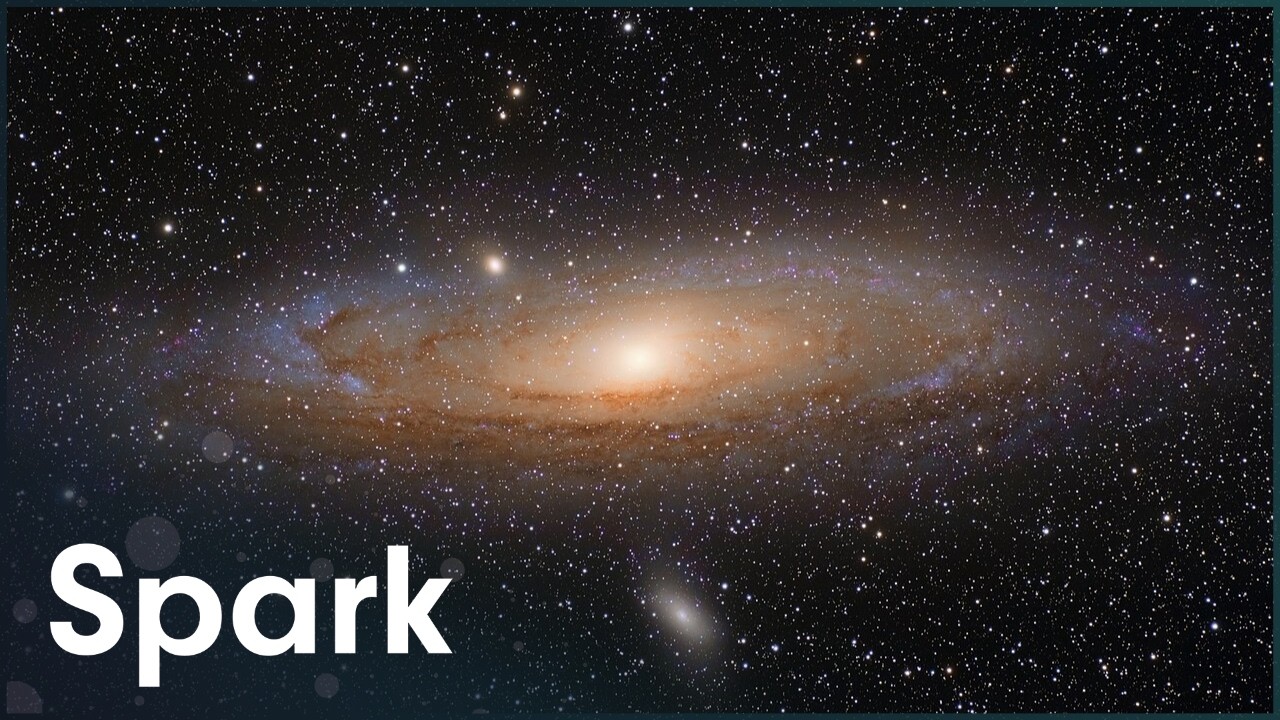
The Cosmic Tug-Of-War Scientists Can't Agree On
Keywords
Summary
182 words
Critical Evaluation
Value of the Information & Strength of the Argument
The documentary provides a high-value synthesis of modern cosmology, effectively connecting theoretical predictions with observational evidence. It argues that general relativity has been repeatedly confirmed, from Mercury’s perihelion precession to gravitational wave detections, while quantum mechanics is essential for understanding the microcosm. The central argument is that these two pillars of physics are incompatible, and that resolving this conflict is crucial for understanding the universe’s origin and fate. The narrative is supported by historical anecdotes and expert interviews, though it occasionally simplifies complex ideas. The value lies in its clear explanation of how scientific progress is driven by both theory and experiment, and in its honest portrayal of what remains unknown, such as dark matter and dark energy. The argumentation is logical and well-paced, building from historical foundations to contemporary research frontiers.
Scientific Rigor, Source Quality, Title Accuracy
The scientific content is rigorous, drawing on well-established theories and experiments, but the documentary does not cite specific papers or provide direct references, which limits its traceability. Sources are implied through interviews with scientists and historical accounts, but no explicit citations are given. The title ‘The Cosmic Tug-Of-War Scientists Can’t Agree On’ is somewhat misleading, as the video is more of a historical overview than a focused debate; however, it does touch on unresolved issues like dark matter and quantum gravity. The title’s sensationalism is mild and does not significantly detract from the content’s educational value.
243 words
Title / Content Match
The title suggests a debate or unresolved conflict among scientists, while the content is a broad historical overview of cosmology; the title is somewhat sensationalized but still related to the theme of unresolved mysteries.
Quality & Reliability
8/10
The documentary relies on established physics and interviews with credible scientists, but it lacks specific citations, timestamps, or direct references to primary literature, which slightly reduces its verifiability.
Key Moments
Markers derived by PSI from the transcript: the creator did not define chapters.
- Introduction to the discovery of accelerating universe expansion by two teams.
- Newton's law of gravitation and its success in predicting Neptune.
- Mercury's perihelion precession and the failure of Newtonian gravity.
- Einstein's general relativity and the 1919 solar eclipse confirmation.
- Quantum physics and Bohr's atomic model explaining spectral lines.
- Discovery of the cosmic microwave background and the Big Bang evidence.
- Black holes, Event Horizon Telescope, and imaging M87's shadow.
- Gravitational waves detection by LIGO and multi-messenger astronomy.
Contribution & Novelties
The documentary offers a comprehensive timeline of cosmological discoveries, emphasizing the interplay between theory and observation. It highlights the 1919 eclipse expedition, the COBE mission’s precise measurement of the CMB, and the LIGO detection of gravitational waves as pivotal moments. The film also underscores the shift to multi-messenger astronomy and the unresolved nature of dark matter and dark energy. Its original contribution lies in making these complex topics accessible while stressing the limits of current knowledge.
Pour aller plus loin :
- General relativity — Foundational theory explained.
- Cosmic microwave background — Key evidence for the Big Bang.
- Gravitational wave — Detection and significance.
- Dark matter — Ongoing mystery in cosmology.
110 words
Radar Profile
The radar shows high scores in information quantity and quality, with a slightly lower technical level due to the documentary's accessible approach. Reliability is strong, reflecting the well-established science presented.