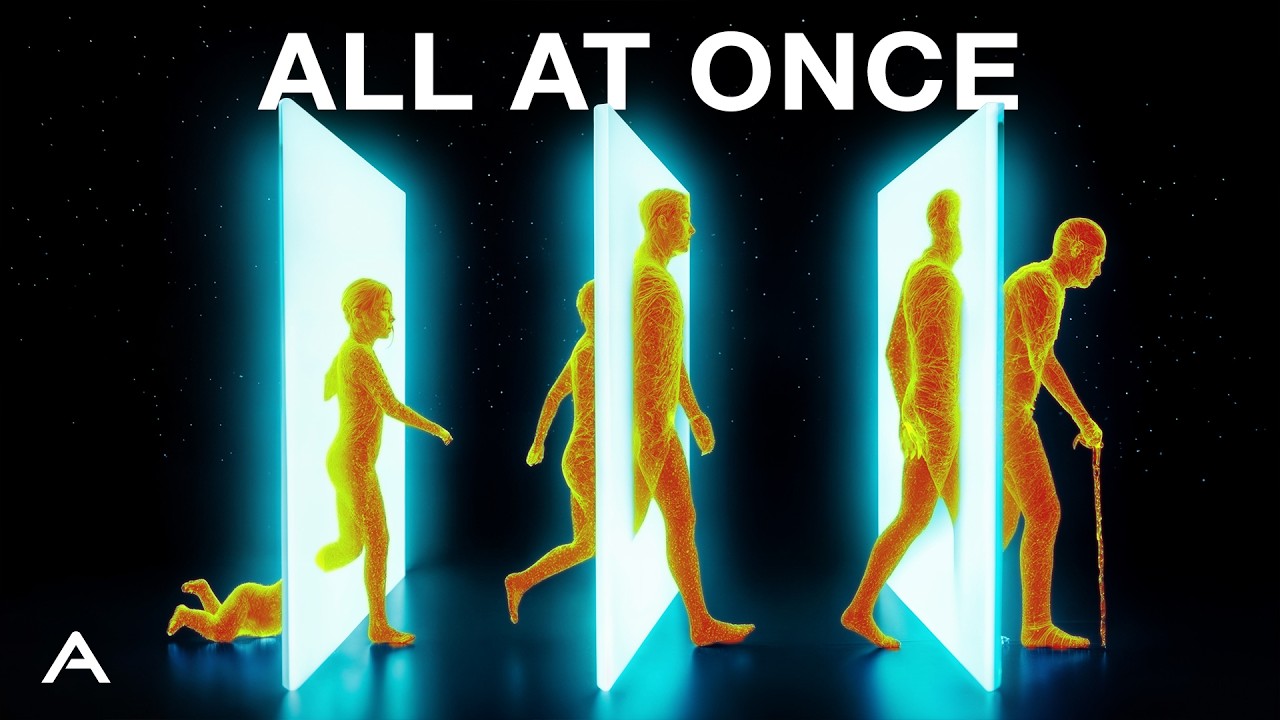
The theory of time that proves your past self still exists
Keywords
Summary
192 words
Critical Evaluation
Value of the Information & Strength of the Argument
The video excels in making complex physics and philosophy accessible without dumbing them down. It presents a coherent argument, building from empirical evidence (Hafele-Keating, GPS) to philosophical reasoning (Putnam). The use of analogies (bread loaf, book) effectively illustrates abstract concepts. The inclusion of the psychological mechanism (Varki & Brower) adds depth by explaining why we perceive time as linear. However, the video sometimes conflates scientific theory with metaphysical interpretation, presenting eternalism as more certain than philosophers might allow. The argumentation is solid but could benefit from acknowledging alternative interpretations (e.g., presentism, growing block).
Scientific Rigor, Source Quality, Title Accuracy
The video demonstrates strong scientific rigor by referencing real experiments and theories, and it correctly attributes key ideas to Einstein and Putnam. The description includes only a sponsor link, so no direct external sources are provided, but the narrative itself cites verifiable works. The title is engaging and accurate, though it overstates the theory’s conclusiveness. The chapter structure helps navigation. Public comments were not provided, so no analysis of audience perceptions is possible.
181 words
Title / Content Match
The title is catchy and encapsulates the video's central thesis, though it may overstate the conclusiveness of the theory by implying a definitive proof.
Quality & Reliability
8/10
The video presents a well-researched overview of the block universe theory, grounding it in Einstein's relativity and citing specific experiments (Hafele-Keating) and philosophers (Hilary Putnam). While it simplifies complex topics, the core scientific concepts are accurately presented. The video acknowledges the theory's implications for free will but does not misrepresent the scientific consensus. However, it might overstate the certainty of the block universe as a proven fact.
Chapters
External References
Contribution & Novelties
The video synthesizes existing scientific and philosophical ideas into a coherent narrative, offering a unique perspective on the emotional and existential implications of eternalism. It effectively connects the physics of special relativity to the philosophy of time and human perception, providing a compelling argument for why the block universe is not just a theoretical curiosity but a framework that could reshape our understanding of loss and permanence.
Pour aller plus loin :
- Eternalism (philosophy of time) — Foundational concept discussed in the video.
- Hafele–Keating experiment — Empirical evidence for time dilation.
- Special relativity — Einstein’s 1905 theory that underlies the relativity of simultaneity.
103 words
Radar Profile
The radar profile shows high scores in information quantity and reliability, moderately high quality, and a lower technical level, indicating a well-crafted educational piece that is both informative and scientifically sound, while keeping complexity accessible to a general audience.