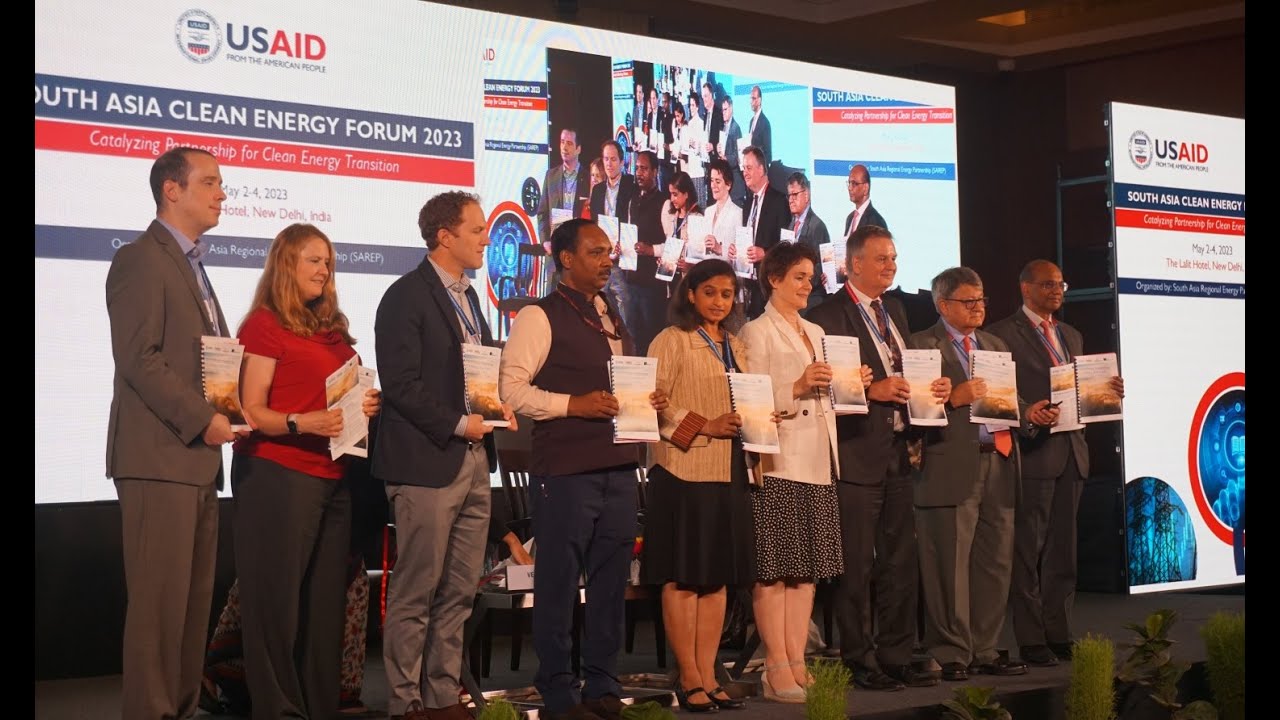
South Asia Clean Energy Forum (SACEF) 2023 Opening Session
Keywords
Summary
218 words
Critical Evaluation
Value of the Information & Strength of the Argument
The video provides valuable insights into the policy landscape and collaborative initiatives for clean energy in South Asia. The speakers present a coherent argument for regional cooperation, backed by concrete examples of national commitments and challenges. Dr. Mathur’s specific observations about the energy needs of different countries and his suggestions for scalable solutions (e.g., floating solar, mini-grids) add practical value. The argumentation is largely persuasive, but it remains at a high level without deep technical elaboration. The emphasis on partnership and institutional frameworks (like SAGE) is well-structured, but the video is more of a diplomatic record than a critical analysis.
Scientific Rigor, Source Quality, Title Accuracy
The video is produced by an official USAID program, so the information is credible and aligns with established policy documents. The speakers cite specific initiatives (e.g., U.S.-India 2030 Agenda, SAGE, ISA) and quantitative targets (e.g., India’s 50% non-fossil capacity by 2030). However, no external sources or data are referenced within the dialogue, and the video does not include citations or links in the description. The title accurately represents the content as the forum’s opening session. No public comments were provided for analysis, so community reception cannot be assessed.
203 words
Title / Content Match
The title accurately reflects the content: the video is the opening session of the SACEF 2023 forum, with speeches and program introductions.
Quality & Reliability
7/10
The video is an official recording of a high-level conference opening session, featuring remarks from USAID and government officials. The content is factual, policy-oriented, and aligned with official U.S. and regional energy transition commitments. However, it lacks independent verification or critical analysis, and the scientific depth is limited to summarizing existing initiatives.
Key Moments
Markers derived by PSI from the transcript: the creator did not define chapters.
- John Smith's opening remarks on personal ties to the region and the importance of partnership
- Introduction of the SACEF purpose and USAID's role, mention of the U.S.-India 2030 agenda
- Screening of the promotional video for SAREP, highlighting regional commitments
- Veena Reddy's address, emphasizing regional cooperation and the forum's significance
- Dr. Ajay Mathur's keynote on country-specific energy challenges and solutions
- Launch of the South Asia Group for Energy (SAGE) Phase 2 and presentation of the report
- Patricia Lacina's closing remarks and commitment to the Indo-Pacific strategy
Contribution & Novelties
The video contributes to understanding the institutional and policy frameworks for clean energy cooperation in South Asia, particularly highlighting the SAGE consortium and the role of U.S. national labs. It provides a snapshot of regional commitments and challenges, but offers little new scientific data or analysis. The discussion of AI-based information portals for energy best practices is a novel idea.
Pour aller plus loin :
- International Solar Alliance — The ISA is a major player in solar energy promotion, referenced by Dr. Mathur.
- Sustainable Development Goal 7 — The video mentions SDG 7 as a backdrop for national commitments.
- Paris Agreement — The 1.5°C goal is a key driver for clean energy transition discussed in the video.
117 words
Radar Profile
The profile shows moderate to high reliability and quality scores, but lower technical depth and information quantity. The video is a reliable record of official statements but lacks rigorous scientific analysis, making it a useful overview for stakeholders rather than a technical reference.