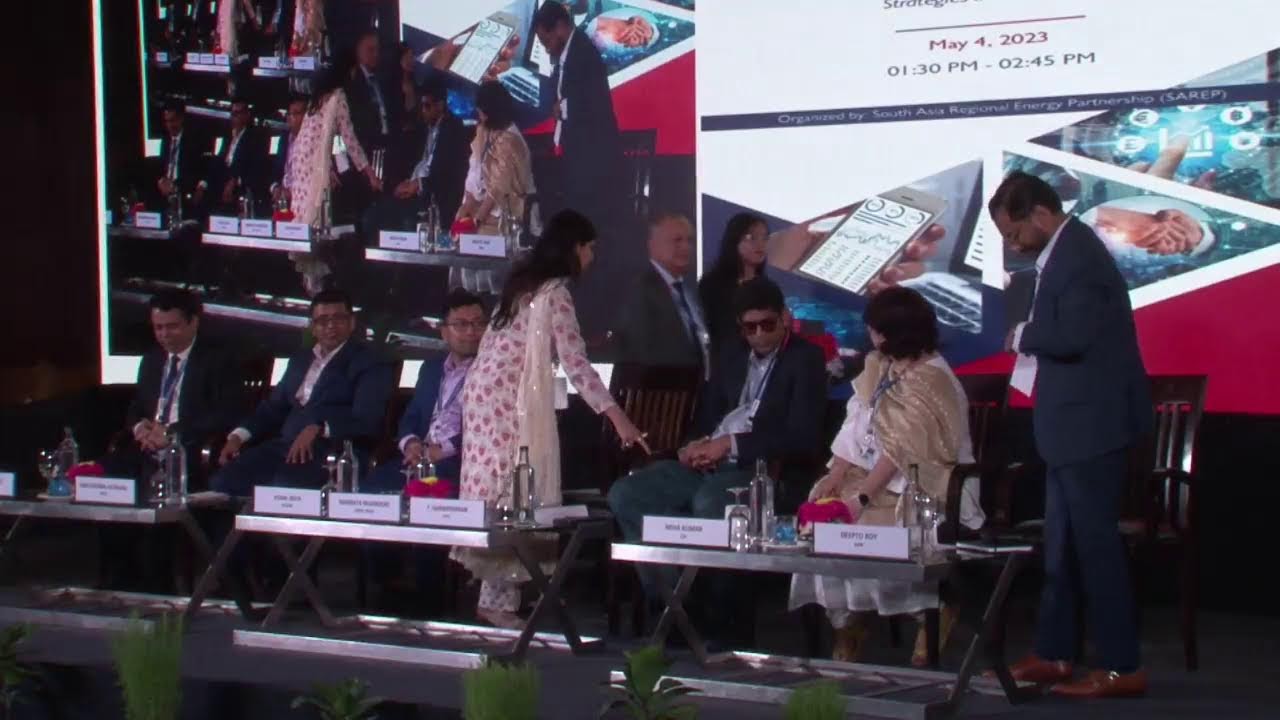
What Works? Innovative Financing Strategies in South Asia | Session 7 at SACEF 2023
Keywords
Summary
200 words
Critical Evaluation
Value of the Information & Strength of the Argument
The primary value lies in the firsthand experience of practitioners from diverse South Asian countries, offering concrete examples of how development finance institutions tackle financing barriers. IDCOL’s approach to structuring projects and leveraging development partner funds is instructive, as is Nepal’s experience with directive lending. The argumentation is largely anecdotal, relying on case-specific successes rather than systematic data. The panel does not engage in deep quantitative analysis or comparative assessment, but it convincingly illustrates the gap between global capital availability and on-ground investment challenges. The quote ‘water water everywhere and no drop to drink’ effectively captures the paradox of abundant liquidity versus actual deployment. However, the discussion remains at an introductory level, with limited critical examination of the proposed solutions’ scalability or long-term impacts.
Scientific Rigor, Source Quality, Title Accuracy
The video is a conference panel, not a peer-reviewed presentation. No external sources or citations are provided in the description, and the panelists refer to general references like IRENA and IFC without specific data points. The rigor is moderate: the arguments are plausible and grounded in practical experience, but they lack verifiable references and statistical evidence. The title accurately matches the content, as the session indeed explores innovative financing mechanisms. No discrepancies were noted between the title and the discussed material. The adequacy is high, though the depth is limited compared to a research study.
234 words
Title / Content Match
The title accurately reflects the session's focus on innovative financing strategies in South Asia, as confirmed by the panel discussion.
Quality & Reliability
7/10
Panel of experienced practitioners from South Asian financing institutions, discussing real-world cases and barriers. Insights are practical but not systematically referenced; no external citations provided.
Key Moments
Markers derived by PSI from the transcript: the creator did not define chapters.
- Apurva introduces the context: South Asia needs USD 2.6 trillion for clean energy transition; highlights national commitments.
- Mayank presents challenges: insufficient domestic capital, high financing costs, hedging issues; uses IRENA data.
- Mayank introduces the panel: representatives from IDCOL, NIFRA, Dolma, IFC, Climate Bonds Initiative, and SAREP.
- IDCOL representative shares strategies: concessional financing, GCF accreditation, and market-based approaches for solar projects.
- NIFRA Bank representative discusses Nepal's directive lending and investment in hydropower, highlighting the role of central bank policies.
- Panelists discuss green bonds and the need for regulatory frameworks to deepen bond markets in South Asia.
- Concluding remarks on the importance of market creation and first-mover transactions to attract private capital.
Cited Sources
- No external sources are listed in the video description. — The video description does not include any links or references to external sources.
Contribution & Novelties
The video offers a practical, region-specific perspective on clean energy financing, highlighting real-world examples from institutions like IDCOL and NIFRA. Its novelty lies in the collective experience of practitioners across South Asia, illustrating how development finance can be blended with commercial capital. The session underscores the importance of innovative instruments such as green bonds and blended finance, and the need for regulatory enablers. While not providing breakthrough research, it synthesizes actionable insights for policy makers and investors.
Pour aller plus loin :
- Blended finance — Describes the strategic use of development finance to mobilize private capital, relevant to the panel’s discussion on de-risking.
- Green bond — Explains this fixed-income instrument used to fund climate and environmental projects, a key mechanism mentioned in the session.
- Development finance institution — Provides context on the role of DFIs like IDCOL and IFC in emerging markets.
142 words
Radar Profile
The profile shows a balanced but moderate performance across all dimensions, with slightly higher scores for information quantity and reliability, reflecting the panel's practical orientation. The low technical depth suggests the content is accessible but not highly specialized.