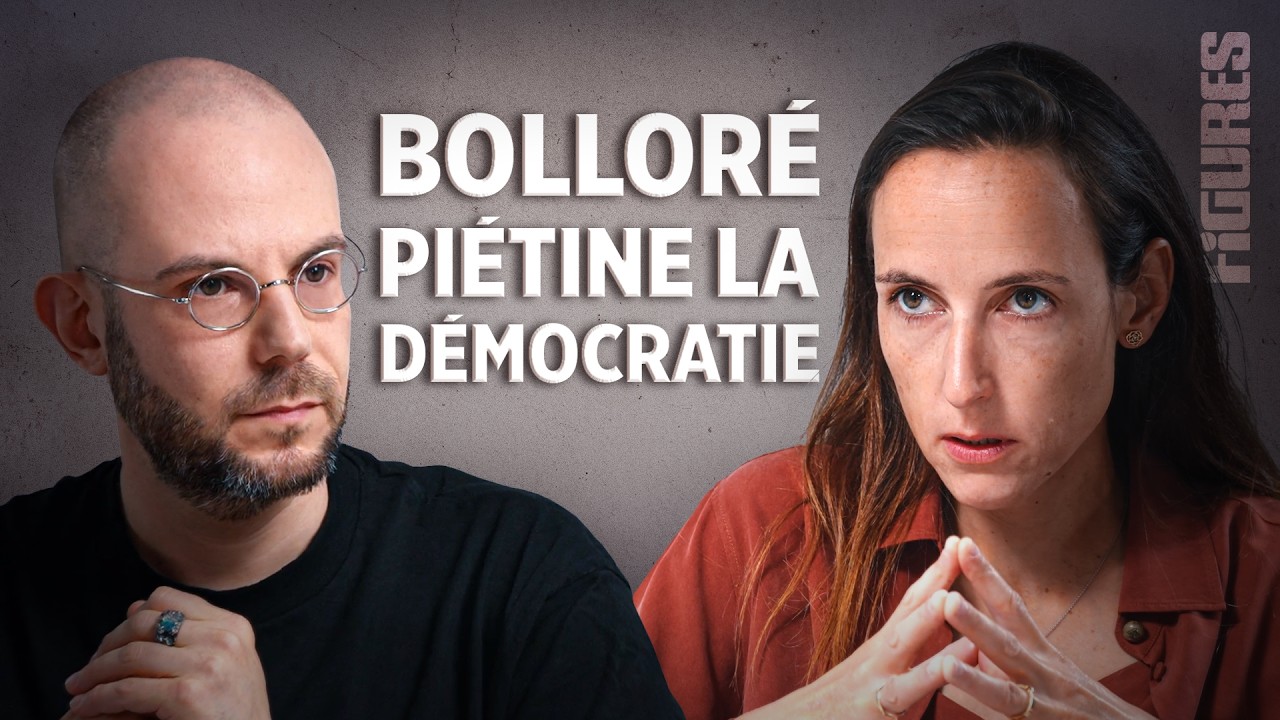
Julia Cagé : Comment les milliardaires nous volent l'élection - FIGURES
Julia Cagé: How the billionaires are stealing the election from us - FIGURES
Keywords
Summary
128 words
Critical Evaluation
Value of the Information & Strength of the Argument
The information is highly valuable as it presents original research with empirical data, offering insights into the mechanisms by which billionaires influence public discourse. The argumentation is compelling, as Cagé supports her claims with quantitative evidence, such as the 20-point increase in far-right speaking time on Bolloré-owned channels. She also contextualizes the problem within broader trends, making the case that this is not just a French issue but a global one. The strength of her argumentation lies in her ability to connect media ownership to electoral outcomes, providing a clear causal pathway.
Scientific Rigor, Source Quality, Title Accuracy
The scientific rigor is high given that Cagé is a professor at Sciences Po and bases her statements on her published research and that of her colleagues. However, specific citations are not given on screen, so viewers are referred to her books and articles. The title appropriately summarizes the central theme, though it uses a strong word ‘steal’ which might exaggerate the effect, but it captures the essence. The content aligns well with the title, as it discusses how billionaires influence elections through media control and political funding. Regarding sources, the video itself does not provide a list of references, but the description includes links to the channel’s social media rather than to academic papers.
222 words
Title / Content Match
The title accurately reflects the discussion about how billionaires influence elections through media and political financing, though it is somewhat sensationalist.
Quality & Reliability
8/10
The content is presented by Julia Cagé, a professor at Sciences Po, who relies on her own research and that of colleagues, using data from LINA archives and quantitative methods. The claims are backed by evidence, although the interview format does not allow for full citation of sources.
Chapters
Cited Sources
- Bluesky profile of Clément Viktorovitch — Channel's social media profile
- Clément Viktorovitch's website — Channel's official website with show tour
- Figures podcast on Acast — Podcast version of the show
- Threads profile — Channel's social media profile
- Twitch channel — Channel's streaming platform
Contribution & Novelties
The video brings a novel quantitative analysis of how media ownership by billionaires, specifically Vincent Bolloré, affects democratic processes. It demonstrates a causal increase in far-right speaking time on acquired channels, using difference-in-differences methodology. This contributes to the debate on media regulation and the role of money in politics.
Pour aller plus loin :
- Media pluralism — Relevant to understanding the importance of diverse voices in democratic media.
- Campaign finance — Directly related to the discussion on money in politics.
- Vincent Bolloré — The central figure of media consolidation.
89 words
Radar Profile
The radar shows high scores in information quantity and quality, with a moderate technical level, indicating a well-balanced presentation for a general audience while maintaining academic depth.