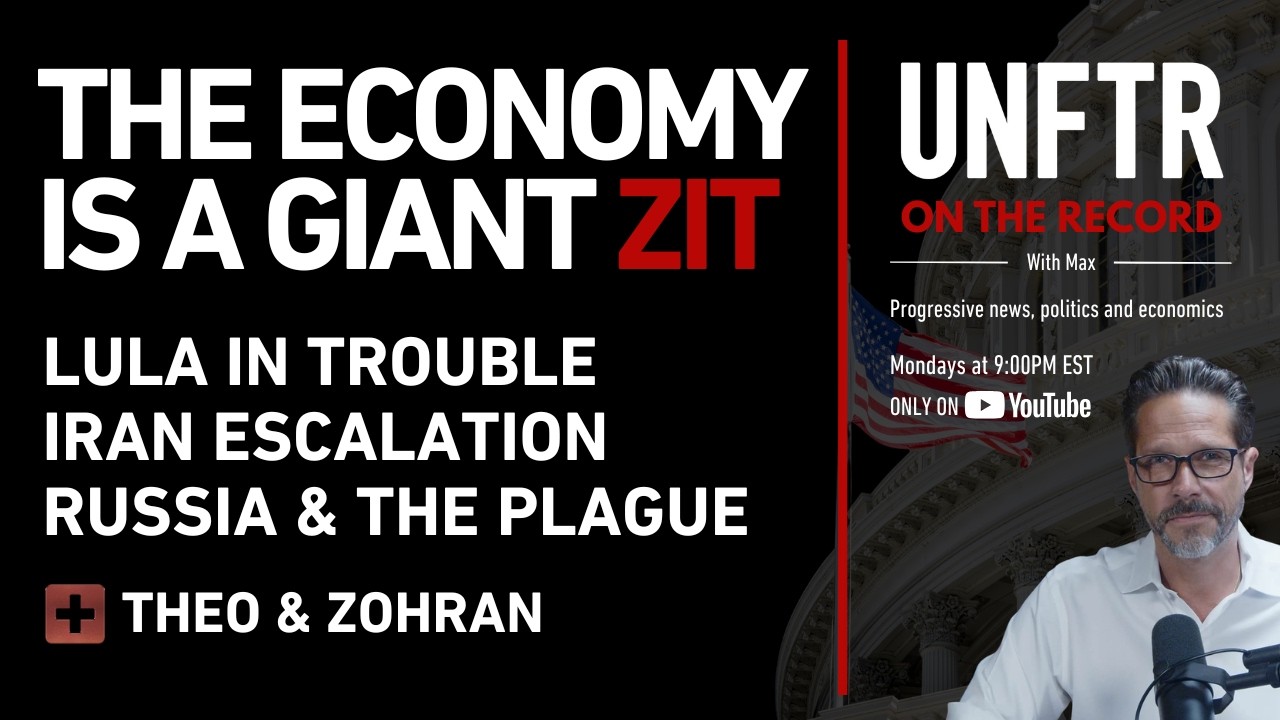
Trump's Economy is a Giant Zit
Keywords
Summary
171 words
Critical Evaluation
Value of the Information & Strength of the Argument
The video provides a coherent argument that the current economic expansion is uneven and bubble-driven, with substantial evidence from recent data points like income stagnation, low consumer confidence, and high delinquencies. The host connects these to broader financial mechanisms, such as private credit and Fed policy, showing how risks are concentrated. However, the argument is heavily opinionated and lacks nuance, often relying on metaphors like the ‘zit’ while dismissing any positive indicators as misleading. The reliance on selective data and potential confirmation bias weakens the overall persuasiveness.
Scientific Rigor, Source Quality, Title Accuracy
The video cites few external sources directly, but the description includes a link to Max’s article on Milton Friedman in Current Affairs, which adds some credibility. The host references Fitch and unnamed ratings agencies without specific details, which is vague. The title is an attention-grabbing metaphor that accurately reflects the content’s alarmist tone. While the analysis is well-structured, the lack of peer-reviewed or primary sources and the clear partisan perspective reduce its scientific rigor.
176 words
Title / Content Match
The title uses a vivid metaphor that matches the content's focus on economic fragility and impending correction.
Quality & Reliability
7/10
The video provides a detailed analysis of economic indicators and financial risks, but it is a partisan commentary with a strong political agenda, limiting its impartiality.
Chapters
Cited Sources
- We’re Living in the World That Milton Friedman Made — Max's cover story referenced in the video, linked from the description.
- UNFTR Memberships — Support links from description, not a content source.
- UNFTR Merch — Merchandise link from description.
- UNFTR Shop — Shop link for coffee and other products.
- Current Affairs Subscription — Subscription link from description.
Contribution & Novelties
The video offers a unique metaphor to describe economic instability and ties together several contemporary issues (private credit, AI debt, Fed policy) in a coherent narrative. It also provides a critical perspective on mainstream media’s reliance on stock market performance. However, its originality is limited by its partisan framing and lack of novel data.
Pour aller plus loin :
- Buffett indicator — A valuation measure used in the video to argue that the market is overvalued.
- Private credit — A $2 trillion market discussed in the video; its risks are central to the analysis.
- Federal Reserve balance sheet — The video discusses the Fed’s balance sheet expansion and its implications; more information can be found at Federal Reserve .
119 words
Radar Profile
The radar profile shows moderate scores across information quantity, quality, technical level, and reliability, indicating a presentation that is informative but biased. The equality in quantity and technical level suggests a fine-grained analysis, while the slightly lower quality and reliability scores reflect its ideological bent.