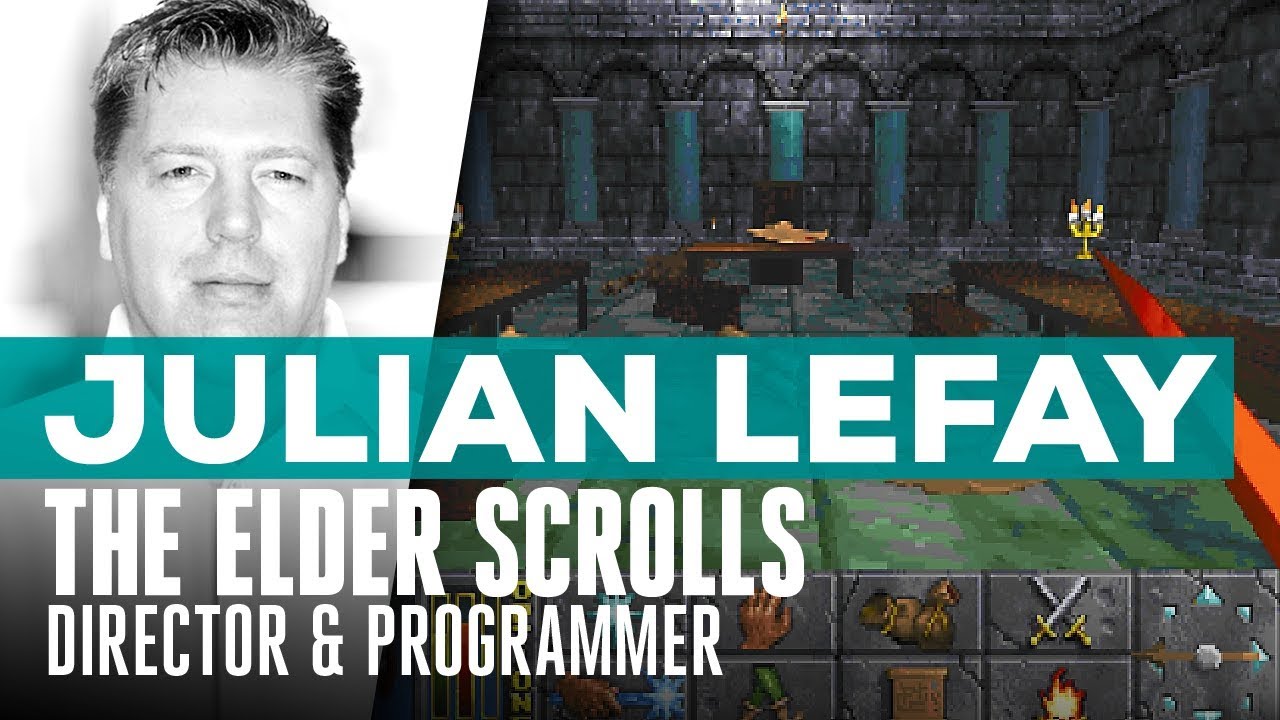
Interview with the "Father of the Elder Scrolls" | Julian Jensen (aka Julian LeFay)
Keywords
Summary
215 words
Critical Evaluation
Value of the Information & Strength of the Argument
The video’s primary value lies in its rare, first-hand perspective from a key historical figure in a major game franchise. Julian Jensen provides unique insights into the design philosophy and technical constraints of early 1990s game development, such as writing games in assembly language and the difficulty of achieving real-time 3D graphics. His explanations about the ‘dungeon master’ concept and procedural generation are thoughtful and well-articulated, offering a coherent argument for why Daggerfall was so ambitious and how that ambition was constrained. The argumentation is not adversarial but rather reflective; Julian shares opinions on modern game design trends, arguing that many developers ‘play it safe’ and lose the creative risk-taking that defined earlier eras. He supports his views with concrete examples from his own experience, such as the Morrowind that never was, which he describes as a more simulated and dynamic world. While the interview is subjective, the depth and consistency of his recollections add credibility. There is no external counter-argument, but the discussion is balanced as Julian openly acknowledges the contributions of others and admits his own imperfections.
Scientific Rigor, Source Quality, Title Accuracy
As a primary source interview, the scientific rigor is inherent in the method: the content is a verbatim account from the subject, recorded directly. The interviewer, Indigo Gaming, compiled questions from fans, ensuring relevance but also introducing a potential bias toward nostalgia. The quality of sources is limited to Julian’s memory and anecdotal evidence; no external documents are referenced during the conversation, but the description provides links to related resources such as the Daggerfall soundtrack composer’s website and fan remixes, which support the claims about the game’s music and community. The title is accurate and specifically describes the interview’s focus. The content aligns well with the title; there is no misleading information. Given that the video is a historical record, it is not subject to the same reproducibility criteria as empirical science, but within its genre, it demonstrates high authenticity.
334 words
Title / Content Match
The title accurately describes the video content as an in-depth interview with the creator of the Elder Scrolls, Julian LeFay.
Quality & Reliability
8/10
Primary source interview with the creator of the Elder Scrolls, providing first-hand account of game development history and personal perspectives; although subjective, it is historically valuable and appears honest and detailed.
Chapters
- Intro
- What was your role in creating the Elder Scrolls?
- How'd you get into programming?
- Elder Scrolls tabletop origins
- Arena's influences
- Do you still talk to the original Elder Scrolls team?
- How could Daggerfall be improved with modern technology/experience?
- Improving procedural generation
- What could have been done if Daggerfall got another 6-12 months?
- PlayerUnknown's Battlegrounds
- Why do modern devs play it safe and not innovate?
- Tabula Rasa
- Favorite game to work on
- Were there any big plans for the Elder Scrolls after Battlespire?
- Machiavelli's prudent archers
- Star Citizen
- Elite and Elite: Dangerous
- The Morrowind that never was
- The Witcher 3
- Elder Scrolls: Redguard
- Why did you leave Bethesda?
- What are you up to now?
- Do you agree with post-2000s Bethesda's direction?
- What makes Daggerfall so special and immersive?
- Daggerfall fan remakes
- Do you still play music?
- Eric Heberling, composer for Daggerfall
- What games do you play now?
- Mods and paid mods
- Anything to say to fans/modders remaking your games?
- Naming the gods of Tamriel
- Was there any secret arc or plan for the story?
- Work on Skullgirls
Cited Sources
- Eric Heberling's website (Daggerfall composer) — Music credits for the video.
- Teatime Coder: Daggerfall music remixes — Music credits for the video.
- Blakegedye's DeviantArt page — Artwork credits for Elder Scrolls icons.
- King Reverant's Elder Scrolls icons — Artwork credits.
- Reddit comparison of The Division real life screenshot — Screenshot comparison featured in video.
- Leozim5's SoundCloud — Additional Daggerfall remixes.
- Indigo Gaming Twitch channel — Channel promotion, not a source.
- Thriftweeds' YouTube video: The Terminator (1991) — Gameplay footage of The Terminator.
- Thriftweeds' YouTube video: Terminator 2029 — Gameplay footage.
- Thriftweeds' YouTube video: The Elder Scrolls: Arena — Gameplay footage.
- Galactic Chicken's Daggerfall Unity gameplay — Gameplay footage of a fan remake.
- zirkoni88's Battlespire gameplay — Gameplay footage.
- World of Longplays: Sword of Sodan gameplay — Gameplay footage of a game Julian worked on.
Contribution & Novelties
This interview is a rare primary document that adds significant original insight into the early history of the Elder Scrolls series. Julian Jensen’s account of the game’s genesis, his design philosophy, and the specifics of the cancellation of his visionary Morrowind provide information not previously documented in mainstream media. The video also serves as a eulogy of sorts, as the creator passed away from cancer in 2023, making his words even more valuable. The interview’s novelty lies in its candid discussion of procedural generation, the limitations of 1990s technology, and the personal struggles behind game development.
Pour aller plus loin :
- The Elder Scrolls - Wikipedia — Overview of the series and its history, providing context for Julian’s influence.
- The Elder Scrolls II: Daggerfall - Wikipedia — Detailed article on the game’s development and features, directly related to his work.
- Procedural generation - Wikipedia — Explanation of the technique that Julian discusses extensively as a key innovation in Daggerfall.
159 words
Radar Profile
The radar profile indicates a very high quantity of information (9) and high quality (9), with moderate technical depth (6) due to the balance between accessible discussion and some programming details. The global reliability (8) is strong given the first-hand nature, but limited by the subjective recollection element.
💬 Très positif : Les commentaires montrent une admiration profonde et un respect pour Julian Jensen, avec une forte vague de condoléances suite à son décès. Sur les 30 commentaires analysés, la quasi-totalité exprime reconnaissance et nostalgie, soulignant la qualité de l'interview et l'importance de son héritage.