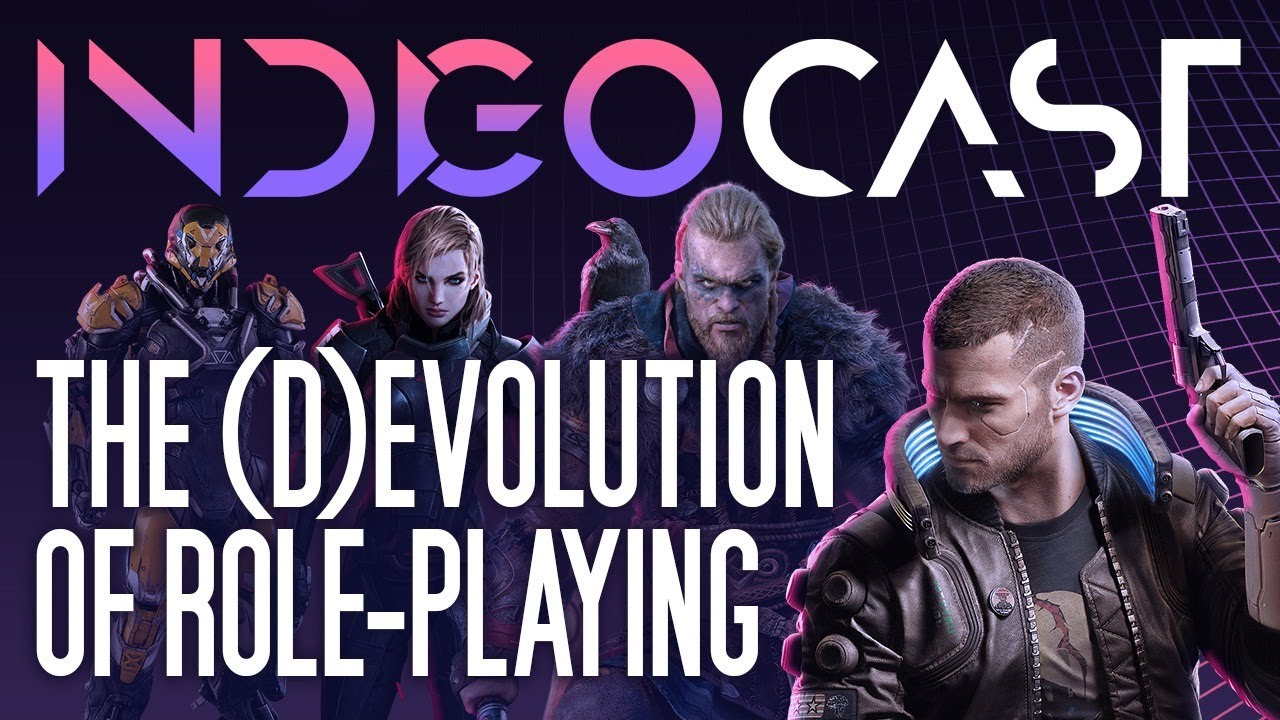
INDIGOCAST #6 | The (D)evolution of Role-Playing w/ NerdSlayer
Keywords
Summary
190 words
Critical Evaluation
Value of the Information & Strength of the Argument
The value of this discussion lies in the hosts’ extensive firsthand experience with a wide range of RPGs, allowing them to draw nuanced comparisons across sub-genres and eras. Their arguments are built on concrete examples, such as how level scaling in The Elder Scrolls IV: Oblivion destroys believability, or how Deus Ex’s multiple approaches illustrate meaningful choice. They reason logically about the difference between superficial RPG elements and core role-playing principles, and they acknowledge exceptions and counterarguments, such as whether a fixed protagonist like Geralt can still be considered an RPG character. The argumentation is solid, though it remains opinion-driven; they do not reference academic or industry research, but their insights are coherent and well-supported by specific game instances.
Scientific Rigor, Source Quality, Title Accuracy
The rigor is moderate. The hosts do not cite formal sources; instead, they rely on personal anecdotes and widely known game mechanics. The description links are mostly to their own social media and a GOG affiliate page, which are not substantive references. However, the discussion is internally consistent and reflects a depth of knowledge that lends it credibility. The title accurately reflects the content: the episode directly addresses the evolution (or devolution) of RPGs, with a clear focus on how the genre has changed and what makes a game truly role-playing. No comments were provided, so no public feedback analysis is included.
236 words
Title / Content Match
The title succinctly captures the core debate: the evolution (or devolution) of role-playing games. It matches the content closely.
Quality & Reliability
7/10
The hosts provide thoughtful, experience-based opinions on RPG mechanics and game design, but rely on anecdotal evidence and personal taste rather than cited studies or data. Their reasoning is generally coherent and well-argued, but lacks external verification.
Key Moments
Markers derived by PSI from the transcript: the creator did not define chapters.
- Introduction of guest NerdSlayer and their shared history with Hellgate: London and Troika games.
- Discussion on definitions of RPG, emphasizing meaningful choices and character creation as core elements.
- Critique of level scaling in games like Oblivion and ESO, arguing it undermines progression and immersion.
- Exploration of hybrid genres, using Zelda and Deus Ex as examples of games blurring the line between action-adventure and RPG.
- Reflection on how modern development costs discourage branching narratives and meaningful player choice.
Cited Sources
- NerdSlayer YouTube Channel — Guest's channel, mentioned in description.
- Audio-Only Version on Anchor — Alternative audio version of the podcast.
- GOG Partner Page — Curated game list, likely containing RPG recommendations.
- Indigo Gaming Archive (Livestreams) — Channel for past livestreams.
External References
Contribution & Novelties
The episode adds to the ongoing discourse on what defines an RPG, offering a structured critique of modern trends like level scaling and the dilution of the genre label. The hosts’ combined expertise provides a balanced perspective on Western and Japanese RPGs, and they articulate the significance of meaningful choice clearly.
Pour aller plus loin :
- Role-playing video game — A comprehensive overview of the genre and its subgenres, useful for contextualizing the discussion.
- Player agency — Explores the concept of player control over a game’s outcome, central to the hosts’ argument.
- Level scaling — Examines the mechanic criticized in the podcast and its effects on difficulty and immersion.
- Systems thinking in game design — Background reading on how game mechanics are designed, relevant to the hosts’ critique of modern design priorities.
132 words
Radar Profile
The radar profile shows high scores in quantity of information and medium scores in technical level and reliability. This reflects a lengthy, detail-rich conversation that is conceptually grounded but lacks external citations. The qualitative value is high due to the depth of personal insight, while the overall reliability is moderate because of the anecdotal nature of the evidence.
💬 Sur les 30 commentaires analysés, l'orientation est positive et nostalgique, avec une approbation générale du contenu et des discussions approfondies, mais aussi des critiques récurrentes sur la dérive des RPG modernes et des suggestions pour des sujets futurs.