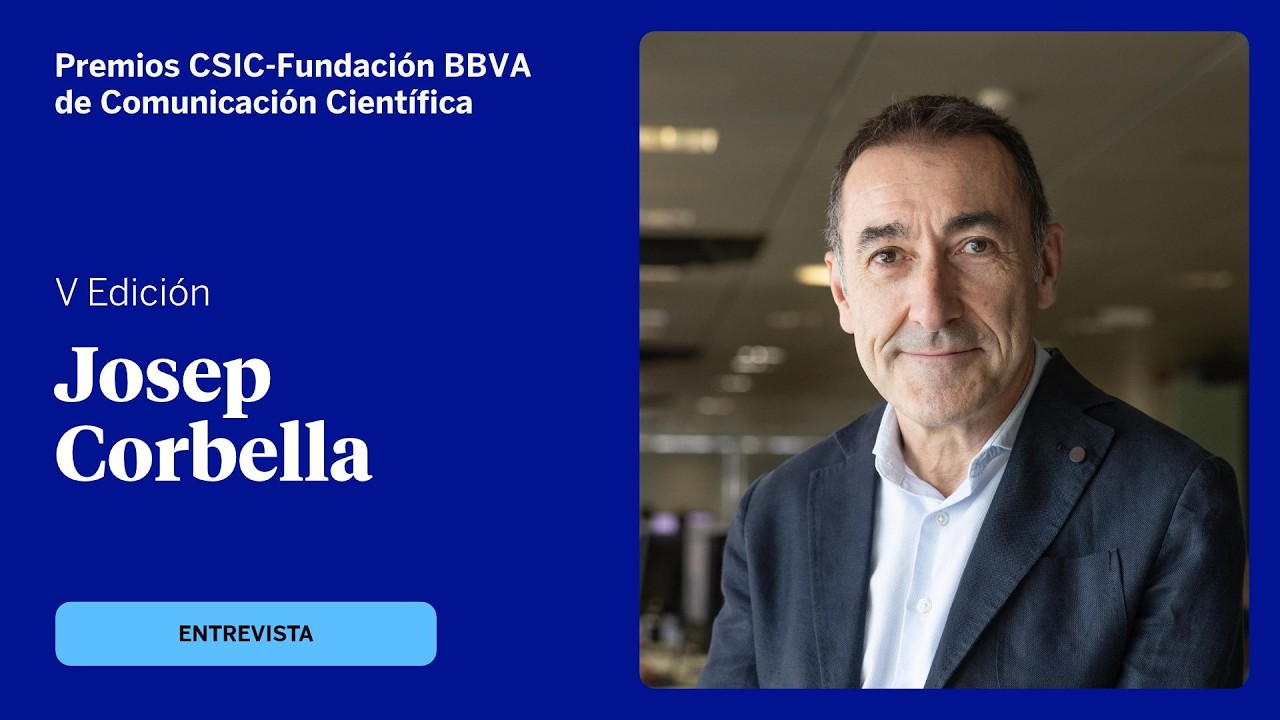
Josep Corbella: “Hemos logrado que las noticias de ciencia tengan presencia diaria en los medios”
Josep Corbella: “We have managed to make science news have a daily presence in the media”
Keywords
Summary
270 words
Critical Evaluation
Value of the Information & Strength of the Argument
The value of this interview lies in the unique perspective of a practitioner who has shaped science journalism in Spain. Corbella provides concrete examples (immunotherapy, lunar water) that illustrate how a dedicated science desk can produce significant scoops. His argument is coherent: he advocates for the news genre as the most impactful, and his reasoning is practical, based on his daily experience. However, his claims about ‘first in the world’ are not independently verified, and the interview lacks critical discussion of potential limitations or controversies in science reporting. The argumentation is solid within its own framework, but relies heavily on personal authority rather than external data.
Scientific Rigor, Source Quality, Title Accuracy
The interview respects journalistic norms of an expert testimony. Corbella mentions specific events (e.g., the immunotherapy trial, Lunar Prospector) but does not provide published references for verification. The title is accurate and matches the content. The description includes a link to the award announcement, which serves as a source for the context of the award. Overall, scientific rigor is moderate: the claims are plausible but not backed by cited literature within the video itself.
195 words
Title / Content Match
The title accurately reflects the main theme of the interview: the effort to achieve daily presence of science news in mainstream media, which Corbella discusses extensively.
Quality & Reliability
6/10
This is a personal testimony from a veteran science journalist, based on his own career experiences and anecdotes, without verifiable references to specific studies or articles. The claims about exclusive scoops are plausible but not independently confirmed within the video.
Key Moments
Markers derived by PSI from the transcript: the creator did not define chapters.
- Corbella explains his initial motivation was calculation, not vocation, to enter journalism
- How he convinced the newspaper management to include science on a daily basis, step by step
- Recalls the exclusive on cancer immunotherapy trial and the lunar water discovery
- Discusses the creation of the Big Bang digital channel and adapting content to online media
- Explains the transversal role of science in all newspaper sections and his advisory function
- Defends the news genre as the most important in journalism
- Talks about his books and the metaphor of the Tourmalet climb for long-term projects
Cited Sources
- Josep Corbella y Carlos Briones galardonados Premios CSIC-Fundación BBVA Comunicación Científica — Official announcement of the award mentioned in the video, providing context for the interview.
Concurring Sources
- Premios CSIC-Fundación BBVA — Confirms the award and the recognition of Corbella's work, supporting the video's context.
Dissenting Sources
- No contradictory sources identified — The video is a personal testimony; no directly contradictory claims found, but the lack of citations prevents full verification.
Contribution & Novelties
This video offers a first-hand account of the historical development of science journalism in Spain, specifically the integration of science news into daily coverage at La Vanguardia. Corbella’s insider perspective on achieving daily presence and the genesis of scoops is a unique contribution, providing practical insights into newsroom dynamics and the role of a specialist journalist. It also articulates a clear thesis about the importance of news as a genre and the social function of science communication.
Pour aller plus loin :
- Science journalism on Wikipedia — Overview of the field and its challenges.
- Immunotherapy on Wikipedia — Background on the cancer treatment that Corbella covered.
- Lunar water on Wikipedia — Context for the discovery of water on the Moon mentioned in the interview.
124 words
Radar Profile
The radar profile shows moderate scores across all dimensions, with quantity and quality of information relatively balanced, but lower technical level and reliability due to the subjective nature of the interview. This indicates a content that is informative from an expert perspective but not deeply technical or rigorously sourced.