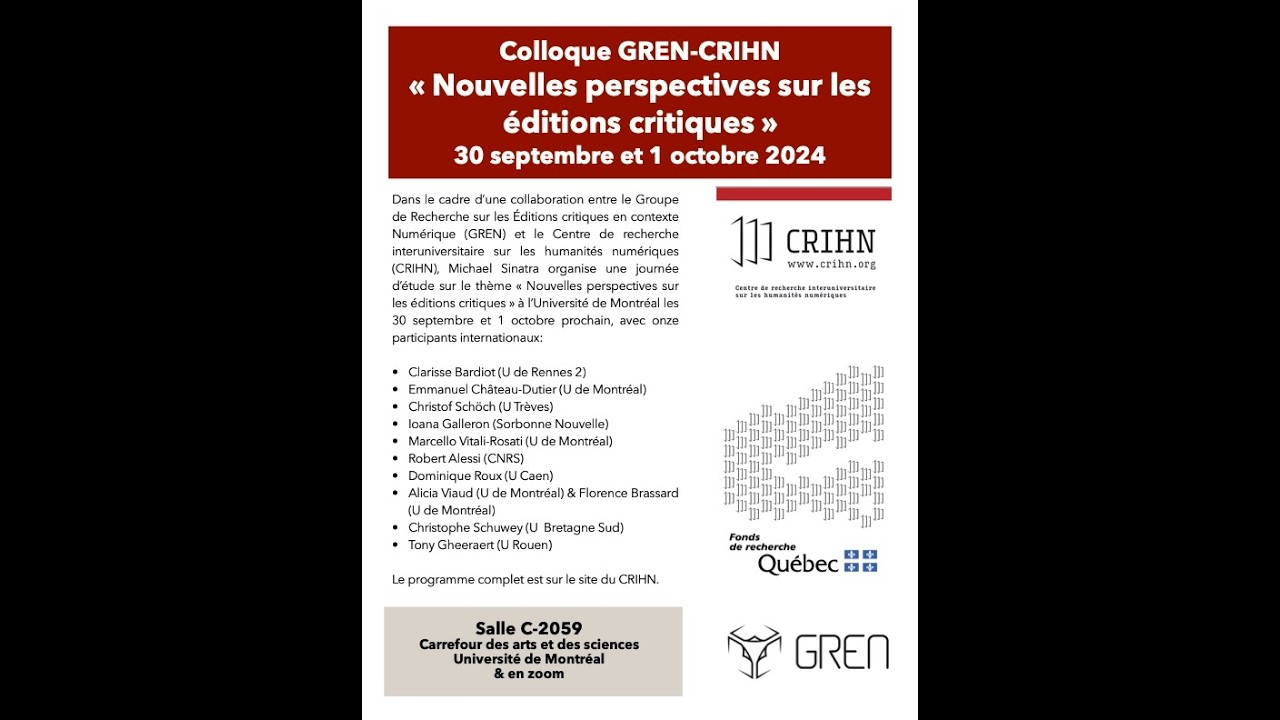
Conférence de Robert Alessi (CNRS), « La philosophie de la ligne de nroff/troff à TeX »
Lecture by Robert Alessi (CNRS), “The Philosophy of the Line from nroff/troff to TeX”
Keywords
Summary
183 words
Critical Evaluation
Value of the Information & Strength of the Argument
The talk provides valuable historical context for understanding the design of text processing systems, arguing persuasively that TeX’s line-oriented approach is a direct descendant of earlier Unix tools. The argument is built on concrete examples (shell commands, ed operations, nroff/troff syntax) and personal experiences, which add authenticity. However, the technical depth is moderate, and the presentation occasionally lacks rigorous distinctions between different layers of abstraction (e.g., interpreter vs. compiler). The argumentation is coherent but may oversimplify the philosophical aspects, as it focuses more on technical lineage than on a deep examination of the ‘philosophy’ mentioned in the title.
Scientific Rigor, Source Quality, Title Accuracy
The speaker demonstrates good knowledge of the subject, referencing key figures such as Joe Ossanna and Donald Knuth, and citing the TeXbook. However, no comprehensive bibliography is provided, and sources beyond the TeXbook are mentioned only in passing. The title is well-matched to the content, though the ‘philosophy’ part could have been more explicitly developed. The talk was delivered as part of an academic conference, indicating a certain level of scholarly rigor, but the lack of verifiable citations and the informal style limit its scientific weight.
199 words
Title / Content Match
The title accurately reflects the content, as the talk explores the historical and conceptual continuity from line-oriented computing (nroff/troff) to TeX.
Quality & Reliability
7/10
The presentation is well-structured and relies on historical facts and direct experience, but it is not peer-reviewed and lacks verifiable citations beyond the TeXbook. The speaker is a recognized scholar, and the content is coherent.
Key Moments
Markers derived by PSI from the transcript: the creator did not define chapters.
- Introduction and presentation of the topic: philosophy of the line from nroff/troff to TeX
- Explanation of interpreters and the shell example with echo command
- Discussion of punched cards and the historical context (Jacquard looms, Hollerith)
- Transition to teletypewriters and the experience of batch computing
- Introduction to the Unix editor 'ed' and its line-based interface
- Presentation of nroff and troff, and their place in Unix history
- Example of nroff/troff formatting commands and their similarity to shell syntax
- Discussion of TeX as inheriting the line-oriented philosophy, with reference to Knuth's TeXbook
- Technical interruption due to network issues, resumption of talk
- Conclusion and commentary on the physicality of early computing and its impact on design
Cited Sources
- The TeXbook — Referenced by the speaker when quoting Donald Knuth's advice on trying TeX for the first time.
Concurring Sources
- The Unix Philosophy — Provides context for the design principles of Unix tools mentioned in the talk.
Dissenting Sources
- Compilers vs. Interpreter — The speaker simplifies the distinction between compilers and interpreters, which could lead to misunderstandings.
Contribution & Novelties
The talk offers a unique perspective on the evolution of text processing, highlighting the continuity between punched cards, Unix line-oriented tools, and modern typesetting systems. This historical framing is valuable for understanding why TeX has certain design choices. However, the presentation does not introduce new technical findings but rather synthesizes existing knowledge from a personal viewpoint.
Pour aller plus loin :
- nroff — Historical background and usage.
- troff — Details on the typesetting system.
- TeX — Comprehensive overview of TeX.
- ed (text editor) — Insight into the line-oriented editor.
- Punched card — Context on early data storage.
97 words
Radar Profile
The profile shows a moderate score across all dimensions, indicating a balanced but not deeply comprehensive presentation. The highest scores are in information quantity and reliability, reflecting the expert's historical account, while the technical level is slightly lower due to the focus on general concepts.