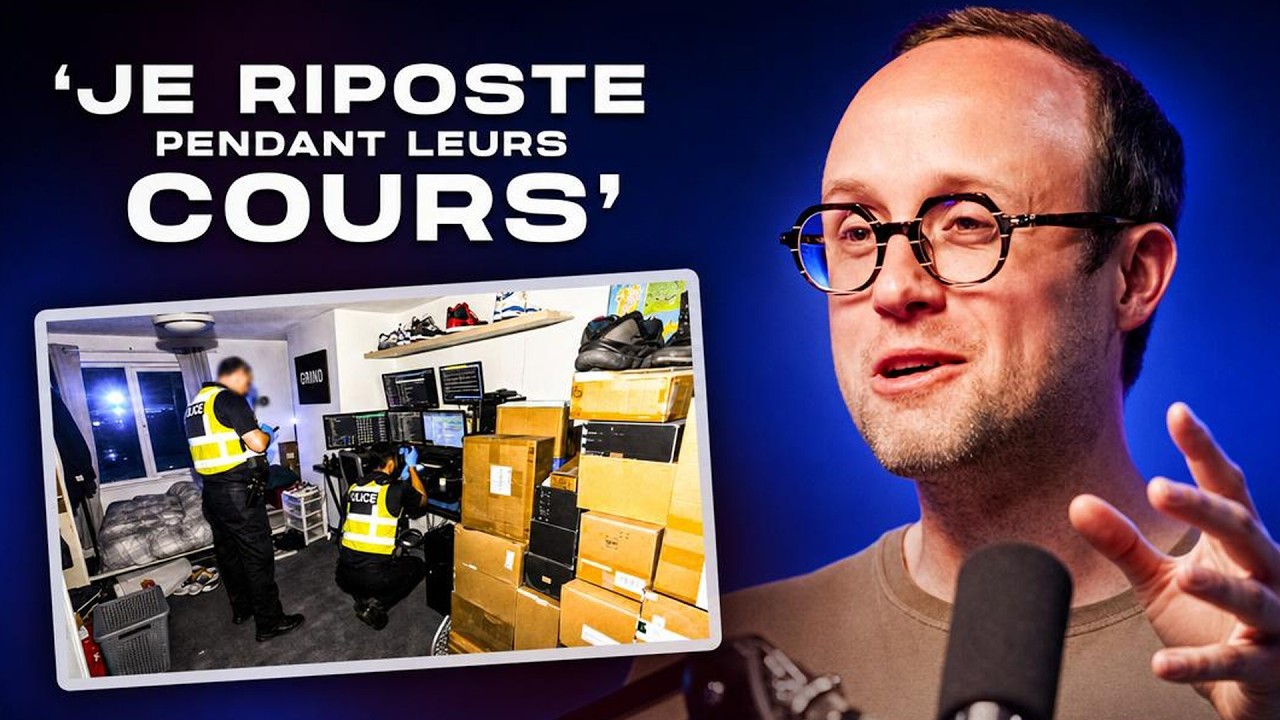
Un chasseur de bots nous dévoile les ruses des fraudeurs
A bot hunter reveals the tricks of fraudsters to us
Keywords
Summary
166 words
Critical Evaluation
Value of the Information & Strength of the Argument
The video provides deep, real-world insight into an underground economy rarely covered. The expert’s explanations are concrete, with technical details (e.g., reverse engineering, proxy usage, CAPTCHA solving) illustrated by real examples and numbers (e.g., 20 million dollars in a single drop, 500,000 checkouts). The argumentation is coherent, moving from how bots operate to why they persist, and the business motivations of different players. However, some claims rely on anecdotal evidence or unverified figures, which could be overstated. The discussion is balanced, acknowledging both the benefits to brands (selling out) and the operational costs, and it avoids sensationalism.
Scientific Rigor, Source Quality, Title Accuracy
The content is based on the expert’s professional experience rather than formal citations; no scientific sources are referenced. The title is accurate and appropriately reflects the interview’s focus. The video includes a sponsored segment (about 1-2 minutes) for Holberton School, which is clearly disclosed. The description provides links to podcast platforms and a recommended video, but no direct references to research papers. Audience comments were not provided, so no analysis is possible on that front.
187 words
Title / Content Match
The title accurately reflects the content: the guest, a bot hunter, details the techniques and business of fraudsters using sneaker bots.
Quality & Reliability
8/10
The interview features an expert (Antoine Vastel) with direct experience in bot detection, providing concrete examples and figures. The information is credible, well-structured, and based on professional insight, though it relies primarily on anecdotal evidence and personal reports rather than peer-reviewed studies.
Key Moments
Markers derived by PSI from the transcript: the creator did not define chapters.
- Introduction to the problem: people losing to bots in flash sales
- Explanation of sneaker bots and their target market (sneakers, streetwear, concert tickets)
- How bots work: buying or renting software, using proxies, creating fake accounts
- Costs involved: bot rental fees, proxy costs, community group access; example of $2,000 in proxy costs
- Potential profits: multipliers of 2.5-4x, examples from Twitter, and a single drop generating $20 million
- Advanced bypass techniques: reverse engineering, exploiting staging environments, and the Louis Vuitton sample trick
- Why sites must protect against bots: maintain user experience, avoid payment processor penalties, and keep site operational
- Corruption cases: paying $5,000 to get IPs whitelisted; difficulty in proving involvement
- CAPTCHA evolution: AI models solving 20,000-60,000 per second; the importance of clean datasets and accessibility constraints
Cited Sources
- Holberton School (sponsor) — Sponsoring segment mentioned in the description, promoting a coding school.
- Underscore Podcast - Spotify — Podcast version of the video available on Spotify.
- Underscore Podcast - Apple Podcasts — Podcast version of the video available on Apple Podcasts.
- Underscore Podcast - Deezer — Podcast version of the video available on Deezer.
- Recommended video — A related video recommended by the channel.
External References
Contribution & Novelties
The video offers a rare insider perspective on the sneaker bot ecosystem, detailing not only how these bots work but also the economic incentives and technical arms race. It highlights the sophistication of bypass techniques, the role of middleware providers, and the challenges faced by e-commerce security teams. The interview provides concrete figures and real-world examples, making abstract concepts tangible.
Pour aller plus loin :
- Sneaker bot - Wikipedia — Overview of sneaker bots, their features, and the resale market.
- CAPTCHA - Wikipedia — Explains the history and evolution of CAPTCHAs, including AI solving.
- Reverse engineering - Wikipedia — The technique used to understand and bypass security systems, as discussed in the video.
113 words
Radar Profile
The radar profile shows high scores in quantity and quality of information, indicating a content-rich and reliable interview. The technical level is also high, suited for audiences familiar with cybersecurity. The overall reliability is slightly lower, reflecting the reliance on anecdotal evidence rather than formal studies.