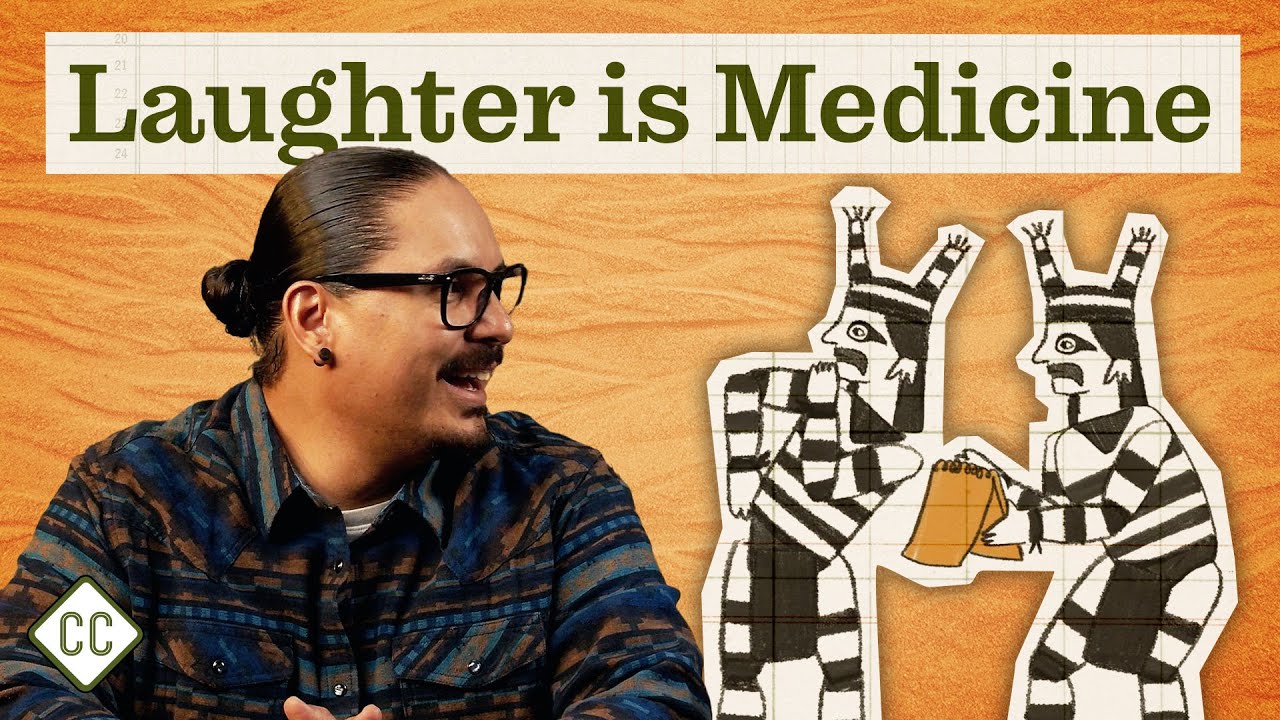
What Do Native Cultures Have in Common?: Ep 6 of Crash Course Native American History
Keywords
Summary
201 words
Critical Evaluation
Value of the Information & Strength of the Argument
The video provides substantial value by correcting common misconceptions about Native cultures, offering an insider perspective through the host’s own experience and comedian background. The argument is structured coherently: it moves from tangible artifacts to abstract values, using concrete examples and narratives. The reliance on Native authors and community voices strengthens the case, as does the connection to contemporary media and activism. The explanation of reciprocity and generosity is tied to both historical and current practices, making the argument compelling. The narrative around humor as a tool for resilience and social cohesion is well-supported by quotes and references. The video effectively balances educational content with engaging storytelling, though some philosophical concepts are simplified for a general audience.
Scientific Rigor, Source Quality, Title Accuracy
The scientific rigor is high for an educational video: the host cites specific sources (Vine Deloria Jr., Joseph Bruchac, Tiffany Midge) and a comprehensive Google Doc list of sources is provided in the description. The presentation avoids overgeneralization by acknowledging diversity among tribes. The title is a question that the video directly addresses, and the content is faithful to that promise. The inclusion of Native perspectives and the host’s own cultural background enhance authenticity. The video does not shy away from discussing colonial impacts, but it does so contextually. The adequacy between title and content is excellent; the episode covers exactly what it announces.
236 words
Title / Content Match
The title accurately reflects the episode's scope: exploring commonalities in Native worldviews, including humor, reciprocity, and generosity. The content matches the promise of the title.
Quality & Reliability
8/10
The video is produced by CrashCourse, a reputable educational channel, with contributions from the host Che Jim (a Native comedian) and references to scholarly and community sources. The content is presented clearly, with citations to a Google Doc source list, and aligns with academic perspectives on Native worldviews. Some claims are simplified for accessibility, but overall the presentation is reliable and well-contextualized.
Key Moments
Markers derived by PSI from the transcript: the creator did not define chapters.
- Introduction: Native toys and games as markers of cultural values.
- Native humor as 'good medicine' and its role in community.
- Representation of Native humor in media and the 1491s.
- Reciprocity and the concept of 'all my relations'.
- Generosity and the potlatch tradition.
- Review and credits, summarizing key points.
Cited Sources
- Sources for Episode 6 — Google Doc listing all sources referenced in the episode, including scholarly and community references.
- How this series was made — Behind-the-scenes document explaining the production and research process for the series.
External References
Contribution & Novelties
The episode’s original contribution lies in its accessible synthesis of Native worldviews, emphasizing humor as a serious cultural and spiritual element often neglected in mainstream narratives. It connects past and present, showing how traditional values like reciprocity and generosity persist in contemporary Native media and activism. The use of a Native host and inclusion of Native voices adds authenticity.
Pour aller plus loin :
- Haudenosaunee Confederacy — Overview of the historical alliance and the Great Law of Peace, central to the episode’s reciprocity discussion.
- Potlatch — Details on the practice and its significance in redistributive economies, complementary to the video’s treatment of generosity.
- Reservation Dogs — Indigenous-led TV series mentioned in the episode, exemplifying modern Native humor and representation.
- Vine Deloria Jr. — Author cited in the episode; his works on Native religion and humor are key references.
138 words
Radar Profile
The radar profile shows a well-balanced video with high scores in information quantity, quality, and reliability, while the technical level is moderate, reflecting its general-audience accessibility. The strong performance in quality and large number of credible references indicate a trustworthy educational resource.