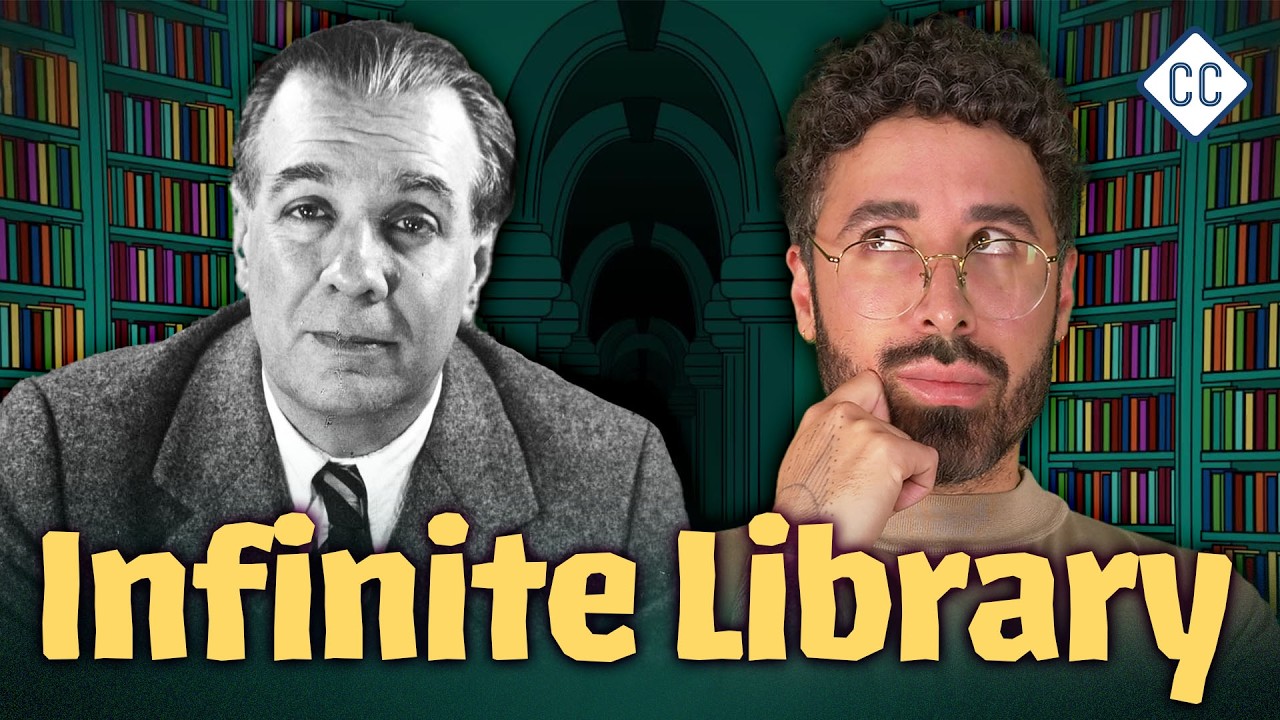
Reading & Writing Latin American literature: Crash Course Latin American Literature #13
Keywords
Summary
168 words
Critical Evaluation
Value of the Information & Strength of the Argument
The video provides valuable insights into the interpretive and translational layers of literature, arguing that meaning is not fixed but emerges through the active engagement of readers and translators. It grounds this argument in concrete examples: Borges’s library symbolizes infinite interpretive possibilities, while Bolaño’s elusive poem demonstrates how a text can resist single meaning. Historical cases, such as the role of translation in independence movements, add depth. The argument is coherent and persuasive, using literary analysis and historical context to support the claim that literature is a communal act. The host’s enthusiastic tone and clear explanations make complex ideas accessible without oversimplifying, and the inclusion of contemporary translators like Megan McDowell shows the ongoing relevance of these themes.
Scientific Rigor, Source Quality, Title Accuracy
The video maintains high scientific rigor, referencing a Google Doc that compiles sources for further reading, typical of CrashCourse’s practice. It accurately attributes quotes and concepts to Borges, Bolaño, and translators, and provides historical details about translation’s role in Latin America. The title ‘Reading & Writing Latin American Literature’ matches the content, which indeed explores how literature is read and written, though it emphasizes reading and translation more than writing per se. The episode is part of a consistent series, and the production quality supports trustworthiness. No conflicting sources are mentioned, and the information aligns with established literary scholarship.
232 words
Title / Content Match
The title accurately reflects the content, which discusses reading, writing, and the role of translators in shaping Latin American literature.
Quality & Reliability
8/10
The video is produced by CrashCourse, a well-known educational channel, and provides a well-structured overview of key literary works and translation concepts, supported by sources referenced in the description.
Key Moments
Markers derived by PSI from the transcript: the creator did not define chapters.
Cited Sources
- Sources document for this episode — Primary source document referenced in the video description, containing citations and further reading.
External References
Contribution & Novelties
This episode contributes to the understanding of Latin American literature by foregrounding the roles of translators and readers in meaning-making, a perspective often underappreciated. It synthesizes literary analysis of Borges and Bolaño with translation studies, illustrating how literature transcends geographical and linguistic boundaries. The depiction of retranslation and the recognition of translators like Edith Grossman and Megan McDowell highlights the dynamic nature of literary works.
Pour aller plus loin :
- Jorge Luis Borges — Pertinent to understand the author and his concepts of the infinite library and metaliterature.
- Roberto Bolaño — For insights into ‘The Savage Detectives’ and his literary legacy.
- Translation — Provides a broad overview of translation theory and practice, relevant to the video’s discussion.
- Edith Grossman — Background on one of the most influential translators of Spanish literature to English.
133 words
Radar Profile
The radar profile shows high scores in information quantity and quality, indicating a dense, well-researched content. The moderate technical level and high reliability suggest the video is accessible yet authoritative, suitable for a general audience interested in literary studies.