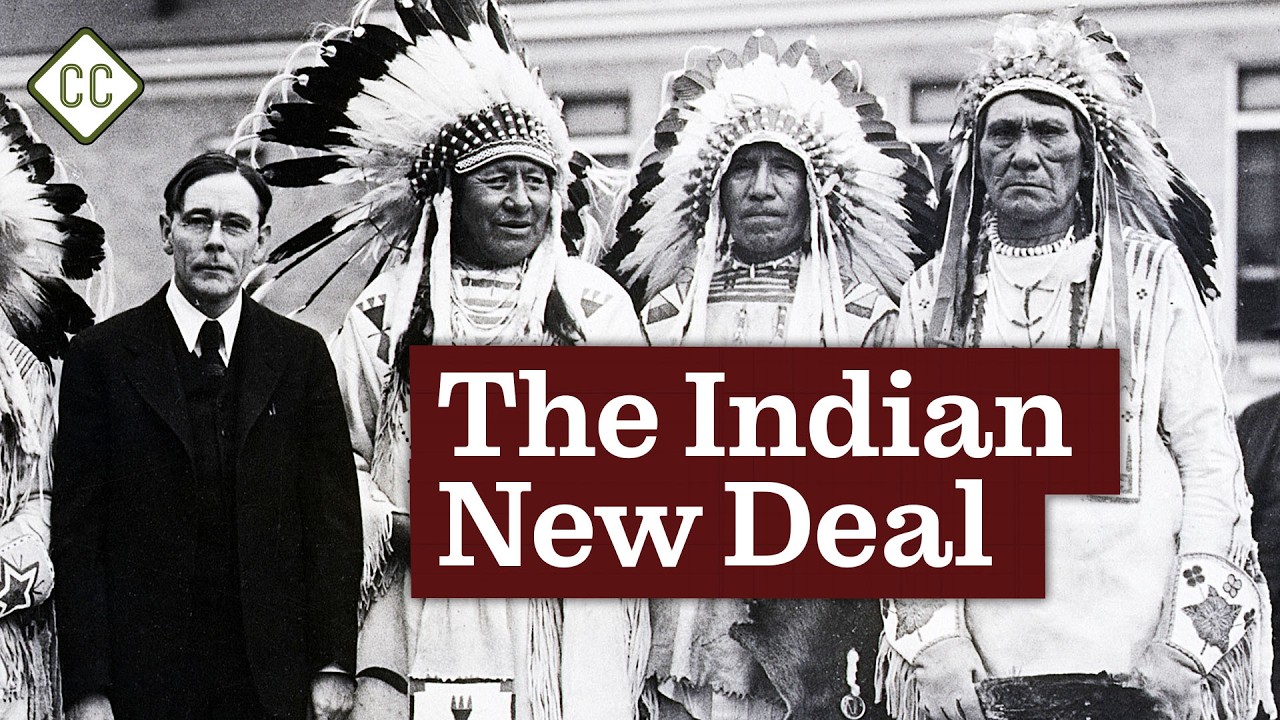
The Indian Reorganization Act Explained: Ep 13 of Crash Course Native American History
Keywords
Summary
194 words
Critical Evaluation
Value of the Information & Strength of the Argument
The video provides substantial value by synthesizing complex historical events into an engaging narrative. It does not shy away from presenting contradictory outcomes, such as the economic successes of the Ute tribes contrasted with cultural erosion, and the Navajo rejection of the IRA. The argumentation is solid, built upon documented facts like the Meriam Report statistics and specific tribal examples. The presenter maintains a balanced tone, acknowledging both the benefits and failures of the law, and emphasizes that the legacy is still contested. However, the argument could be strengthened by deeper engagement with tribal perspectives, though the use of case studies helps ground the discussion.
Scientific Rigor, Source Quality, Title Accuracy
The production adheres to rigorous standards by citing primary sources, including the Meriam Report and official government documents, which are listed in the description. The narrative correctly situates the IRA within the larger context of U.S. Indian policy and acknowledges the act’s limitations. The title accurately reflects the content, and the episode is well-structured with clear sections. While the video simplifies some legal nuances for accessibility, it remains historically accurate. The inclusion of multiple tribal experiences, such as the Ute and Navajo, demonstrates an effort to present a nuanced narrative. Credit is given to scholars and sources, enhancing its credibility.
220 words
Title / Content Match
The title precisely matches the content, which explains the Indian Reorganization Act, its historical context, and its legacy.
Quality & Reliability
8/10
The video offers a comprehensive and accessible overview of the Indian Reorganization Act, supported by primary sources such as the Meriam Report and case studies. It presents both positive and negative aspects, maintaining a balanced perspective. While it simplifies some complexities for a general audience, it remains a reliable educational resource.
Key Moments
Markers derived by PSI from the transcript: the creator did not define chapters.
Cited Sources
- Sources for the episode — List of primary and secondary sources used in the episode.
- Behind the scenes: How this series was made — Documentation on the production process and research methodology.
External References
Contribution & Novelties
The video contributes an accessible and balanced overview of the Indian Reorganization Act, highlighting its dual nature as both a corrective measure and a source of new problems. It uses real historical examples to illustrate the law’s impact, making it valuable for educational purposes. For those wishing to delve deeper, the following resources are recommended:
Pour aller plus loin :
- Indian Reorganization Act - Wikipedia — Provides a detailed legislative history and analysis.
- John Collier - Wikipedia — Biography of the key architect of the IRA.
- Meriam Report - Wikipedia — The landmark 1928 report that influenced the act.
- Ute people - Wikipedia — Context on the Ute tribes discussed in the video.
113 words
Radar Profile
The scores indicate a strong performance in information quantity and quality, with moderate technical depth. This suggests a well-balanced educational video that is both informative and accessible, suitable for a general audience interested in Native American history.