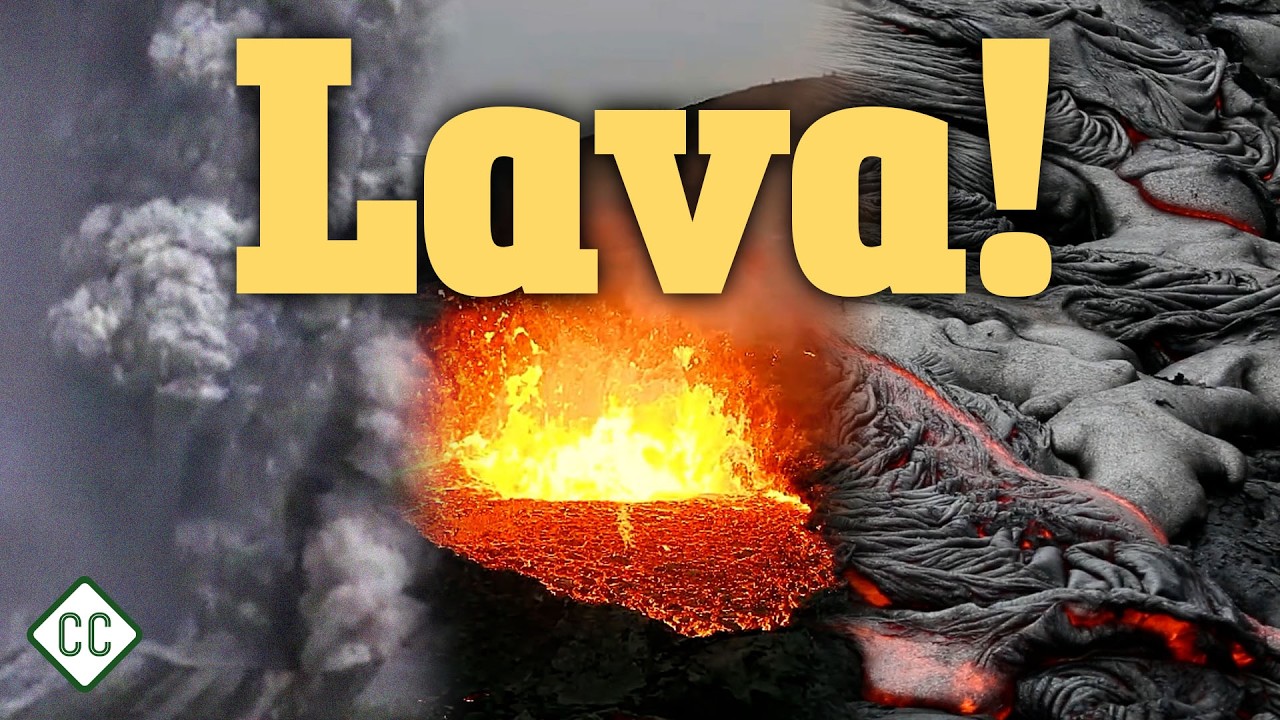
Volcanoes Explained: Crash Course Geology #13
Keywords
Summary
157 words
Critical Evaluation
Value of the Information & Strength of the Argument
The video provides a solid, accessible introduction to volcanology, clearly explaining complex processes such as magma formation, gas expansion, and the role of silica. The argumentation is logical: it builds from basic definitions to classification of volcano types, then to real-world implications. It effectively uses analogies (shaken soda, gooey lava) and concrete examples (Mauna Loa, Kīlauea, Parícutin, Mount Fuji) to illustrate key concepts. The risk assessment at the end is balanced, avoiding alarmism while acknowledging genuine hazards. The content is scientifically accurate for its level and supports its claims with credible sources.
Scientific Rigor, Source Quality, Title Accuracy
The video maintains a high standard of scientific rigor, citing a documented source list (Google Doc) for further reading. It correctly distinguishes between technical terms and popular usage (e.g., ‘supervolcano’ is not an official term) and provides quantitative data (e.g., VEI, population exposure). The title is appropriate, delivering exactly what is promised—a comprehensive explanation of volcanoes. No comments were provided for analysis, so public reception cannot be assessed.
175 words
Title / Content Match
The title accurately reflects the content, which provides a comprehensive overview of volcanic processes, types, and hazards.
Quality & Reliability
8/10
Clear, accurate and well-structured introduction to volcanoes, backed by credible sources and clear explanations.
Key Moments
Markers derived by PSI from the transcript: the creator did not define chapters.
- Introduction using Lake Taupō as an example of a caldera formed by a supereruption.
- Definition of a volcano and explanation of the eruption mechanism.
- How volcanoes form at plate boundaries, including subduction, divergent zones, and hotspots.
- Yellowstone supervolcano, the Volcanic Explosivity Index, and the improbability of a future supereruption.
- Risk of eruptions, monitoring methods, and preparedness advice.
- Review of key points and credits.
Cited Sources
- Crash Course Geology #13 - Sources — Document listing sources referenced in the episode.
External References
Contribution & Novelties
This video offers a clear and engaging synthesis of volcanic science, making it an excellent educational resource for beginners. It emphasizes the diversity of volcanic phenomena and the scientific methods used to assess hazards. The discussion of supervolcanoes corrects common misconceptions and provides a factual basis for risk assessment.
Pour aller plus loin :
- Volcanic Explosivity Index — Relevant for understanding eruption intensity scales.
- Subduction — Key process in volcano formation at convergent boundaries.
- Hotspot (geology) — Explains intraplate volcanism like Yellowstone.
82 words
Radar Profile
The profile shows balanced scores across information quantity, quality, technical level, and reliability, with a slightly higher reliability score reflecting the channel's established credibility and cited sources.