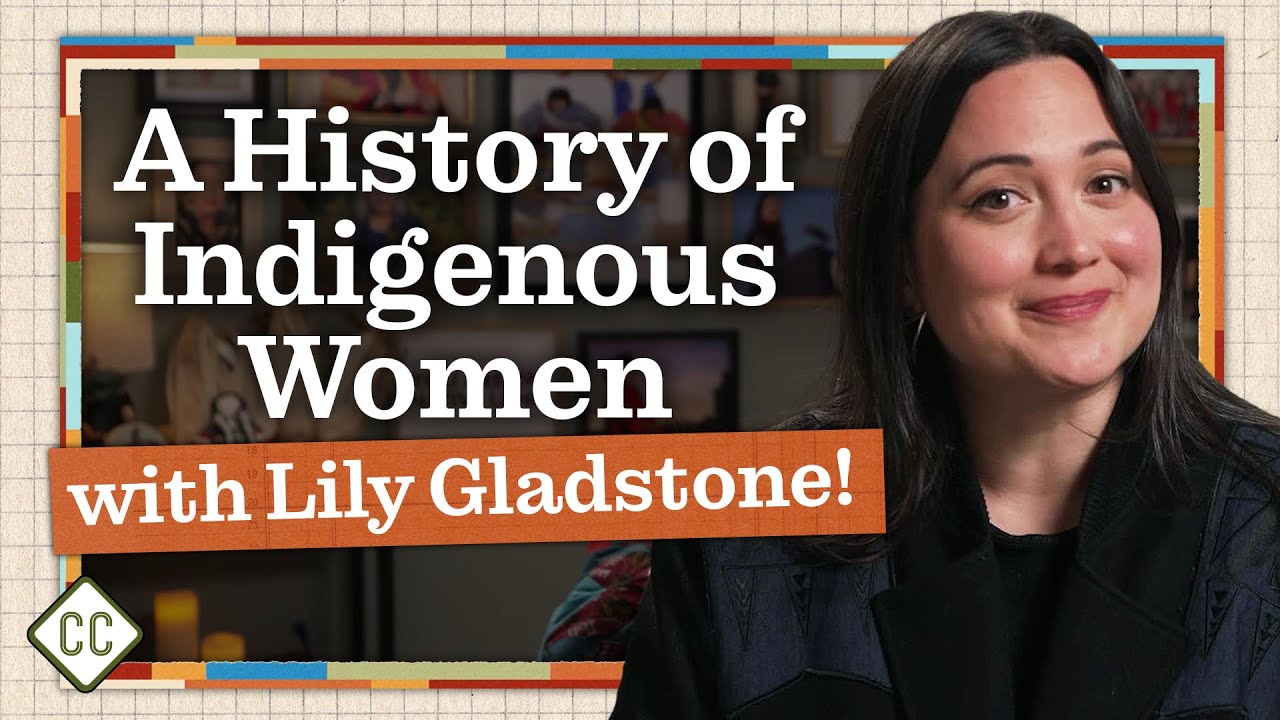
A History of Indigenous Women with Lily Gladstone: Ep 19 of Crash Course Native American History
Keywords
Summary
201 words
Critical Evaluation
Value of the Information & Strength of the Argument
The video offers substantial educational value by synthesizing a wide range of historical and contemporary information about Indigenous women, weaving together specific examples and broader patterns. The argumentation is strong, structured around a clear thesis that Indigenous women have always held important roles, and that colonial disruption was both violent and strategic. The use of primary sources, such as quotes from Paula Gunn Allen and the story of Jikonsaseh, lends authenticity. The episode also critically engages with the diversity of tribal cultures, avoiding overgeneralization while still presenting a coherent narrative. The inclusion of statistical data and legal cases (e.g., the CDC homicide rates, Cobell v. Salazar) adds empirical weight. Overall, the information is presented with clarity and purpose, making a compelling case for the historical and ongoing significance of Indigenous women.
Scientific Rigor, Source Quality, Title Accuracy
The episode demonstrates high scientific rigor by basing its content on documented historical events, oral traditions, and legislative records. CrashCourse provides a comprehensive sources document linked in the description, ensuring transparency and verifiability. The title accurately reflects the content, which is exclusively focused on Indigenous women’s history. One notable flaw is the claim that Deb Haaland was the first Native head of the Bureau of Indian Affairs; in fact, Ely S. Parker held that role in 1869. This error was corrected in the comments and does not detract significantly from the overall quality. The presence of the special thanks to the documentary ‘100 Years: One Woman’s Fight for Justice’ adds credibility to the footage used. The tone is respectful and grounded in scholarly consensus, though it occasionally simplifies complex debates for clarity.
278 words
Title / Content Match
The title precisely reflects the episode's focus on the historical and contemporary roles of Indigenous women, hosted by Lily Gladstone.
Quality & Reliability
8/10
The episode is well-researched with a linked sources document and draws on scholarly and legal references. However, a minor inaccuracy regarding Deb Haaland and the Bureau of Indian Affairs is noted and corrected in the comments, reducing the score slightly.
Key Moments
Markers derived by PSI from the transcript: the creator did not define chapters.
- Introduction: Lily Gladstone introduces the sacred role of Native women.
- Overview of matriarchal societies, with examples like the Navajo (Diné).
- Discussion of Native women who fought in battles, such as Buffalo Calf Road Woman.
- Story of Jikonsaseh and her role in founding the Haudenosaunee Confederacy.
- Examination of diverse gender systems and the variations among tribes.
- Effects of colonization on gender roles and the deliberate violence against Native women.
- Contemporary violence against Native women, including statistics and MMIW movement.
- Profiles of Native women activists: LaDonna Harris, Elouise Cobell, and Deb Haaland.
- Review and credits, with closing remarks.
Cited Sources
- Sources document for this episode — Comprehensive list of references used in the episode, including scholarly and primary sources.
- 100 Years: One Woman's Fight for Justice — Documentary footage used to illustrate Elouise Cobell's story.
- Making of Crash Course Native American History — Background information about the series production and methodology.
Concurring Sources
- Sources document for this episode — The list of sources corroborates the historical claims made in the episode.
- 100 Years: One Woman's Fight for Justice — The documentary supports the portrayal of Elouise Cobell's activism.
Dissenting Sources
- Ely S. Parker - Wikipedia — The video states that Deb Haaland was the first Native head of the Bureau of Indian Affairs, but Ely S. Parker served as Commissioner in 1869, contradicting that claim.
External References
Contribution & Novelties
The episode provides a comprehensive yet accessible synthesis of Indigenous women’s roles across history, emphasizing both their traditional authority and the deliberate disruptions by colonial forces. It contributes original perspective by highlighting less-known figures like Jikonsaseh and framing violence against Native women as a tool of settler-colonialism. The inclusion of contemporary movements and legislative milestones adds a timely dimension.
Pour aller plus loin :
- Missing and Murdered Indigenous Women — Relevant for deeper understanding of the MMIW movement and its impact.
- Not Invisible Act — Details of the 2020 legislation authored by Deb Haaland.
- Cobell v. Salazar — Legal case overview of the $3.4 billion settlement for mismanaged trust funds.
- Ely S. Parker — Clarification on the first Native American to lead the Bureau of Indian Affairs, correcting the video’s claim.
131 words
Radar Profile
The radar profile shows high scores in information quality and global reliability, with slightly lower scores in quantity and technical level. This reflects a well-researched, informative episode that is accessible rather than highly technical, and while comprehensive, it could have expanded further on certain topics.
💬 Sur les 30 commentaires analysés, le climat est très positif avec une forte ferveur : les spectateurs expriment une admiration marquée pour Lily Gladstone, saluent la qualité éducative de l'épisode, et soulignent l'importance de raconter ces histoires. Certains commentaires signalent une erreur factuelle concernant le BIA, mais dans un esprit de correction constructive.