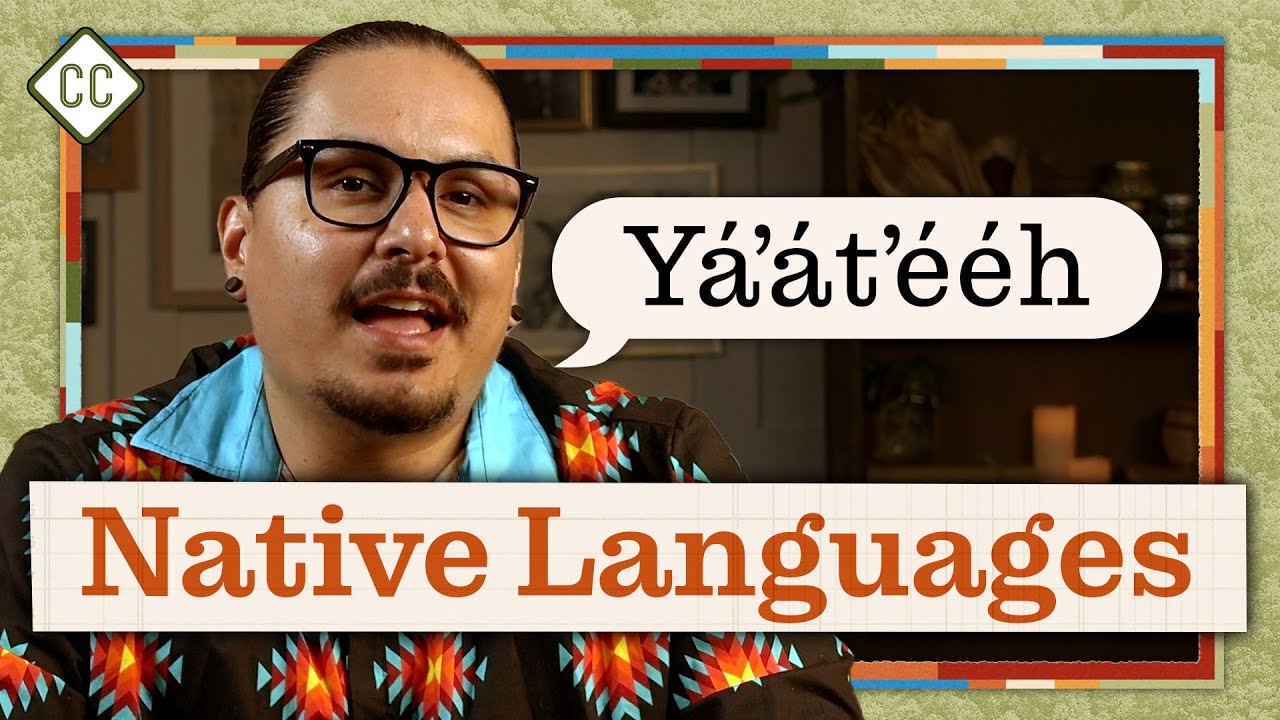
Native Languages & The Indian Education Act: Ep 21 of Crash Course Native American History
Keywords
Summary
192 words
Critical Evaluation
Value of the Information & Strength of the Argument
The video provides high-value information by connecting historical policy to contemporary language vitality, illustrating with concrete examples and emotional testimonies. It argues effectively that language loss is a result of deliberate actions (linguicide) and that current revitalization efforts are both successful and culturally significant. The narrative is well-structured, moving from a current example (game) to historical context and then to positive solutions, which strengthens the argument. The host, Che Jim, is a member of the Navajo Nation, adding personal credibility. The inclusion of quotes from elders and scholars, as well as statistics, enhances the argumentative solidity.
Scientific Rigor, Source Quality, Title Accuracy
The video is scientifically rigorous, citing a Google Doc with detailed sources. It references a 2024 federal report on boarding school deaths (973 children) and a 2018 Alaska linguistics emergency declaration, demonstrating up-to-date and verifiable data. The host distinguishes between scholarly estimates (300-2,000 languages) and acknowledges uncertainty. The use of personal testimony (Bill Wright) and expert quotes (Robin Wall Kimmerer, Paul Disain) adds depth. The title is appropriate as the episode indeed discusses Native languages and the Indian Education Act, though the act is only briefly mentioned. The source list is transparent and accessible, supporting the video’s credibility.
209 words
Title / Content Match
The title accurately reflects the content, which covers Native language loss and the Indian Education Act, though the act is only part of the discussion.
Quality & Reliability
9/10
Excellent educational content with clear citations, reputable channel, and balanced presentation.
Key Moments
Markers derived by PSI from the transcript: the creator did not define chapters.
- Introduction to the episode, featuring the game 'Never Alone' as a language revitalization tool.
- The state of Native languages: fluency decline and prediction of 90% loss by 2050.
- How language reveals cultural values with examples from Anishinaabemowin and Navajo (hózhó).
- Colonization and the impact of Federal Indian Boarding Schools, including abuse and linguistic loss.
- Language revitalization efforts: immersion schools in Hawaii and Arizona, media like Star Wars dub, and positive outcomes.
Cited Sources
- Sources document for this episode — Comprehensive list of references used in the episode, including reports, interviews, and academic studies.
Concurring Sources
- Sources document for this episode — The episode's source list aligns with the claims made, providing verifiable references.
External References
Contribution & Novelties
The video synthesizes historical policies and contemporary revitalization strategies, offering a nuanced view of Native language survival. It introduces the term ’linguicide’ and connects it to broader assimilationist policies. The examples of Never Alone, immersion schools, and media dubs provide practical and cultural pathways for preservation.
Pour aller plus loin :
- Linguicide — Definition and examples of deliberate language extinction.
- American Indian boarding schools — Historical context and consequences.
- Language revitalization — Methods and case studies, including Hawaiian and Maori initiatives.
81 words
Radar Profile
The radar profile shows strong scores in information quality, reliability, and adequacy, with slightly lower but still good marks for quantity and technical level. This indicates a well-balanced, reliable educational video that is accessible yet substantive.
💬 Positive - The 30 comments analyzed reflect a highly positive reception, with many viewers expressing gratitude, sharing personal connections to language loss, and praising the video's emotional and educational impact.