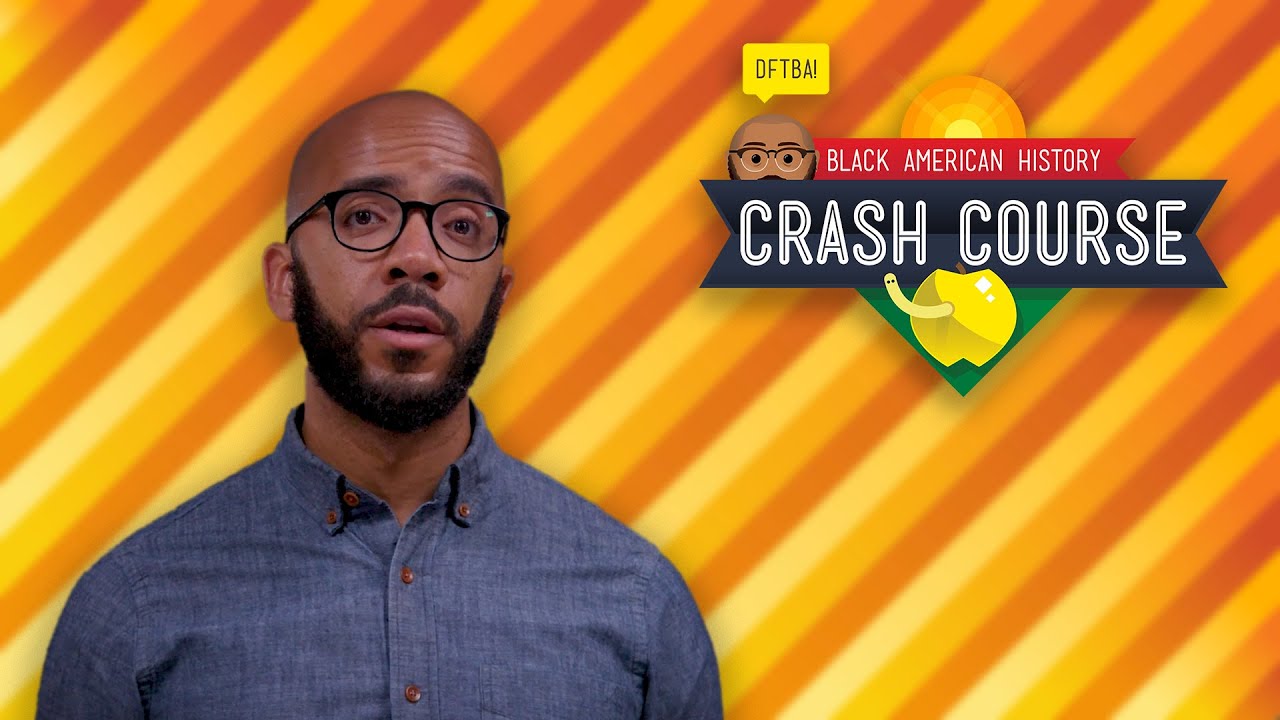
Black American History Arts & Culture | Compilation
Keywords
Summary
178 words
Critical Evaluation
Value of the Information & Strength of the Argument
The video offers substantial educational value by synthesizing key figures, works, and movements in Black American arts and culture. Its argumentation is solid, grounding each artistic development in its historical and political context—for instance, connecting the Harlem Renaissance to the Great Migration and Red Summer. The presentation of divergent viewpoints, such as the debate between Langston Hughes and Countee Cullen over artistic representation, strengthens the analytical depth. Primary sources, including poems and essays, are quoted to support claims, and the narrative consistently links art to broader struggles for civil rights.
Scientific Rigor, Source Quality, Title Accuracy
The scientific rigor is high for an educational documentary: the content is accurate and well-structured, though it does not cite specific scholarly works in the transcript. The only provided external link is to the Crash Course Kids channel, which is not directly relevant to the content. The title accurately describes the compilation’s scope, which is a positive indicator of content integrity. No user comments were provided for analysis.
173 words
Title / Content Match
The title accurately reflects the compilation's content, focusing on arts and culture in Black American history across six episodes.
Quality & Reliability
8/10
The video provides historically accurate information presented by a recognized scholar, with clear pedagogical framing. Some simplifications are inherent to the format, but the core content aligns with established historical knowledge.
Key Moments
Markers derived by PSI from the transcript: the creator did not define chapters.
- Harlem Renaissance: Part 1 – Visual and literary arts overview
- Harlem Renaissance: Part 2 – Political ideas and figures like Marcus Garvey
- Zora Neale Hurston – Life, anthropology, and literary work
- The Origins of Rap & Hip Hop – Historical roots and evolution
- Toni Morrison – Literary legacy and impact
- Phillis Wheatley – First Black American poet published
Cited Sources
- Crash Course Kids — Link provided in description for children's educational content, not directly relevant to the episode's sources.
Concurring Sources
- The New Negro by Alain Locke — A foundational text of the Harlem Renaissance, which the video discusses in the context of political thought.
- Their Eyes Were Watching God by Zora Neale Hurston — A major novel referenced in the episode on Hurston, exemplifying her literary contributions.
Contribution & Novelties
The video compiles existing historical knowledge into a coherent narrative, offering a synthetic view of Black American arts and culture across different eras. Its originality lies in the pedagogical framing that connects disparate figures and movements into a single storyline. It does not present new research but serves as a valuable educational resource.
Pour aller plus loin :
- Harlem Renaissance — Essential overview of the movement.
- Zora Neale Hurston — Biographical details and literary significance.
- The New Negro — Alain Locke’s influential anthology.
- Phillis Wheatley — Historical context of her poetry.
91 words
Radar Profile
The profile shows high scores in quantity and quality of information, with a moderate level of technical depth. Reliability is solid, reflecting the Crash Course brand's reputation, while the technical score indicates accessibility for a broad audience.