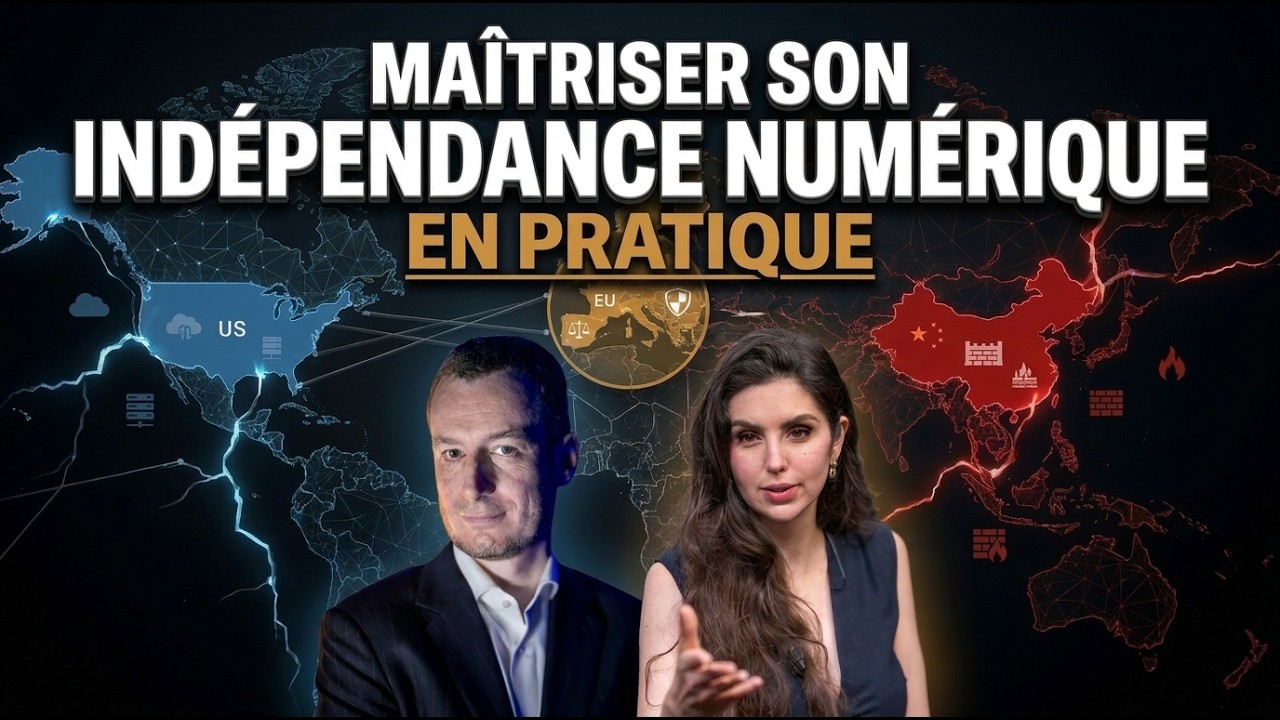
Comment assurer l'indépendance numérique et la résilience des entreprises ? Avec un expert d'Eviden
How to ensure digital independence and resilience of companies? With an expert from Eviden
Keywords
Summary
215 words
Critical Evaluation
Value of the Information & Strength of the Argument
The video provides valuable insights into digital sovereignty from a practitioner’s perspective. The argumentation is structured and logical, emphasizing a risk-based approach that aligns with established cybersecurity frameworks. The expert effectively explains complex topics like post-quantum cryptography in accessible terms, using concrete examples to illustrate points. The discussion is pragmatic, avoiding ideological bias, and focuses on actionable strategies for enterprises. However, the value is limited by the lack of data or case studies with verifiable outcomes, and the expert’s opinions are not supported by external references. The argumentation is persuasive but relies heavily on the speaker’s authority rather than empirical evidence.
Scientific Rigor, Source Quality, Title Accuracy
The title accurately reflects the content, focusing on digital independence and resilience for enterprises. The expert, Pierre Brin Murol, is identified as CTO of cyberproof at Eviden, which lends credibility. However, the video does not cite specific studies, articles, or external sources; it relies solely on the expert’s professional experience and general knowledge. The description provides links to RiskIntel’s newsletter, LinkedIn, and official website, but these are promotional and not sources for the claims made. The content is consistent with known cybersecurity principles and EU regulations, but without citations, the rigor is limited. The title-content alignment is strong, with no misleading elements.
218 words
Title / Content Match
The title accurately reflects the content: a discussion on digital independence and resilience for enterprises, featuring an expert from Eviden.
Quality & Reliability
7/10
The expert provides practical insights from experience, but the video lacks external references or data verification. The discussion is coherent and aligns with known cybersecurity principles, but the low viewership and absence of cited sources limit its reliability.
Key Moments
Markers derived by PSI from the transcript: the creator did not define chapters.
- Introduction of the show and guest Pierre Brin Murol, CTO of cyberproof at Eviden.
- Discussion on the Cloud and AI Act proposal presented to the European Commission.
- Analysis of differences between public and private sector approaches to sovereignty.
- Emphasis on risk-based approach: sovereignty as security management, not an ideology.
- Real-world examples: a CAC 40 company and a healthcare startup dealing with data control.
- Discussion of main challenges: complexity, negotiating with hyperscalers, and risk of acquisition.
- Explanation of post-quantum cryptography, including Shor's and Grover's algorithms and 'harvest now decrypt later'.
- Regulatory roadmap and deadlines: post-quantum transition by 2030 for critical use cases, 2035 for others.
Cited Sources
- RiskIntel Newsletter — Link to subscribe to RiskIntel's newsletter mentioned in the video description.
- RiskIntel LinkedIn — RiskIntel's LinkedIn page linked in the description.
- RiskIntel Official Site — Official website of RiskIntel Media, linked in the description.
Contribution & Novelties
The video offers a pragmatic perspective on digital sovereignty, shifting the conversation from ideological debates to risk management. It provides specific examples of client needs and technical solutions, such as the control of encryption keys and identity management. The discussion on post-quantum cryptography is particularly timely, highlighting the regulatory pressures and the ‘harvest now, decrypt later’ threat, which is often overlooked in business contexts. The expert’s emphasis on a multidisciplinary approach (technical, legal, geopolitical) is a valuable contribution.
Pour aller plus loin :
- Post-Quantum Cryptography — Overview of cryptographic algorithms designed to resist quantum attacks.
- Shor’s Algorithm — Explanation of the algorithm that threatens RSA and other asymmetric cryptosystems.
- Grover’s Algorithm — Explanation of the algorithm that weakens symmetric cryptography.
- NIS 2 Directive — EU cybersecurity regulation that mandates state-of-the-art cryptography, relevant to the discussion.
- Quantum Computing — Overview of quantum computers and their capabilities, as referenced in the video.
150 words
Radar Profile
The profile shows balanced scores across information quantity, quality, technical level, and reliability, indicating a video that provides solid expert opinions but lacks external validation. The moderate technical level suggests it is accessible to a business audience, while the reliability score reflects the absence of cited references.