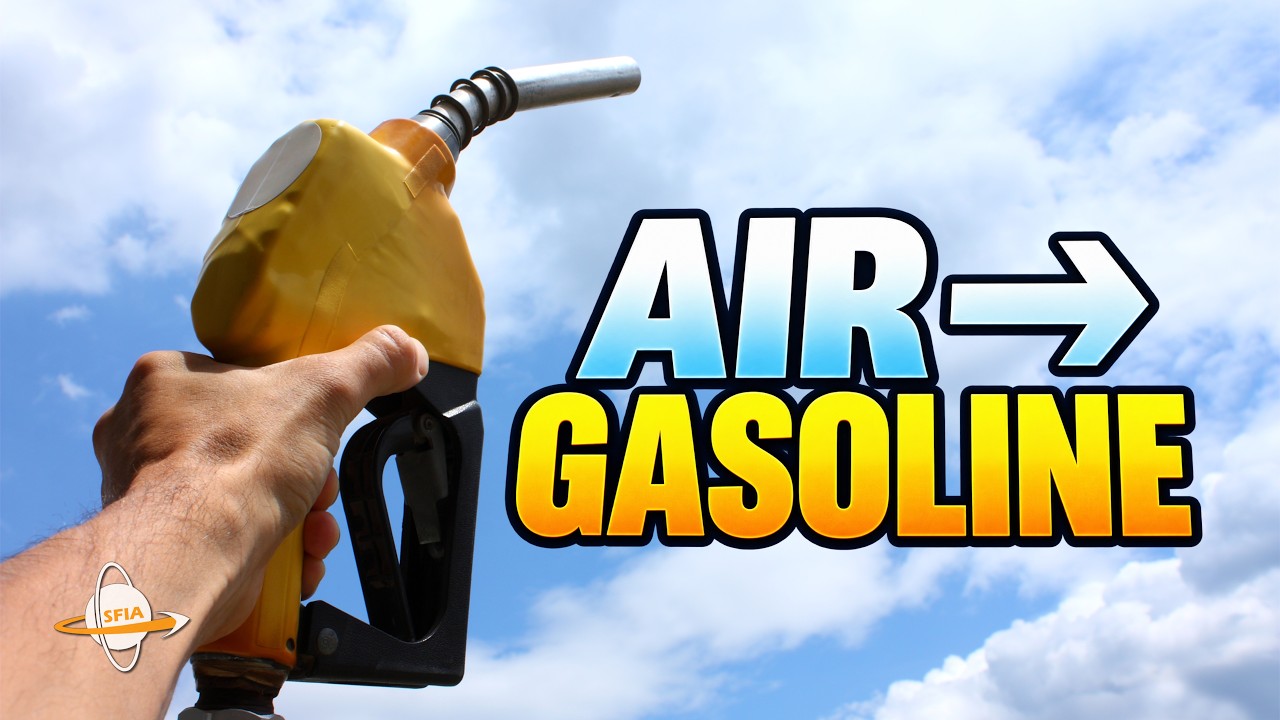
We Can Make Gasoline From Air. So Why Don’t We?
Keywords
Summary
208 words
Critical Evaluation
Value of the Information & Strength of the Argument
The video provides substantial value by synthesizing complex chemistry and physics into an accessible narrative, effectively bridging technical details with broader implications for energy and space colonization. The argumentation is logically structured, starting from why hydrocarbons matter, moving through the chemistry, then addressing economic and thermodynamic constraints, and finally considering applications. It avoids oversimplification by acknowledging trade-offs (e.g., efficiency losses, infrastructure costs) and presents a balanced view of when synthetic fuels are advantageous versus batteries or grids. The use of the Sabatier and Fischer-Tropsch processes is rigorous, and the explanation of the ’thermodynamic tax’ is clear and technically sound. The discussion on carbon neutrality and source accounting is nuanced, correctly distinguishing between recycled carbon and new fossil emissions. Overall, the argumentation is credible and well-reasoned, supporting its premise without falling into hype.
Scientific Rigor, Source Quality, Title Accuracy
The video demonstrates scientific rigor by grounding its explanations in well-established chemical principles and processes. It does not cite specific peer-reviewed papers, but instead relies on general knowledge in chemistry and engineering, which is appropriate for a popular-science format. The technical details (e.g., reaction stoichiometry, energy loss) are accurate and presented without distortion. The title is not only catchy but accurately reflects the content, as the entire video addresses the feasibility and practical considerations of making gasoline from air. The chapter structure helps viewers navigate the topic logically. However, the lack of direct citations to primary literature could be seen as a minor weakness, though it does not detract from the overall reliability given the channel’s reputation and the correct presentation of standard concepts. The adequacy between title and content is excellent, with no mismatch.
282 words
Title / Content Match
The title perfectly matches the content, which explores the feasibility and implications of synthesizing gasoline from air, and answers the question with a nuanced discussion of energy costs and applications.
Quality & Reliability
8/10
The video provides a clear, balanced explanation of synthetic fuels, covering well-established chemical processes (Sabatier, Fischer-Tropsch) and their thermodynamic and economic constraints. While it presents a hopeful future scenario, it correctly acknowledges current inefficiencies and trade-offs, and does not overstate feasibility.
Chapters
- Intro
- Why Hydrocarbons Matter
- The Key Ingredients
- The Sabatier Process: Making Methane
- From Methane to Gasoline
- Plastics, Chemicals, and Carbon Feedstocks
- The Carbon-Neutral Accounting
- The Thermodynamic Tax
- Where the Power Comes From
- Mining the Air at Civilization Scale
- Beyond Earth: Any World Becomes a Fuel Depot
- Space Industry
- The Post-Scarcity Hydrocarbon
Cited Sources
- Isaac Arthur - Official Website — Official website of the channel, providing access to episodes, transcripts, and additional resources.
- SFIA Reddit Community — Community forum for discussion of the channel's topics and episodes.
- SFIA Discord Server — Discord community for fans to engage in related discussions.
Concurring Sources
- NASA - In-Situ Resource Utilization — NASA's ongoing research on manufacturing propellant from Martian resources aligns with the video's Mars examples.
External References
Contribution & Novelties
This video offers a comprehensive and accessible synthesis of synthetic fuel technology, effectively connecting Earth-based energy storage challenges with space exploration opportunities. Its originality lies in framing hydrocarbons as a ‘manufactured product’ rather than a mined resource, and in exploring the implications for a post-scarcity civilization. The video’s systematic approach—from chemistry to economics to planetary applications—provides a fresh perspective that encourages viewers to reimagine energy infrastructure.
Pour aller plus loin :
- Sabatier reaction - Wikipedia — Detailed chemistry and applications, including CO2 methanation.
- Fischer–Tropsch process - Wikipedia — Core industrial process for producing liquid hydrocarbons from syngas, central to the video’s discussion.
- Direct air capture - Wikipedia — Technology for extracting CO2 directly from ambient air, a key feed source for synthetic fuels.
- Syngas - Wikipedia — Important intermediate in synthetic fuel production, bridging carbon and hydrogen feedstocks.
- In-situ resource utilization - Wikipedia — Expansion on the video’s space-based fuel production ideas, especially for Mars missions.
156 words
Radar Profile
The radar profile shows high scores in information quantity and technical level, indicating a content-rich, moderately deep explanation. Quality and reliability are also high, reflecting the channel's consistent accuracy. The balanced trade-offs discussed contribute to a solid overall assessment, though the lack of direct citations slightly lowers the reliability score.
💬 positive - The 30 comments analyzed are overwhelmingly positive, with viewers praising the educational value and the channel's ability to reframe perspectives on energy storage. Many comments also engage with the technical content, discussing related technologies and expressing appreciation for the depth of the presentation.