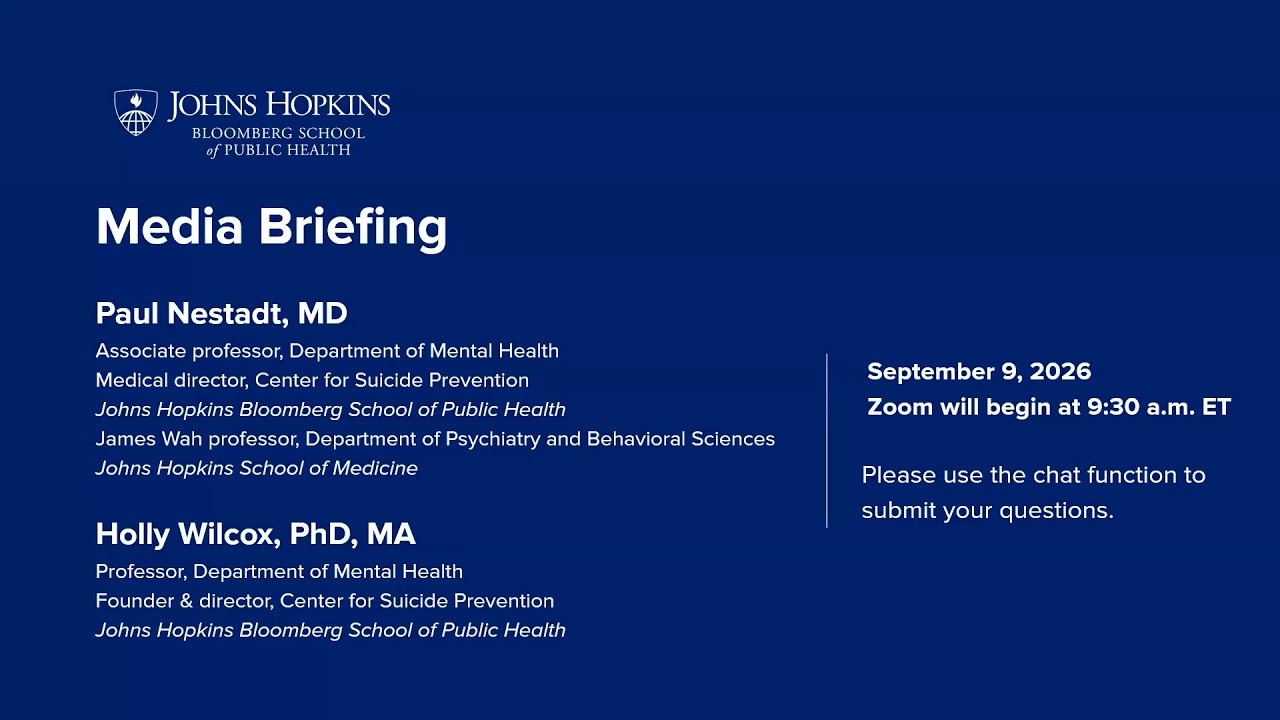
Media Briefing: Suicide Trends and Effective Prevention Strategies
Keywords
Summary
200 words
Critical Evaluation
Value of the Information & Strength of the Argument
The value of this briefing lies in its clear articulation of evidence-based suicide prevention strategies, particularly lethal means safety. The argumentation is solid, built on epidemiological data and controlled studies. For instance, they logically explain that firearm access dramatically increases fatality risk (90% fatality vs. 2% for overdose) and that surviving an attempt reduces long-term risk to 6%. The psychological autopsy methodology is well-justified for understanding deaths. The 988 impact study is presented with appropriate caution, acknowledging its observational nature. The discussion of AI is timely and balanced, noting both potential benefits and harms. Overall, the reasoning is internally consistent and grounded in credible research.
Scientific Rigor, Source Quality, Title Accuracy
The scientific rigor is high, with speakers citing CDC statistics, peer-reviewed studies, and official programs (e.g., Air Force). Sources include the American Foundation for Suicide Prevention, the 988 Lifeline, and Johns Hopkins research. The title accurately reflects the content, and the description provides direct links to resources. No comments were provided for analysis, so that aspect is omitted.
178 words
Title / Content Match
The title precisely matches the content: the video is a structured media briefing covering national suicide trends and evidence-based prevention strategies.
Quality & Reliability
9/10
The briefing features two senior professors from the Johns Hopkins Bloomberg School of Public Health, both with extensive research experience in suicide prevention. They cite recent CDC data (e.g., 14.3 million adults seriously considered suicide in 2024) and peer-reviewed studies (e.g., Patel et al. on 988 impact). The information is presented with cautious interpretation (e.g., observational data limitations) and aligns with established public health knowledge.
Chapters
- Introduction
- Addressing suicide risk at a public health level
- Concrete methods for helping prevent suicides
- Suicide trends nationally and in Mississippi
- Firearm access and suicide
- Ethical coverage of suicide in the media
- Common themes in suicide
- 988 hotline infrastructure
- Suicide prevention in schools and workplaces
- Studying attempts vs deaths
- Using data to help prevent suicide
- AI influence on suicide attempts or prevention
- Studying mortality data to enhance prevention
- Population-level strategies effectiveness
- The importance of reaching people where they are
Cited Sources
- A Cascade of Care Model for Suicide Prevention — Referenced as a resource for a comprehensive prevention model.
- How To Talk About Suicide - Johns Hopkins — Offers guidance on discussing suicide safely.
- Firearm Suicide - Center for Gun Violence Solutions — Details on firearm suicide statistics and prevention.
- Center for Suicide Prevention - Johns Hopkins — Background on the center and its work.
- Holly Wilcox - Faculty Profile — Credentials and work of Professor Wilcox.
- Paul Nestadt - Faculty Profile — Credentials and work of Professor Nestadt.
- Ethical Reporting Guidelines for Media - AFSP — The guidelines referenced for journalists.
- Suicide Under the Microscope - Hopkins Medicine — Article about suicide research.
- Johns Hopkins Bloomberg School of Public Health — Homepage of the institution.
Concurring Sources
- CDC Suicide Prevention Data — The CDC provides the national suicide statistics referenced in the briefing.
- Patel et al. 2026 Study on 988 — The study referenced for the 11% reduction in suicide mortality post-988 launch.
Contribution & Novelties
The video provides a concise, expert synthesis of current suicide prevention evidence, emphasizing the critical role of lethal means safety and policy interventions. It offers new insights by connecting national data to specific policy effects, such as the 14% reduction in youth gun suicides from child access prevention laws. The discussion of the 988 lifeline’s impact adds recent data, and the segment on AI chatbots opens a forward-looking debate. Its originality lies in the clarity of the public health message: prevention is a community responsibility, not just an individual clinical task.
Pour aller plus loin :
- A Cascade of Care Model for Suicide Prevention — A framework for coordinated care, directly relevant to the briefing’s holistic approach.
- 988 Suicide & Crisis Lifeline — Official site for the crisis hotline, corroborating the discussed infrastructure and outcomes.
- WHO Suicide Prevention Fact Sheet — Global context and statistics that complement U.S.-focused data.
- American Foundation for Suicide Prevention — Source for state-specific data and advocacy efforts mentioned in the video.
166 words
Radar Profile
The radar profile shows high scores across all dimensions, with particularly strong reliability and quality of information. The technical level is moderate, making it accessible to a broad audience while still providing depth. This suggests a highly trustworthy and informative briefing suitable for journalists and the public.