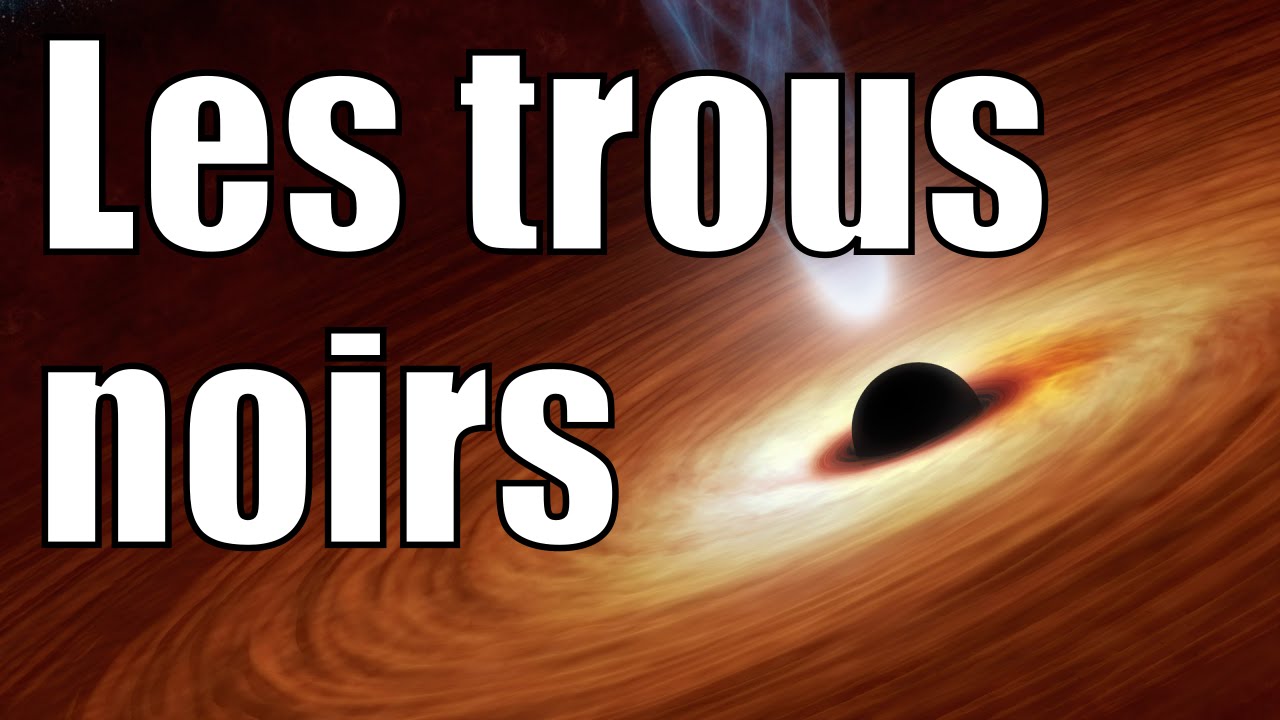
Les trous noirs
Black Holes -- Amazing Science #19
Title history
- Les trous noirs — observed on 20261019-0426 UTC (PSI archive)
Keywords
Summary
153 words
Critical Evaluation
Value of the Information & Strength of the Argument
The value of the video lies in its clear pedagogical approach. The argumentation is structured logically: starting with a familiar concept (escape velocity), extending it to dense objects, then introducing the Schwarzschild radius, and finally exploring observational evidence and consequences. The presenter explicitly acknowledges the limitations of the simplified argument, which strengthens the scientific credibility. He also provides concrete examples (Earth, Moon, Sun) and a real astronomical object (Sagittarius A*) to ground the concepts.
Scientific Rigor, Source Quality, Title Accuracy
The scientific rigor is high for a popular science video. The presenter distinguishes between established knowledge (Schwarzschild radius, observational evidence) and open questions (singularity, quantum gravity). He cites resources in the description, including links to NASA images and his own blog posts, which provide more detailed derivations. The title accurately reflects the content; it is concise and directly matches the subject. The video is well-researched and the simplifications are flagged as such, which is commendable.
164 words
Title / Content Match
The title 'Black Holes' perfectly encapsulates the video's scope, covering formation, detection, and the experience of falling into one.
Quality & Reliability
9/10
The video is from a well-known popular science channel run by a physicist. The content is accurate but uses simplifications (e.g., Newtonian escape velocity argument) that are explicitly acknowledged as incomplete. The presentation is rigorous, with clear explanations and references to additional materials, but is not a peer-reviewed source.
Key Moments
Markers derived by PSI from the transcript: the creator did not define chapters.
- Introduction: what is a black hole, and the plan to explain with simple physics
- Derivation of escape velocity using energy conservation
- Examples of escape velocities for Earth, Moon, Sun
- Introduction of Schwarzschild radius and event horizon
- Observational evidence: matter falling into black holes and stellar orbits around Sagittarius A*
- Falling into a black hole: spaghettification and tidal forces
- Time dilation seen by outside observer; inside the horizon, inevitable collapse
- Singularity and quantum gravity theories; conclusion
Cited Sources
- Chandra X-ray Observatory image of Sagittarius A* — Image used in the video to illustrate the region around the central black hole of the Milky Way
- Science Étonnante blog — The presenter's blog, where he posts articles accompanying his videos
- Search for black hole posts on the blog — Links to related blog posts on black holes
- Blog post accompanying this video — Detailed article that clarifies the limitations of the simplified argument and gives the general relativity treatment
- Wikimedia Commons - John W. Young on the Moon — Image used as an analogy for something in the video (likely to illustrate escape velocity or gravity)
- Wikimedia Commons - Kruskal diagram of Schwarzschild chart — Diagram illustrating the structure of spacetime around a black hole, likely shown in the video
Contribution & Novelties
The video’s original contribution lies in its explanatory clarity and pedagogical strategy. It uses a step-by-step derivation of escape velocity to introduce the concept of black holes, making the underlying physics accessible to a general audience. It then connects the concept to real astronomical observations, such as the motion of stars near Sagittarius A*. The presenter also honestly points out the limitations of the simplified argument, encouraging viewers to explore the full relativistic treatment. This blend of accessible explanation and scientific honesty is valuable.
Pour aller plus loin :
- Black hole - Wikipedia — For a comprehensive overview of black hole physics, including types and observational evidence.
- Schwarzschild radius - Wikipedia — Detailed derivation and significance of the radius defining the event horizon.
- Event Horizon Telescope — The project that captured the first image of a black hole, providing direct visual evidence.
- General relativity - Wikipedia — For understanding the full theory that predicts black holes.
- Loop quantum gravity - Wikipedia — Mentioned in the video as a candidate theory for quantum gravity.
173 words
Radar Profile
The radar profile shows high scores in quality, information quantity, and reliability, with a slightly lower technical level, reflecting a balance between depth and accessibility. The video excels in clear communication and factual accuracy, making it a strong educational resource.
💬 très positif. Sur les 30 commentaires analysés, tous expriment une admiration et une gratitude pour la clarté des explications, avec plusieurs soulignant que la chaîne est l'une des meilleures en vulgarisation scientifique.