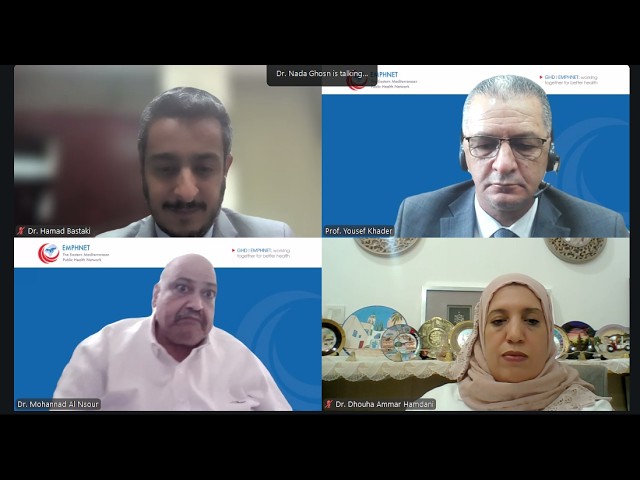
WEBi 58: Behind the Alert The Work That Stops Outbreaks
Keywords
Summary
136 words
Critical Evaluation
Value of the Information & Strength of the Argument
The value of this webinar lies in its concrete, real-world examples that demonstrate the tangible benefits of FETP training on public health practice. Each speaker provides specific cases—such as establishing new surveillance streams in Lebanon, evaluating emergency response timelines in Sudan, and developing integrated surveillance in Qatar—that substantiate the claim that field epidemiologists work effectively behind the scenes. The argumentation is based on experiential narratives rather than empirical studies, but the depth of detail and direct involvement of the speakers lend authenticity and practical relevance. The lack of comparative or outcome-based analysis weakens the strength of the argument, but the presentation is persuasive in illustrating the indispensable role of FETPs.
Scientific Rigor, Source Quality, Title Accuracy
The webinar demonstrates moderate scientific rigor: while the speakers are well-credentialed and their examples are coherent, the reliance on personal experience without external validation limits the robustness of the claims. No external literature or data sources are cited; the bulk of evidence comes from program reports and anecdotal observations. The title accurately captures the content, which consistently emphasizes the behind-the-scenes work of field epidemiologists. The alignment between title and content is strong, and the webinar fulfills its stated objectives of showcasing FETP contributions. No audience comments were provided for analysis; therefore, no public reception trends can be assessed.
223 words
Title / Content Match
The title accurately reflects the content, focusing on the behind-the-scenes work of field epidemiologists in preventing and controlling outbreaks.
Quality & Reliability
7/10
The webinar features credentialed public health experts from FETP programs sharing detailed field experiences. The content is credible given institutional affiliations, but it is largely anecdotal and lacks systematic scientific analysis or peer review. The examples illustrate real-world impact, yet the evidence is primarily descriptive rather than experimental.
Key Moments
Markers derived by PSI from the transcript: the creator did not define chapters.
- Introduction by Dr. Mohannad Al Nsour and Dr. Hamad Bastaki on World Field Epidemiology Day and webinar objectives.
- Dr. Nada Ghoson presents Lebanon's FETP experience, including context, history, and impact on surveillance.
- Dr. Mohamed Awadallah shares an evaluation of a dengue outbreak response in Sudan using the 7-1-7 approach.
- Dr. Dhouha Ammar Hamdani discusses her journey from FETP trainee to IPC lead, highlighting national projects on MRSA and HAI surveillance.
Cited Sources
- EMPHNET — Organizer of the webinar and regional network supporting FETPs.
- Mediterranean Black Sea Program for Intervention Epidemiology Training — Mentioned by Dr. Nada as a collaborative program for FETP training in Lebanon.
- CDC — Cited as a supporter of FETP training and field epidemiology.
Contribution & Novelties
The webinar contributes by providing current, first-hand accounts of FETP implementation across the Eastern Mediterranean region, offering insights into the diverse applications of field epidemiology in settings as different as Lebanon, Sudan, and Qatar. It underscores the often-invisible nature of this work and its critical role in community protection. The addition of the 7-1-7 metric in the Sudan case provides a practical framework for evaluating outbreak response that may be novel to many viewers.
Pour aller plus loin :
- Field Epidemiology Training Program — Background on FETP models and global impact.
- Outbreak investigation — Standard methodologies for investigating disease outbreaks.
- Surveillance for infectious diseases — Overview of surveillance systems and their role in public health.
115 words
Radar Profile
The scores reflect a high quantity of information and moderate technical depth, with reliability slightly lower due to the lack of external validation. The profile is balanced, indicating informative but not peer-reviewed content.