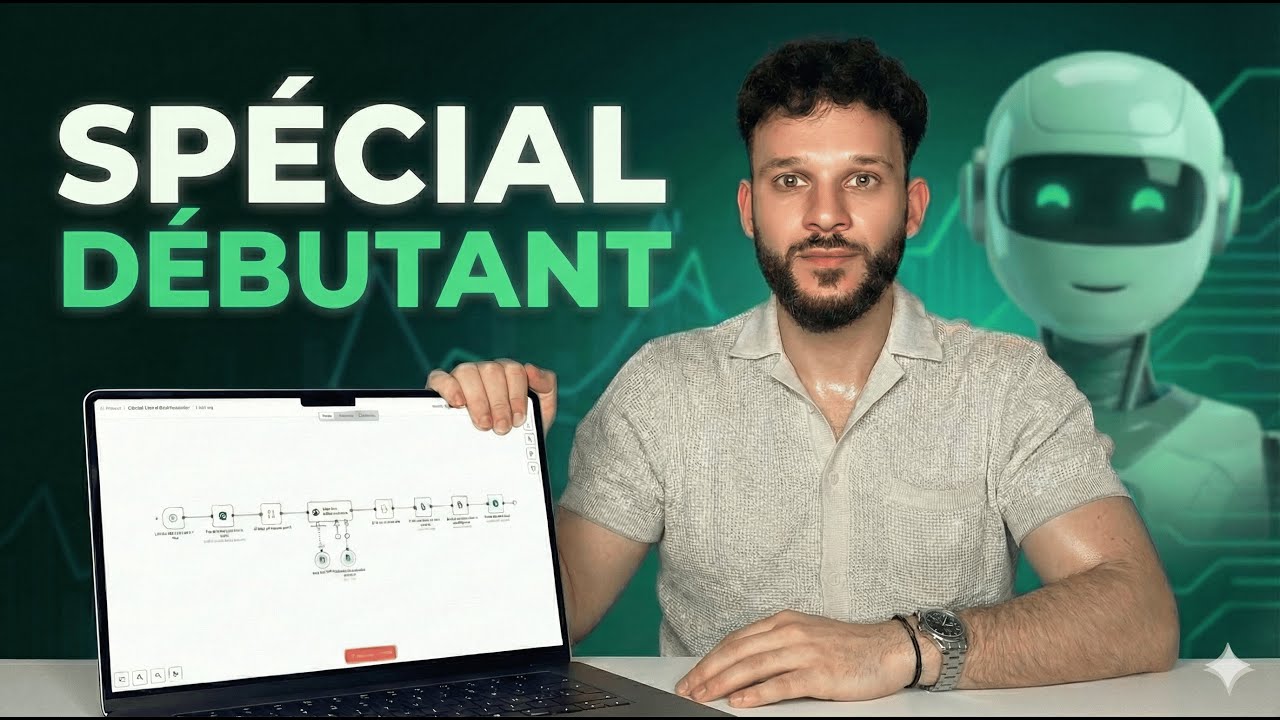
J'ai créé un Agent IA pour mon Agence AAA (Explication Complète)
Title history
- J'ai créé un Agent IA pour mon Agence AAA (Explication Complète) — observed on 20261101-0152 UTC (YouTube)
Keywords
Summary
187 words
Critical Evaluation
Value of the Information & Strength of the Argument
The video offers practical value by showing a concrete, working automation pipeline that saves time and streamlines content marketing. The argumentation is coherent: the creator identifies a repetitive task (transforming LinkedIn posts into emails), explains the manual friction, and presents a logical technical solution using readily available tools (Apify, OpenAI, Google Docs, Telegram, Substack). While the reasoning is sound and the demonstration is authentic, the lack of metrics or comparative analysis limits the strength of the argument. The creator is transparent about the system’s early stage and future refinements, which adds credibility but does not constitute a rigorous scientific evaluation.
Scientific Rigor, Source Quality, Title Accuracy
The scientific rigor is limited: the video is a personal case study without external citations, peer-reviewed sources, or reproducible benchmark data. The only links in the description are promotional (to Telegram community and an application form), which serve as business engagement rather than scholarly references. The title accurately conveys the content—a complete explanation of building an AI agent for his agency—and the video delivers on that promise. No comments were provided for analysis, so no public sentiment can be assessed.
195 words
Title / Content Match
The title accurately reflects the content: the creator explains and demonstrates a custom AI agent built for his agency's newsletter automation. The video matches the promise of a complete explanation.
Quality & Reliability
6/10
The video provides a clear, hands-on demonstration of a practical AI automation workflow, but it is based on personal experience and lacks external verification or empirical evidence. The technical details are explained at a moderate level and the creator openly discusses limitations and future improvements, which lends some credibility, though no sources or references are provided.
Chapters
Cited Sources
- Wolph Telegram Community — Link in the video description for joining the creator's Telegram channel.
- Wolph Application Form — Link in the video description for applying to the Wolph collective.
Contribution & Novelties
The video provides an original, practical example of integrating an AI agent into a business workflow without deep coding, illustrating how content repurposing can be automated. It demonstrates a systematic approach that viewers can adapt. The novelty lies in the specific combination of tools (Apify, OpenAI, Google Sheets, Google Docs, Telegram, Substack) and the iterative design strategy.
Pour aller plus loin :
- Artificial intelligence — Foundational concepts behind the AI agent.
- Workflow automation — General principles of automating business processes.
- No-code development platform — The ecosystem enabling such automations.
- Content marketing — Strategic context for the newsletter repurposing.
98 words
Radar Profile
The radar profile shows moderate scores across all dimensions, with a slight peak in quantity of information and a dip in reliability. This suggests a video that delivers a substantial amount of practical content but lacks authoritative verification, making it a balanced yet not deeply rigorous source.