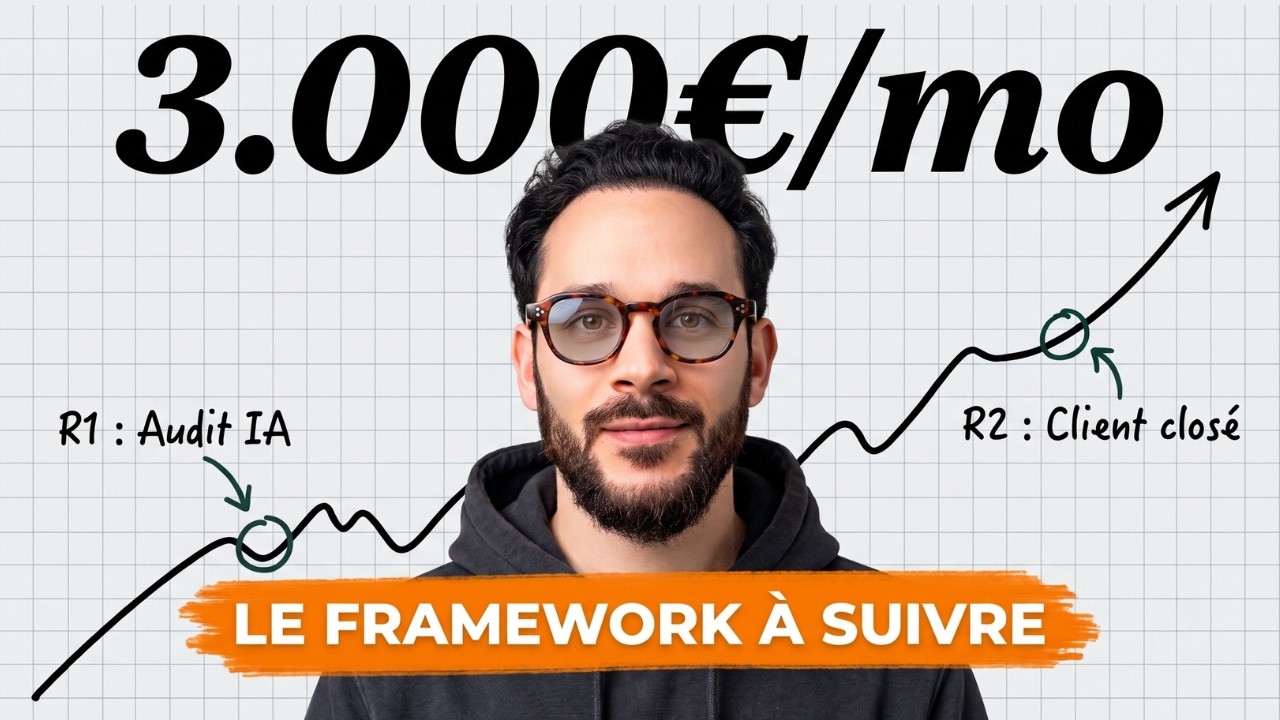
Vendre une infrastructure IA 3000€ sans être un vendeur (Matrice POVI)
Selling a €3,000 AI Infrastructure Without Being a Salesperson (POVI Matrix)
Title history
- Vendre une infrastructure IA 3000€ sans être un vendeur (Matrice POVI) — observed on 20261101-0112 UTC (YouTube)
Keywords
Summary
144 words
Critical Evaluation
Value of the Information & Strength of the Argument
The video offers a structured sales methodology that is easy to follow and logically presented. The emphasis on diagnosing deep client needs and using the cost of inaction as a closing tool is a well-known B2B sales technique. However, the argumentation is based entirely on the creator’s personal experience and unverifiable success stories (e.g., clients signing deals at €7500 and €16000). No empirical data, case studies, or references to sales literature are provided. The advice is prescriptive but may oversimplify complex sales situations, and the claim that 99% of companies are disorganized is presented without evidence. The value lies mainly in the procedural clarity, but the scientific basis is weak.
Scientific Rigor, Source Quality, Title Accuracy
The video has no scientific rigor; no sources are cited beyond a link to the creator’s own coaching selection form (https://go.wolph.ai/aYKZBSL ). The only reference in the description is this commercial link, and the video promotes a Google Doc available via Instagram. The content is opinion-based and anecdotal. The title is accurate and matches the content, which is a tutorial on selling AI services. There is a promotional segment at the end of the video (approximately 1 minute) advertising the creator’s coaching services, which are not penalized in the rating. The overall quality of sources is low, as the video relies on personal experience rather than verifiable data.
233 words
Title / Content Match
The title accurately describes the content: a framework to sell AI services for €3000, based on the POVI matrix.
Quality & Reliability
3/10
The video is a commercial tutorial with no scientific sources or empirical data. It relies on personal anecdotes and unproven claims about sales effectiveness. The argumentation is persuasive but lacks evidence.
Key Moments
Markers derived by PSI from the transcript: the creator did not define chapters.
- Introduction: problem of technical people unable to sell their AI skills.
- Presentation of the POVI matrix and the four pieces of information to collect.
- Explanation of the 5 Whys technique to uncover deep client problems.
- R1 (audit) details: mapping the client's business visually to gain authority.
- R2 (sales meeting): using cost of inaction and auto-closing to convince the client.
- Product vs. Offer concept: packaging AI solutions to justify higher prices.
Cited Sources
- Application form for coaching program — Mentioned at the end of the video as a selection form for further coaching.
Contribution & Novelties
The video contributes a practical, action-oriented sales framework (POVI) specifically tailored to AI service providers, combining elements from consultative selling and solution-based approaches. It emphasizes the psychological moment from discovery to close, which is systematically underdevelopped in technical tutorials. The originality is the synthesis of existing sales concepts into a simple mnemonic and the focus on two-meeting cycles.
Pour aller plus loin :
- 5 Whys — Root cause analysis technique directly used in the video to identify deep client motivations.
- SPIN selling — A consultative selling model that complements the POVI approach with situation, problem, implication, and need-payoff questions.
- Consultative selling — A broader sales concept that frames the advisor role described in the audit phase.
116 words
Radar Profile
The profile shows moderate quantity of information but low quality and reliability, with low technical depth, indicating a practical but non-scientific content. The scores suggest that while the video provides a fair amount of procedural detail, its credibility and analytical rigor are limited.