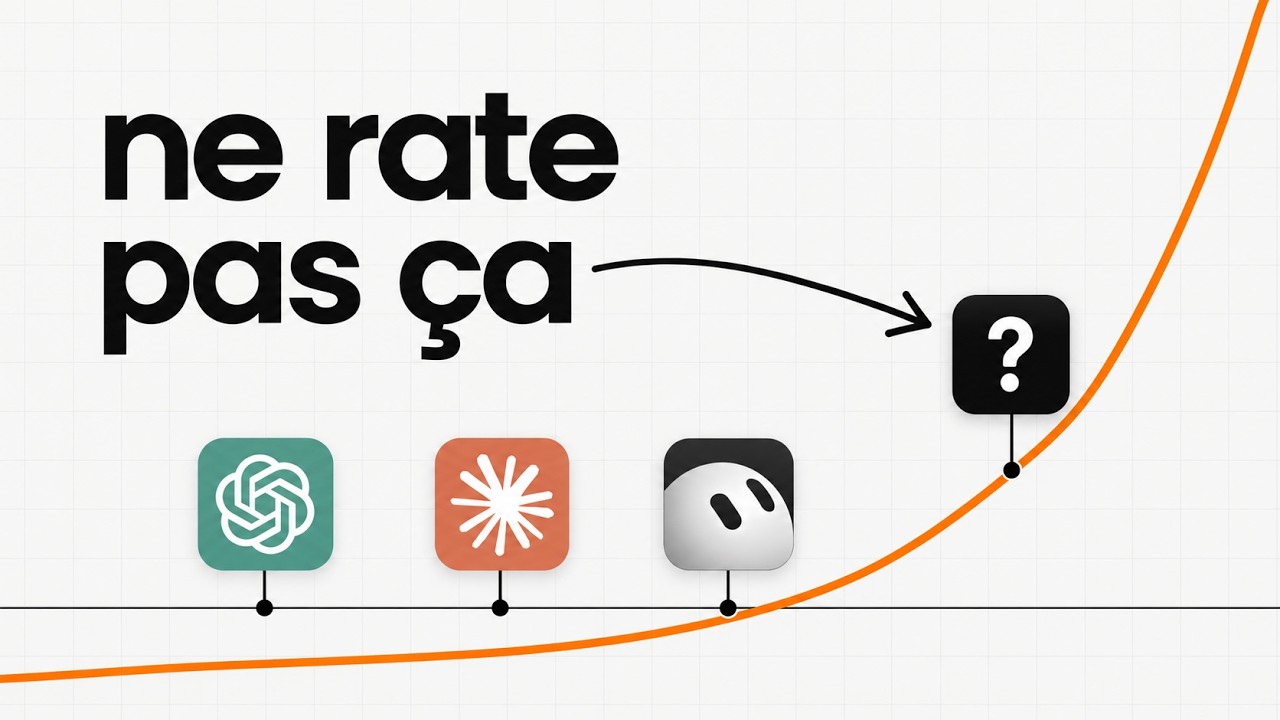
Ce que j’apprendrais à la place du Prompt Engineering en 2027.
What I’d learn instead of Prompt Engineering in 2027.
Title history
- Ce que j’apprendrais à la place du Prompt Engineering en 2027. — observed on 20261031-2254 UTC (YouTube)
Keywords
Summary
152 words
Critical Evaluation
Value of the Information & Strength of the Argument
The video delivers valuable practical advice on shifting from prompt engineering to a management mindset, offering a clear framework (objective, context, example) that is actionable for business users. The argumentation is persuasive, supported by anecdotes from Anthropic and the speaker’s own consulting experience. However, the claims lack rigorous evidence and are primarily based on personal success stories. The promotional tone and vague references to ‘Anthropic’s guide’ without specific citations weaken the academic credibility. Still, the core idea that management skills are more important than technical prompting is well-articulated and logically presented.
Scientific Rigor, Source Quality, Title Accuracy
Scientific rigor is low; the video cites no formal research or verifiable sources, instead relying on hearsay and personal achievements. The only external link is a promotional URL for the speaker’s own offer. The title matches the content precisely, and the presentation is clear, but the lack of concrete references or data reduces its reliability. The video does acknowledge counterpoints (e.g., previous emphasis on context engineering) but does not engage with conflicting evidence. Overall, the source quality is anecdotal rather than scholarly, though the title-content alignment is strong.
194 words
Title / Content Match
The title accurately reflects the core message, which advocates shifting from prompt engineering to AI management.
Quality & Reliability
7/10
The video offers practical, experience-based advice on AI management but relies heavily on anecdotal evidence and promotional content, lacking verifiable scientific sources.
Key Moments
Markers derived by PSI from the transcript: the creator did not define chapters.
- Introduction and claim about Claude Code creator using Claude as an employee.
- Explanation that prompt engineering is dead, replaced by management.
- Introduction of the three bricks: objective, context, example.
- Discussion on SMART objectives and the importance of measurability.
- Context building and giving AI access to company tools.
- Iteration process, creating SOPs, and cost management.
Cited Sources
- Wolf AI promotional link — The only external link in the description, leading to the speaker's own service.
Concurring Sources
- SMART criteria — Supports the video's recommendation to use measurable objectives for AI tasks.
- Intelligent agent — Corroborates the notion of autonomous AI agents performing tasks independently.
Contribution & Novelties
The video’s original contribution is the practical framework for managing AI as an employee, shifting focus from prompt crafting to objective-setting, context provision, and iterative refinement. It emphasizes that business understanding, not technical prompting, will be the key skill, which contrasts with the prevailing ‘prompt engineering’ discourse.
Pour aller plus loin :
- SMART criteria — The framework for setting measurable objectives, directly relevant to the video’s advice.
- Prompt engineering — Historical context on the discipline the video argues is fading.
- Intelligent agent — Background on autonomous AI agents, which aligns with the video’s concept of AI as an employee.
99 words
Radar Profile
The radar chart suggests a moderate profile with balanced scores across information quantity, quality, and technical level, but lower reliability, reflecting the video's practical but unsupported nature.