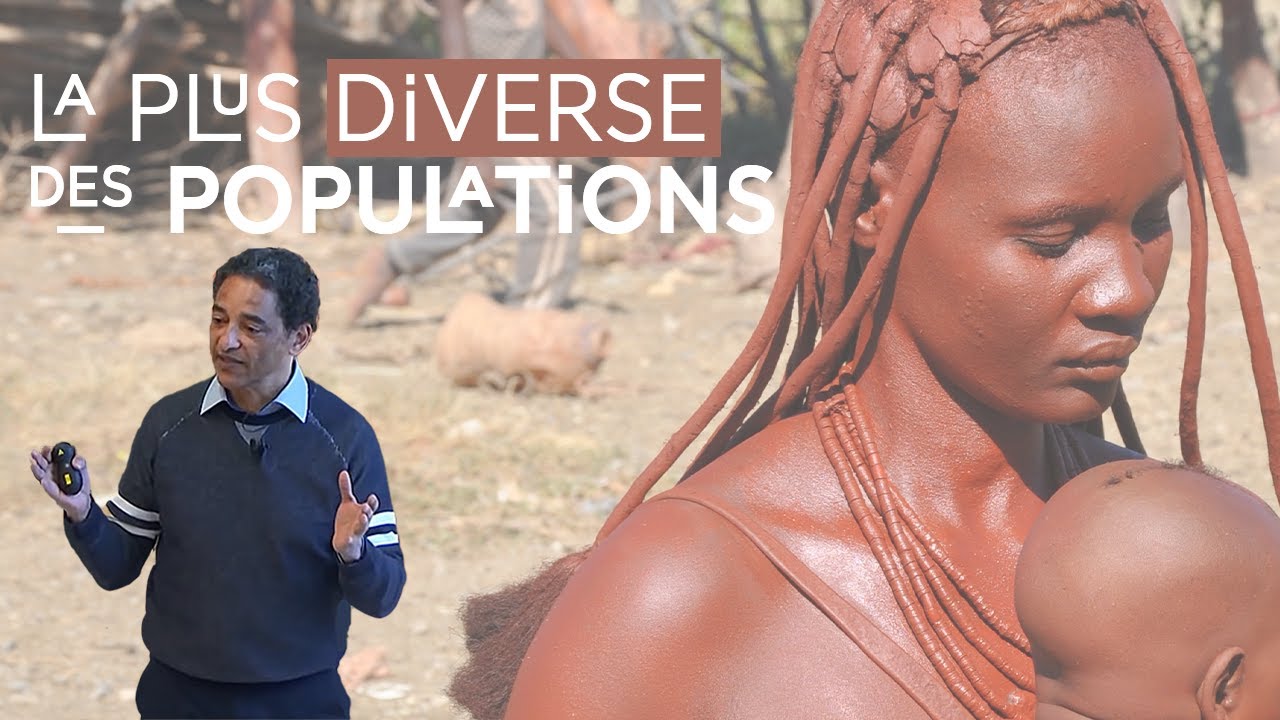
L'espèce humaine : naissance et diversification en Afrique (3/3)
The Human Species: Origins and Diversification in Africa (3/3)
Keywords
Summary
181 words
Critical Evaluation
Value of the Information & Strength of the Argument
The lecture provides substantial value by integrating molecular genetics, paleontology, and evolutionary biology to dismantle racialist misconceptions. The argumentation is systematic: from defining life and DNA to demonstrating how genetic changes accumulate over time and manifest as both disease and evolutionary novelty. Romana effectively communicates that all humans share a recent African origin and that within Africa genetic variation is highest, a point supported by modern genomic evidence. The presentation is persuasive because it builds on foundational concepts before applying them to real-world implications, making the scientific case against race compelling.
Scientific Rigor, Source Quality, Title Accuracy
Romana’s discourse is grounded in well-established scientific data, including the sequencing of the human genome and comparisons with other primates. He references Charles Darwin and Watson & Crick, aligning with the canonical history of biology. However, he does not cite specific research studies or provide detailed data sources, keeping the talk at a general explanatory level. The title accurately matches the scope: the focus is clearly on the African cradle of our species and the diversification that preceded global expansion. The lack of citations in the presentation slightly weakens the scholarly rigor, though the scientific consensus he presents is current and reliable.
208 words
Title / Content Match
The title accurately reflects the content: the lecture discusses the African origin of Homo sapiens and the genetic diversification that occurred on the continent before global dispersal.
Quality & Reliability
8/10
Conférence by a professor of medicine and geneticist, based on established scientific knowledge but simplified for a general audience. Thorough explanations of DNA and evolution, though some generalizations may obscure nuances.
Key Moments
Markers derived by PSI from the transcript: the creator did not define chapters.
- Introduction and the universal question of human origins.
- Different mythological and religious explanations versus the scientific approach.
- Definition of life and the geological time scale, including the Cambrian explosion.
- Detailed explanation of DNA structure, code, and chromosomes.
- Mutations, genetic diseases, and the evolutionary role of chromosomal rearrangements.
- Comparison of human genome with chimpanzee and gibbon, illustrating rearrangements.
- Conclusion: African origin of modern humans and greater diversity within Africa.
Cited Sources
- On the Origin of Species by Charles Darwin — Referenced as the father of evolutionary theory.
- Molecular structure of nucleic acids (Watson & Crick) — Mentioned for the discovery of the DNA double helix.
Contribution & Novelties
This lecture contributes a clear and accessible synthesis of current genetic knowledge about human origins, effectively correcting misconceptions about race by showing that biological diversity is greatest within Africa. It bridges multiple disciplines (genetics, paleontology, linguistics) to reinforce the scientific consensus. The speaker’s personal journey through the questions adds a relatable narrative.
Pour aller plus loin :
- Recent African origin of modern humans — This concept directly supports the lecture’s central thesis of an African origin and subsequent dispersal.
- Human genetic diversity — Provides deeper insight into the genetic variation mentioned in the talk.
- Mitochondrial Eve — A relevant example of tracing common ancestry through maternal lineages.
107 words
Radar Profile
The radar profile is expected to show high scores for quality and quantity of information, moderate technical level, and high global reliability. This reflects a scientifically sound but accessible presentation.
💬 Très positif. Sur les 30 commentaires analysés, la plupart expriment des remerciements et de l'enthousiasme pour la conférence, plusieurs demandent des liens vers les parties 1 et 2, et certains posent des questions complémentaires sur des points spécifiques.