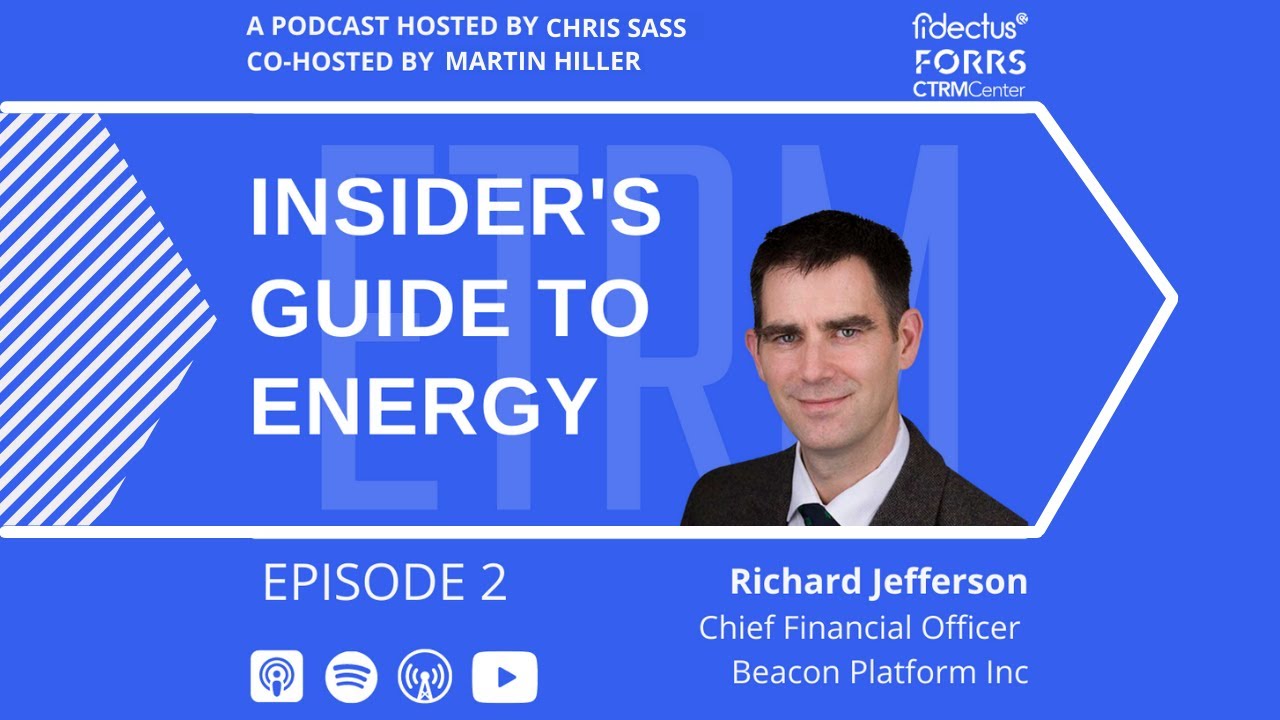
Episode 2 | ETRM Mini-Series with Beacon
Keywords
Summary
144 words
Critical Evaluation
Value of the Information & Strength of the Argument
The value of the information lies in the direct explanation of Beacon’s platform architecture and its positioning in the ETRM market. The argumentation is based on Jefferson’s professional experience, including his time at Deutsche Bank, and practical examples such as adapting to negative oil prices or modeling gas storage. However, the claims are largely anecdotal and self-promotional, lacking quantitative benchmarks or comparisons with alternative solutions. The reasoning is coherent and addresses relevant industry challenges, but it does not provide independent evidence or critical evaluation.
Scientific Rigor, Source Quality, Title Accuracy
The video aligns well with its title, offering a focused interview about Beacon within the ETRM series. The source material is the interview itself and the two linked pages from the description, which provide background and contact information. No external peer-reviewed research is cited, and the discussion is essentially a vendor presentation. The hosts ask pertinent questions, but the responses remain at a descriptive level without deep technical details or verification of claims. The public comments are not available for analysis, so no trends can be inferred.
186 words
Title / Content Match
The title accurately reflects the content: a dedicated episode in the ETRM mini-series featuring Beacon.
Quality & Reliability
7/10
The interview provides firsthand insights into Beacon's cloud-native ETRM platform and market dynamics, but it is vendor-focused and lacks independent validation or comparative analysis.
Key Moments
Markers derived by PSI from the transcript: the creator did not define chapters.
- Introduction: Chris Sass welcomes Richard Jefferson, CFO of Beacon.
- Jefferson discusses why the market needs new players due to changing commodity dynamics and COP26.
- Discussion on the impact of renewables and ESG on business models, including PPAs and carbon certificates.
- Beacon's 'buy and build' approach, use of Python, and cloud-native architecture explained.
- Model flexibility and switching (e.g., Bachelier model) during negative WTI prices.
- Customer onboarding, Beacon University, and certification of professional services partners.
- Visualization and reporting capabilities, including risk ladders and stress testing.
- Discussion on short-term trading automation and challenges from renewables, plus closing remarks.
Cited Sources
- ETRM Mini-Series page — Used to provide more insights about all vendors in the ETRM Mini-Series.
- Beacon page on insidersguide — Linked to find out more about Beacon.
Concurring Sources
- ETRM definition and market overview — Background on the domain of energy trading and risk management.
Contribution & Novelties
The video offers a practitioner’s perspective on how a modern cloud-native ETRM platform can address the challenges of energy transition, particularly the need for flexibility and integration. Its novelty lies in Beacon’s specific approach of combining a core platform with client-extensible models in Python, rather than offering a monolithic black-box system. The discussion also highlights real-world cases like model switching during market anomalies.
Pour aller plus loin :
- Energy trading — Overview of energy markets and trading practices.
- Commodity trading — Context for physical and derivative trading.
- Cloud computing — Foundation of cloud-native platforms.
- Python (programming language) — The primary language mentioned for model development.
105 words
Radar Profile
The radar profile shows above-average scores in information quantity and quality, reflecting the informative nature of the interview. The technical level is moderate, as the discussion remains conceptual rather than deeply technical. Reliability is slightly lower due to the vendor perspective and lack of independent verification.