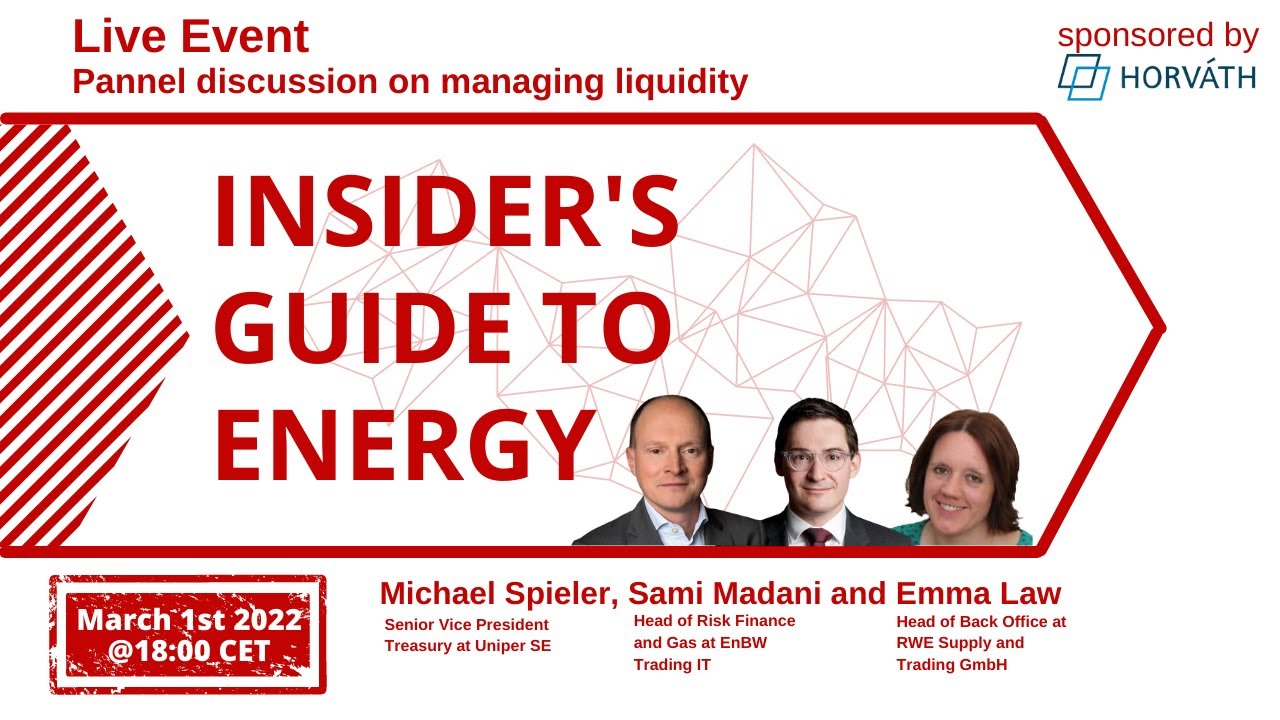
Live panel discussion on Managing Liquidity
Keywords
Summary
196 words
Critical Evaluation
Value of the Information & Strength of the Argument
The value of the information lies in the direct, real-world experiences shared by the panelists, each representing a distinct functional perspective (treasury, back office, IT) within the same industry. Their arguments are based on practical observations from navigating a volatile market, making the insights actionable for others in similar roles. However, the discussion is largely subjective, relying on anecdotal evidence rather than data-driven analysis. The panelists agree on the core need for transparency, stable processes, and close cooperation across departments, but they do not engage in deep technical explanations or provide evidence for the effectiveness of specific tools. The argumentation is coherent but lacks critical evaluation or alternative viewpoints, which limits its scientific rigor.
Scientific Rigor, Source Quality, Title Accuracy
The video is a moderated panel discussion and, as such, draws on the personal expertise of the participants rather than citing external scholarly sources or publications. The only references provided in the description are the channel’s social media links, which are not academic or technical in nature. The discussion is informed by real-world events, but no specific data sets, reports, or studies are referenced. The title accurately describes the content, and there is no indication of deliberate misrepresentation. The absence of documented sources reduces the scientific verifiability, but the practical nature of the content still offers meaningful insights for practitioners. No comment section is provided, so audience reception cannot be assessed.
240 words
Title / Content Match
The title accurately reflects the content: a live panel discussion focusing on managing liquidity in the energy trading sector.
Quality & Reliability
6/10
The panel provides practical, experience-based insights from senior practitioners in treasury, back office, and IT within major European energy companies. While the discussion is grounded in recent real-world events, it relies primarily on anecdotal evidence and lacks quantitative data or cited sources, limiting its verifiability.
Key Moments
Markers derived by PSI from the transcript: the creator did not define chapters.
- Introduction and sponsor mention
- Format overview and introduction of panelists
- Michael Spieler from Uniper shares treasury perspective on liquidity management during volatility
- Emma Law from RWE discusses back office challenges and the shift to real-time reporting
- Sami Madani from EnBW talks about IT requirements, data as an asset, and data mesh concepts
- Discussion on tools and dashboards for liquidity visibility
- Panel addresses who verifies data and the importance of data ownership
Cited Sources
- Insider's Guide to Energy - LinkedIn page — The panel's official LinkedIn page, mentioned in the video description as a way to follow the podcast.
- Insider's Guide to Energy - YouTube channel — The channel's main page, linking to other episodes and content.
Contribution & Novelties
The video provides a cross-functional, practical perspective on liquidity management from three major European energy firms, emphasizing the importance of data availability and cross-departmental collaboration during market stress. It offers a unique combination of treasury, back office, and IT viewpoints, which is uncommon in typical industry discussions. The discussion touches on emerging concepts like data mesh and the need for real-time transparency, but does not delve into technical implementation details.
Pour aller plus loin :
- Liquidity Risk Management — Foundational concept for understanding the risks discussed.
- Data Mesh — The panel mentions this emerging architectural approach for decentralizing data ownership.
- Energy Trading — Background on the specific market context of the discussion.
112 words
Radar Profile
The radar profile shows moderately balanced scores across information quantity, quality, technical level, and reliability, with a slight tilt toward quantity. This indicates a content-rich discussion that offers practical insights but lacks deep technical depth or rigorous sourcing.