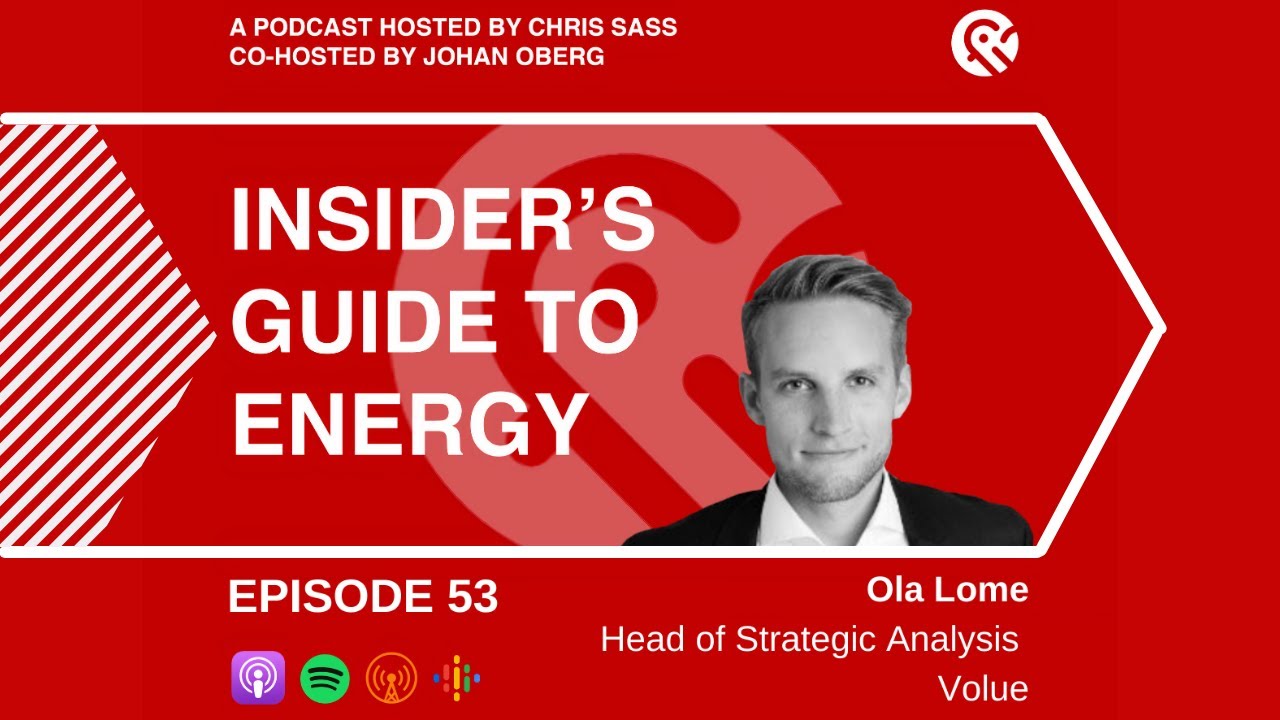
53 - Is asset backed trading fit for the future?
Keywords
Summary
186 words
Critical Evaluation
Value of the Information & Strength of the Argument
The value of the information lies in the practical expertise of Ola Lome, who brings direct experience from the European power trading sector. His explanations clarify complex market mechanisms, such as the distinction between day-ahead and intraday markets, and the operational realities of connecting physical assets to trading desks. The argumentation is well-structured, moving from historical context to current inefficiencies and future needs. The discussion of the ten-minute intraday trade process effectively illustrates systemic bottlenecks, and the point about efficiency losses when not considering the entire plant is a nuanced insight. However, the episode is largely anecdotal and lacks quantitative data or benchmarking against published studies. The guest’s recommendations, while plausible, are presented as personal observations rather than evidence-based conclusions.
Scientific Rigor, Source Quality, Title Accuracy
The rigor of the content is moderate, as it relies on expert opinion without citing specific research or data. The guest’s background adds credibility, but claims about market dynamics and company readiness are not supported by external sources. The only link provided in the description is to Volue’s homepage, which serves as a company reference rather than a substantive source. The title ‘Is asset backed trading fit for the future?’ is adequately reflected in the content, which directly addresses the question and explores multiple facets. The lack of formal citations limits the ability to verify the claims, though the internal coherence of the argument is strong.
241 words
Title / Content Match
The title directly addresses the central question of the episode, exploring the current state and future viability of asset-backed trading in energy markets. Content matches the title well.
Quality & Reliability
7/10
The episode relies on the professional expertise of a guest from the energy industry, providing practical insights and perspectives without formal citations. The reasoning is coherent and grounded in sector knowledge, though lacking in external references or data verification.
Key Moments
Markers derived by PSI from the transcript: the creator did not define chapters.
- Introduction of Ola Lome and his role at Volue, discussing his background and the company's focus on connecting assets to markets.
- Historical evolution from vertically integrated monopolies to liberalized power markets, mentioning Chile, Nordics, and the US.
- Discussion on the cultural divide between engineers and traders in power companies, and the need for integration.
- Ola shares a survey showing an average intraday trade time of ten minutes, breaking down the steps causing delays.
- Future outlook on automation, scalability for small assets, and the necessity of a cultural shift for utilities.
Cited Sources
- Volue – Homepage — Mentioned as the company Ola Lome works for, and a reference for their software solutions in connecting assets to markets.
Contribution & Novelties
The episode provides a practitioner’s perspective on asset-backed trading, highlighting the operational gap between traditional power plant optimization and market trading. It underscores the need for tighter integration of forecasting, optimization, and execution, and points out a specific inefficiency: the time taken for intraday trades. The discussion on scalability and automation for small distributed energy resources adds forward-looking insights. While not revolutionary, the synthesis of current industry challenges and proposed solutions is useful.
Pour aller plus loin :
- Electricity market — Overview of market structures and trading mechanisms.
- Virtual power plant — Relevant to the aggregation of small distributed resources.
- Day-ahead market — Detailed explanation of one of the key trading platforms discussed.
113 words
Radar Profile
The radar profile shows high scores in quantity and quality of information, reflecting a substantial and relevant discussion. The technical level is moderately high, suitable for an informed audience. The reliability score is slightly lower due to the lack of formal citations and reliance on expert opinion.