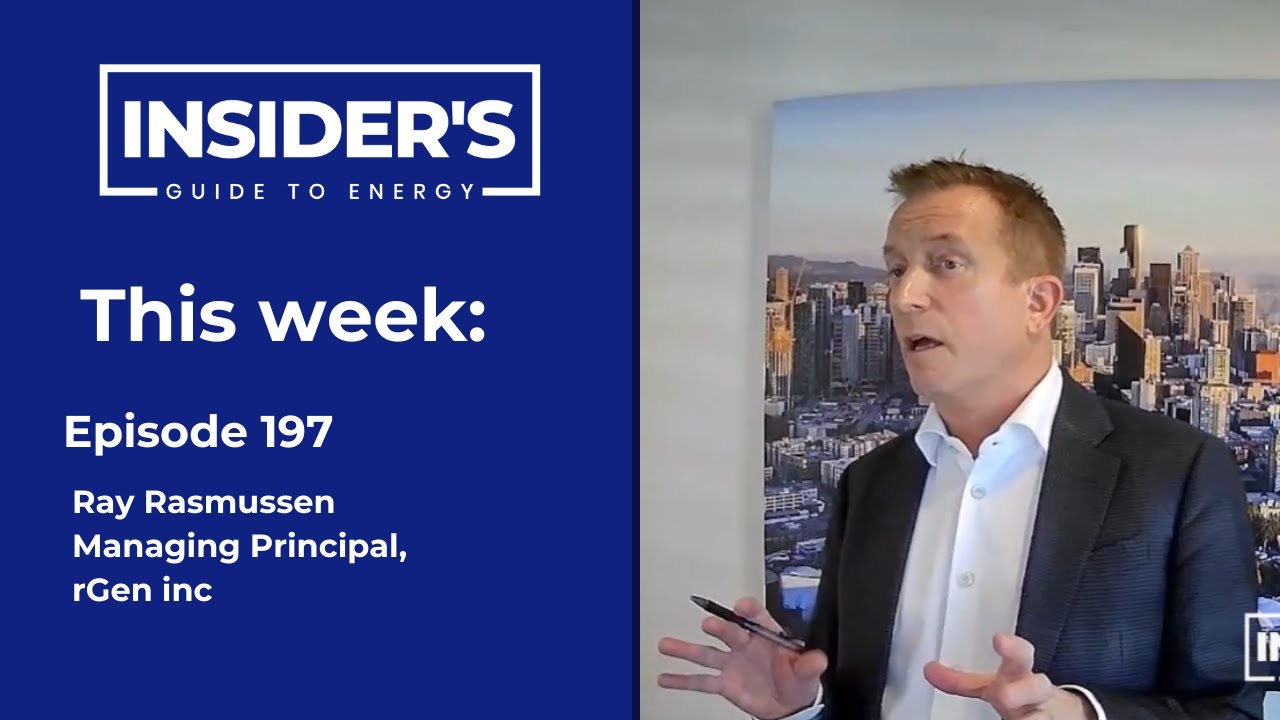
197 - AI in Energy: Practical Insights on Leveraging AI for Utility and Energy Sectors
Keywords
Summary
208 words
Critical Evaluation
Value of the Information & Strength of the Argument
The episode’s value lies in its pragmatic framing: rather than showcasing cutting-edge AI research, it offers a grounded roadmap for energy companies that are under pressure to adopt AI but lack internal expertise. Rasmussen’s central argument — start with no-regrets projects, build internal skills, avoid outsourcing the entire capability — is coherent and actionable. He provides a concrete example (a generation client with maintenance records dating to the 1930s) that illustrates how AI can convert a document backlog into a conversational knowledge base. The argument is strengthened by his acknowledgment of limitations: agentic AI is described as immature, breaking under load, and poorly supported by vendors. However, the reasoning remains largely anecdotal. No cost-benefit analysis, success metrics, or comparative evaluation of alternatives is offered. The recommendation to use Microsoft tools is justified by security and engineering scale, but the argument would be stronger with independent benchmarks or a discussion of trade-offs versus other platforms. The hosts’ ‘vegetables vs. dessert’ framing usefully distinguishes incremental from transformational value, but the dessert examples (compliance, EV planning) remain speculative and underdeveloped.
Scientific Rigor, Source Quality, Title Accuracy
Scientific rigor is limited: the episode is an expert interview, not a study, and no data, citations, or peer-reviewed sources are presented. The only external references are the guest’s LinkedIn profile and the podcast website, both listed in the description. Rasmussen mentions ‘work done by Siemens’ on digital twins and ‘Pegasus’ as an RPA vendor, but these are name-drops without links or specifics. The title accurately reflects the content — a practical discussion of AI in energy — and does not overpromise. No advertising sequence was detected in the transcript. The discussion of security and hallucinations is responsible, though it relies on general assertions rather than documented incidents. Overall, the sourcing is weak but the content is transparent about being opinion-based.
313 words
Title / Content Match
The title accurately reflects the content: a practical discussion of AI applications in utilities and energy, focused on getting started rather than hype.
Quality & Reliability
6/10
The episode is an expert-opinion interview with a named consultant (Ray Rasmussen, rGen Consulting) whose claims are grounded in practical experience with energy clients. However, no quantitative data, peer-reviewed studies, or verifiable case metrics are provided; the discussion remains at the level of general guidance and vendor-adjacent recommendations (Microsoft stack). No factual errors detected, but the evidentiary base is thin.
Key Moments
Markers derived by PSI from the transcript: the creator did not define chapters.
- Ray Rasmussen defines AI as a tool that provides answers rather than search results, distinguishing it from traditional search.
- Discussion of the 'search vs. find' problem in enterprise document management and how AI changes the dynamic.
- Security concerns: energy companies targeted by bad actors; recommendation to use Microsoft's secure ecosystem rather than public ChatGPT.
- SharePoint as a foundation, combined with Power Automate, Power Apps, and Power BI for AI-enabled document access.
- Client example: generation units with maintenance records dating to the 1930s, made conversational via OCR and AI.
- Agentic AI discussed as a close cousin of RPA, with current limitations: low volume, fragility, and uneven vendor support.
- IoT data as a strong AI use case due to structured, reliable data that can be normalized and rationalized.
- Future applications: grid modeling, compliance and federal permitting assistance, and EV charging infrastructure planning.
Cited Sources
- Insider's Guide to Energy Podcast Website — Official website of the podcast, listed in the description.
- Ray Rasmussen LinkedIn Profile — Guest's professional profile, listed in the description.
Contribution & Novelties
The episode’s original contribution is its framing of AI adoption in energy as a capability-building exercise rather than a technology acquisition. Rasmussen’s ’no-regrets on-ramp’ concept — starting with document management on existing SharePoint infrastructure to build internal AI skills — offers a concrete, low-risk entry point that contrasts with the hype-driven narratives common in AI discussions. The distinction between search and find, and the emphasis on security within the Microsoft ecosystem, adds practical nuance. The candid assessment of agentic AI’s current limitations (low volume, fragility, poor support) is also valuable for practitioners navigating vendor claims.
Pour aller plus loin :
- Retrieval-augmented generation — The technical approach underlying the document-management use case discussed.
- Digital twin — Referenced in the context of grid modeling and Siemens’ work.
- Robotic process automation — The precursor technology Rasmussen compares to agentic AI.
- Microsoft Copilot — The AI assistant built into the Microsoft stack recommended by the guest; no URL provided to avoid uncertainty.
- Power BI — The analytics tool mentioned as part of the proposed architecture; no URL provided to avoid uncertainty.
177 words
Radar Profile
The profile shows moderate information quantity and quality, with low technical depth, reflecting the episode's nature as a high-level practitioner discussion rather than a technical deep dive. Reliability is moderate, anchored in the guest's experience but lacking external validation. The overall shape suggests a useful introductory resource for energy professionals exploring AI adoption.