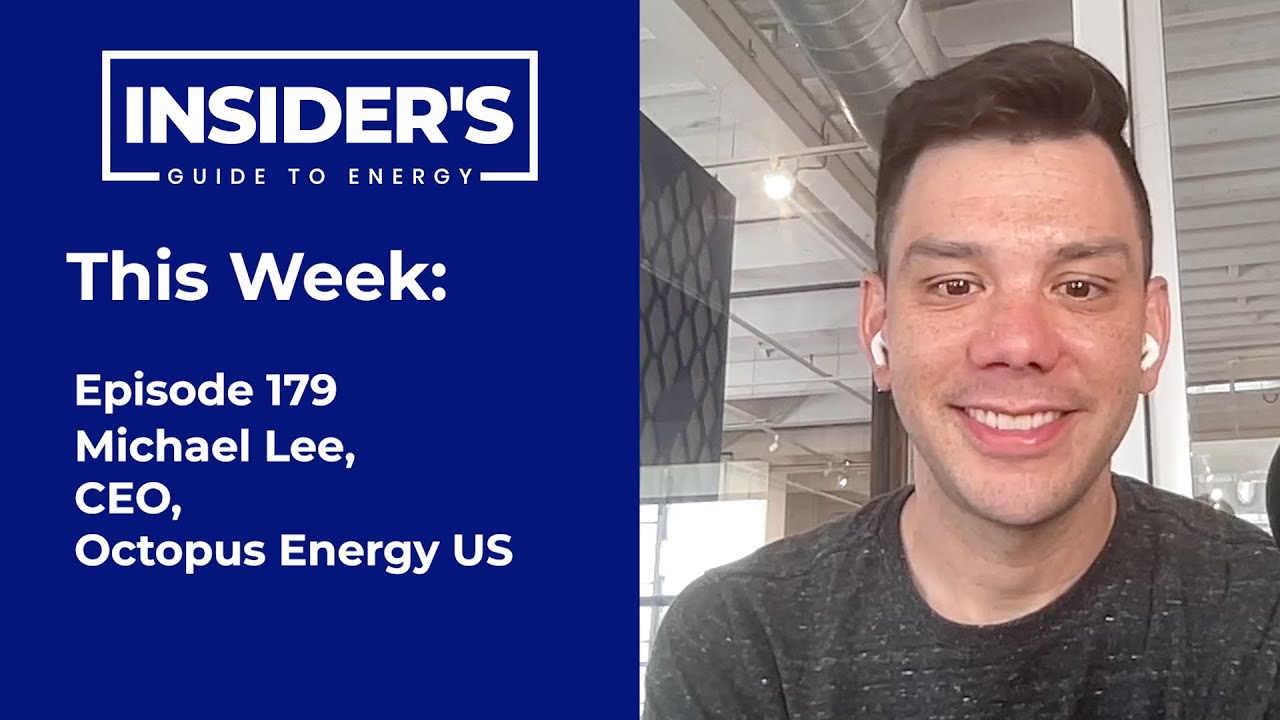
179 - Revolutionizing Energy: Michael Lee on Octopus Energy’s Vision for a Decentralized Future
Keywords
Summary
190 words
Critical Evaluation
Value of the Information & Strength of the Argument
The episode provides valuable insights into the practical implementation of demand flexibility and smart rates from the perspective of a leading energy retailer. Michael Lee articulates a coherent vision for a decentralized grid, emphasizing that the future of energy is about timing optimization rather than simply building more storage or transmission. The argument is well-structured: he identifies the problem (inflexible load, outdated rate designs), proposes a solution (smart rates and device orchestration), and illustrates with concrete examples (EV charging, pre-cooling homes). The reasoning is logical and grounded in real-world experience, particularly in Texas. However, the argumentation relies heavily on assertions without quantitative evidence or references to independent studies. For instance, the claim that base load is a myth is provocative but not substantiated with data. The discussion of consumer behavior and trust is insightful but remains at a conceptual level. Overall, the value lies in the strategic perspective and practical examples, but the lack of empirical support weakens the argument’s robustness.
Scientific Rigor, Source Quality, Title Accuracy
The episode does not cite specific scientific studies or reports, though it mentions ERCOT and the Kraken software. The host and guest reference general trends (e.g., doubling of electricity usage) without providing sources. The title accurately reflects the content, which is a forward-looking discussion on decentralized energy and Octopus Energy’s role. The conversation is largely opinion-based, typical of a podcast interview, and does not claim to present original research. The absence of peer-reviewed sources or data limits the scientific rigor, but the expert nature of the guest lends some credibility. No comments were provided for analysis.
272 words
Title / Content Match
The title accurately reflects the episode's focus on Michael Lee and Octopus Energy's vision for a decentralized, consumer-centric energy future. It is a fair summary of the conversation.
Quality & Reliability
6/10
The content is an expert interview with a credible industry CEO, offering informed opinions and some references (ERCOT, Kraken, retail restructuring states). However, it lacks citations to peer-reviewed studies or independent data, and several claims (e.g., doubling/tripling electricity usage, base load as a myth) are presented without sources. The discussion is largely qualitative and promotional for Octopus Energy.
Key Moments
Markers derived by PSI from the transcript: the creator did not define chapters.
- Michael Lee introduces Octopus Energy US and its three main activities: retail energy, EV/heat pump deployment, and software licensing.
- Discussion on the grid of the past vs. future, emphasizing the need for decentralization and demand flexibility.
- Lee explains Texas’s unique energy market and the anticipated doubling of electricity usage in 5-6 years.
- The concept of smart rates is introduced, contrasting with flat and time-of-use rates.
- Lee argues that base load is a myth and that flexibility can reduce the need for traditional base load generation.
- Discussion on how utilities can use Octopus’s Kraken software to improve customer engagement and load flexibility.
- Lee outlines Octopus’s expansion plans in North America, focusing on states with retail restructuring and direct billing.
- Closing remarks on trust, transparency, and reliability as key factors for consumer adoption.
Contribution & Novelties
The episode offers a fresh perspective on the energy transition by focusing on the retail side and consumer-centric solutions rather than large-scale generation and transmission. It introduces the concept of smart rates as an evolution beyond time-of-use rates, where the load-serving entity manages flexibility on behalf of the customer. The discussion on reimagining devices (EVs, water heaters, homes) as thermal or electrical batteries provides a practical framework for reducing the need for grid-scale storage. The emphasis on trust and transparency as prerequisites for demand flexibility is a valuable addition to the conversation.
Pour aller plus loin :
- Demand response — Overview of demand response programs and their role in grid management.
- Smart grid — Broader context on grid modernization and consumer participation.
- Vehicle-to-grid — Concept closely related to smart charging of EVs for grid flexibility.
135 words
Radar Profile
The radar profile shows moderate to high information quantity and quality, with a lower technical level, reflecting a strategic and business-oriented discussion rather than a deep technical analysis. Reliability is moderate due to the lack of cited sources, but the expert guest adds credibility. Overall, the episode is informative for a general audience interested in energy transition trends.