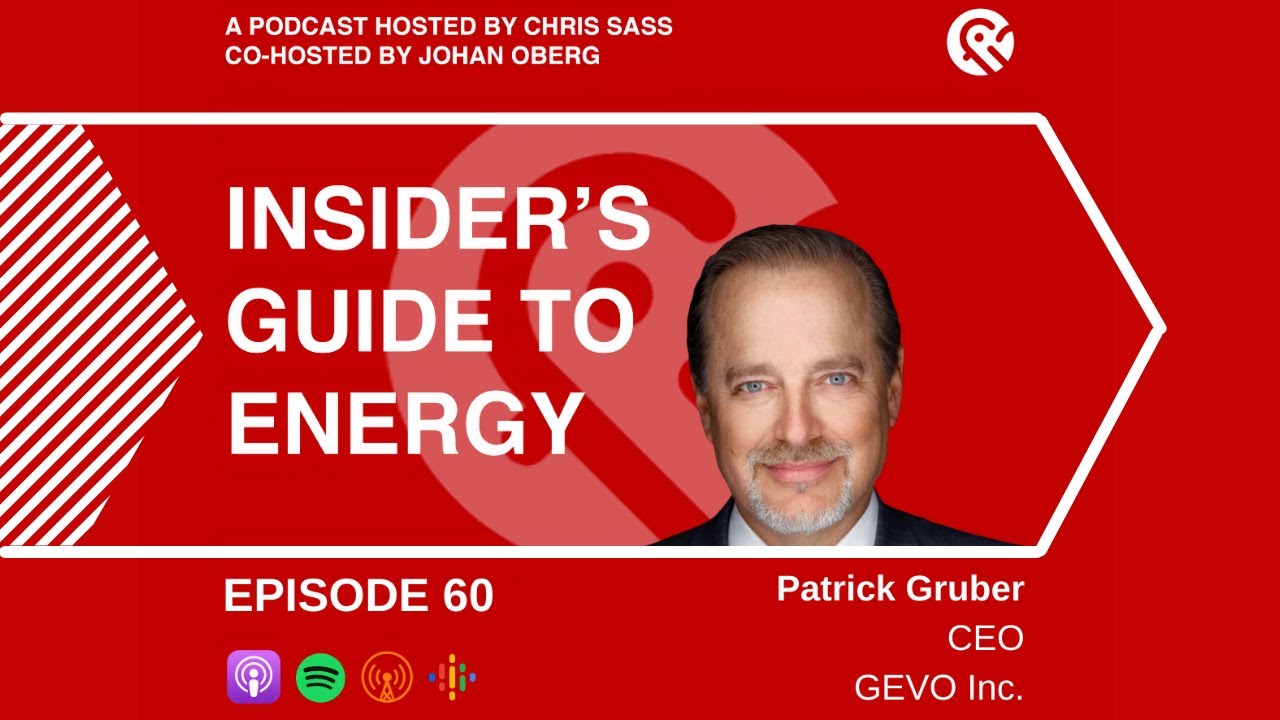
60 - “It’s got to be jet fuel!” – Dr. Patrick Gruber talks Sustainable Aviation Fuel
Keywords
Summary
174 words
Critical Evaluation
Value of the Information & Strength of the Argument
The podcast offers valuable insights into the practicalities of making sustainable aviation fuel from the perspective of an industry insider. The argumentation is coherent and well-structured, presenting a compelling case for the feasibility of SAF while acknowledging economic and technological hurdles. The emphasis on transparent carbon accounting and the critique of fossil-based waste as a feedstock are particularly strong points. However, the conversation is inherently promotional, and the host’s uncritical approach means that potential drawbacks, such as the real environmental impact of large-scale biomass use or the energy intensity of the process, are not deeply questioned. The reasoning relies heavily on the potential of future scalability and assumes successful technology deployment, which is not yet proven at scale.
Scientific Rigor, Source Quality, Title Accuracy
The content is presented as an expert opinion interview, with the guest’s credibility stemming from his PhD in chemistry and leadership role at Gevo. No independent sources are cited in the video; the only source provided is the company’s homepage. The title is an accurate reflection of the topic, though it does not hint at the promotional nature of the discussion. The lack of peer-reviewed references or data verification weakens the scientific rigor. The interview covers many claims (e.g., production capacity, carbon tracking) without providing evidence or external validation. Nevertheless, the technical explanations are consistent with known principles of biofuel production, and the discussion of carbon accounting is thoughtful. The overall rigor is moderate, but the bias inherent in a company CEO talking about his own product is acknowledged.
262 words
Title / Content Match
The title accurately reflects the core topic—the necessity for SAF to behave exactly like jet fuel—and the interview indeed covers that and more.
Quality & Reliability
6/10
The information is provided by a CEO with a direct commercial interest, introducing potential bias, but the technical details about SAF production, feedstock sources, and carbon tracking are plausible and aligned with industry knowledge.
Chapters
Cited Sources
- Gevo Homepage — Official website of Gevo, providing information about the company and its sustainable aviation fuel technology.
Contribution & Novelties
The video offers a first-hand account of challenges and opportunities in the sustainable aviation fuel industry, particularly around carbon tracking and drop-in fuel certification. It highlights the importance of blockchain in ensuring the sustainability credentials of feedstocks, a point that is often overlooked. The discussion of using residual carbohydrates and the potential for negative emissions through carbon sequestration adds a nuanced perspective.
Pour aller plus loin :
- Sustainable aviation fuel — Provides a broader overview of SAF types, standards, and market status.
- Biofuel — Explains the general concept and production methods, relevant to the feedstocks discussed.
- Carbon offset — Relates to the carbon accounting and offsetting mechanisms implied in the conversation.
111 words
Radar Profile
The profile shows balanced scores across the dimensions, with slightly higher quantity of information and lower overall reliability, reflecting the promotional yet informative nature of the interview. The technical level is moderate, and the qualitative assessment is consistent with a podcast that blends expert insight with commercial advocacy.