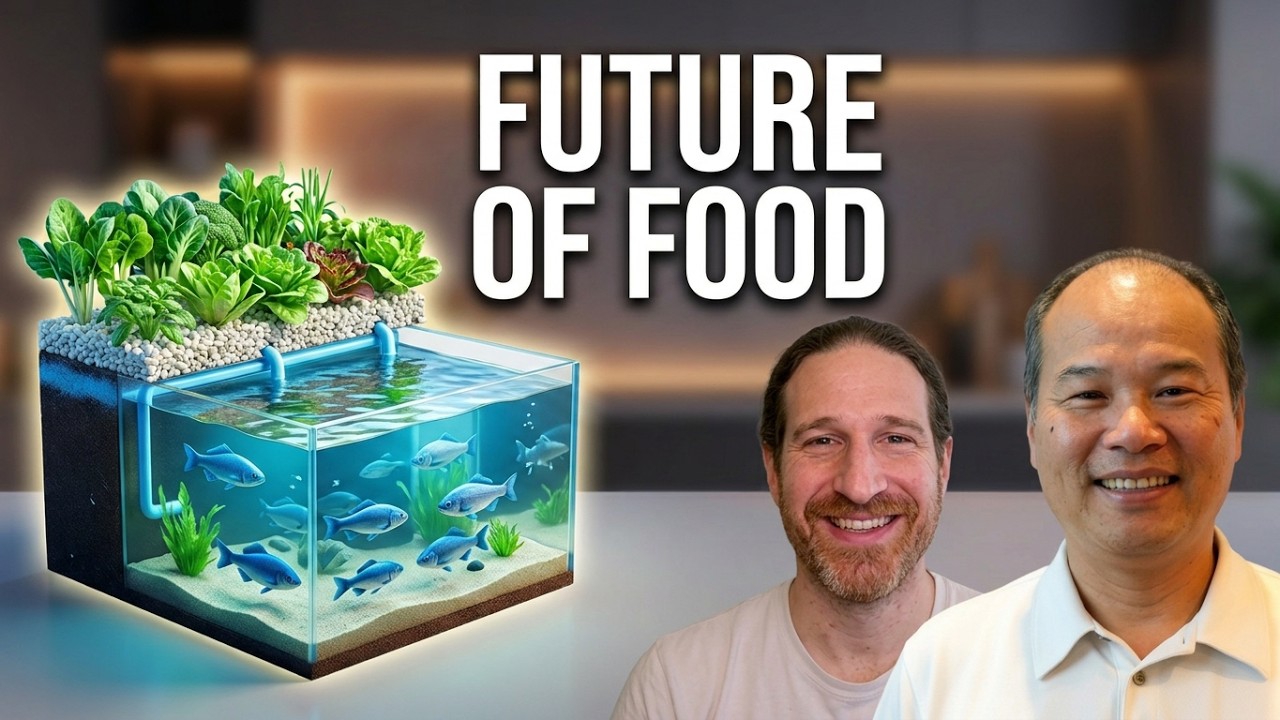
Ep 28: Aquaculture, Part 1 - talking about the different types of food production available.
Keywords
Summary
174 words
Critical Evaluation
Value of the Information & Strength of the Argument
The value of this episode lies in its accessible synthesis of different aquaculture approaches, connecting large-scale industrial methods with time-tested traditional practices. The hosts argue that aquaculture can be more sustainable than wild-caught fishing and can support local economies, particularly when designed as polyculture systems. They illustrate arguments with concrete examples, such as Brazil’s shrimp farming and Mexican chinampas, and emphasize the resilience of multi-trophic systems. The discussion of aquaponics as a self-regulating system is particularly compelling, highlighting the benefits of biodiversity over monoculture. While the reasoning is not deeply rigorous, it is consistent and persuasive, offering a balanced view that acknowledges both advantages and challenges like capital investment and expertise.
Scientific Rigor, Source Quality, Title Accuracy
The scientific rigor is moderate; the hosts rely on general knowledge and personal experience rather than citing specific studies within the episode. However, the description includes two relevant sources on floating gardens in Bangladesh, which do lend credibility. The content aligns well with established facts about aquaculture, and the title is accurate. The inclusion of traditional systems shows awareness of diverse practices. Overall, the information is reliable but could benefit from more explicit sourcing; the provided links are a step in that direction. No significant inaccuracies were noted, and the tone remains measured and informative.
221 words
Title / Content Match
The title accurately reflects the content, which discusses the different types of food production under aquaculture, including marine and freshwater systems, and both modern and traditional approaches.
Quality & Reliability
7/10
The episode provides a broad and accessible overview of aquaculture, aquaponics, and mariculture, supported by relatable examples and personal experience. While the information is generally accurate and aligns with established knowledge, the discussion is conversational and lacks in-depth citations on the fly; however, two relevant source links are provided in the description.
Key Moments
Markers derived by PSI from the transcript: the creator did not define chapters.
- Definition of aquaculture and its various forms (marine, freshwater, plants, animals).
- Discussion of offshore mariculture, environmental impacts, and introduction of Integrated Multi-Trophic Aquaculture (IMTA).
- Traditional aquaculture systems: chinampas in Mexico and floating gardens in Bangladesh.
- Explanation of aquaponics using the Cleveland project as an example, highlighting its self-regulating nature.
- Symbiotic systems like ducks in rice paddies and the importance of mangroves for coastal protection.
- Wrap-up: aquaculture growth compared to agriculture, and preview of future deep-dive episodes.
Cited Sources
- The Floating Gardens of Bangladesh - Rosa Luxemburg Foundation — Mentioned as an example of traditional aquaculture in Bangladesh, illustrating sustainable floating garden systems.
- Floating cabbage farming gains popularity in Gopalganj - The Financial Express — Referenced to highlight modern adaptations of floating gardens in Bangladesh for cabbage cultivation.
Concurring Sources
- The Floating Gardens of Bangladesh - Rosa Luxemburg Foundation — Supports the episode's description of traditional floating gardens providing food and resilience.
- Floating cabbage farming gains popularity in Gopalganj - The Financial Express — Provides a contemporary example of floating gardens, corroborating the episode's claim of their continued relevance.
Contribution & Novelties
This episode adds value by framing aquaculture as a continuum from ancient practices to modern industrial systems, emphasizing that traditional methods hold lessons for sustainability. It introduces concepts like IMTA and aquaponics in a clear way, linking them to ecosystem resilience. The hosts also connect aquaculture to broader climate and food security issues, positioning it as a positive solution. For listeners new to the topic, it provides a solid foundation for further exploration.
Pour aller plus loin :
- Integrated multi-trophic aquaculture - Wikipedia — A deeper look into the polyculture concept mentioned in the episode.
- Chinampa - Wikipedia — Detailed information on the ancient Mexican agricultural system highlighted for its efficiency.
- Aquaponics - FAO — The Food and Agriculture Organization’s resources on aquaponics, a key topic discussed in the episode.
130 words
Radar Profile
The profile shows a balanced presentation with moderate information quantity and good quality, but a relatively low technical level appropriate for a general audience. Reliability is decent, supported by linked sources, though not deeply academic.